 Guide On Map
Old Kathmandu: From the Palace to Asan
From Hanuman Dhoka Palace through monastery courtyards and market squares to Asan Tole
Guide On Map on your phone
Open the walk like a regular app
It takes about 10 seconds to install. No app store needed.
The whole path
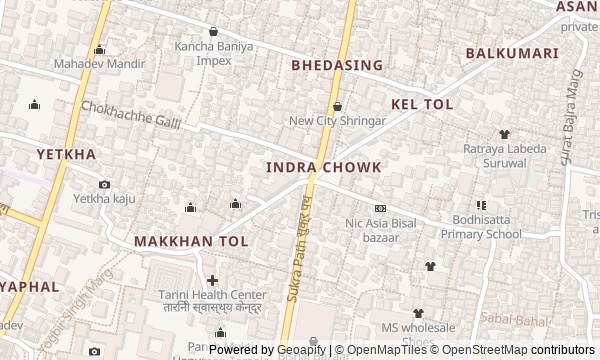
Route map
About the walk
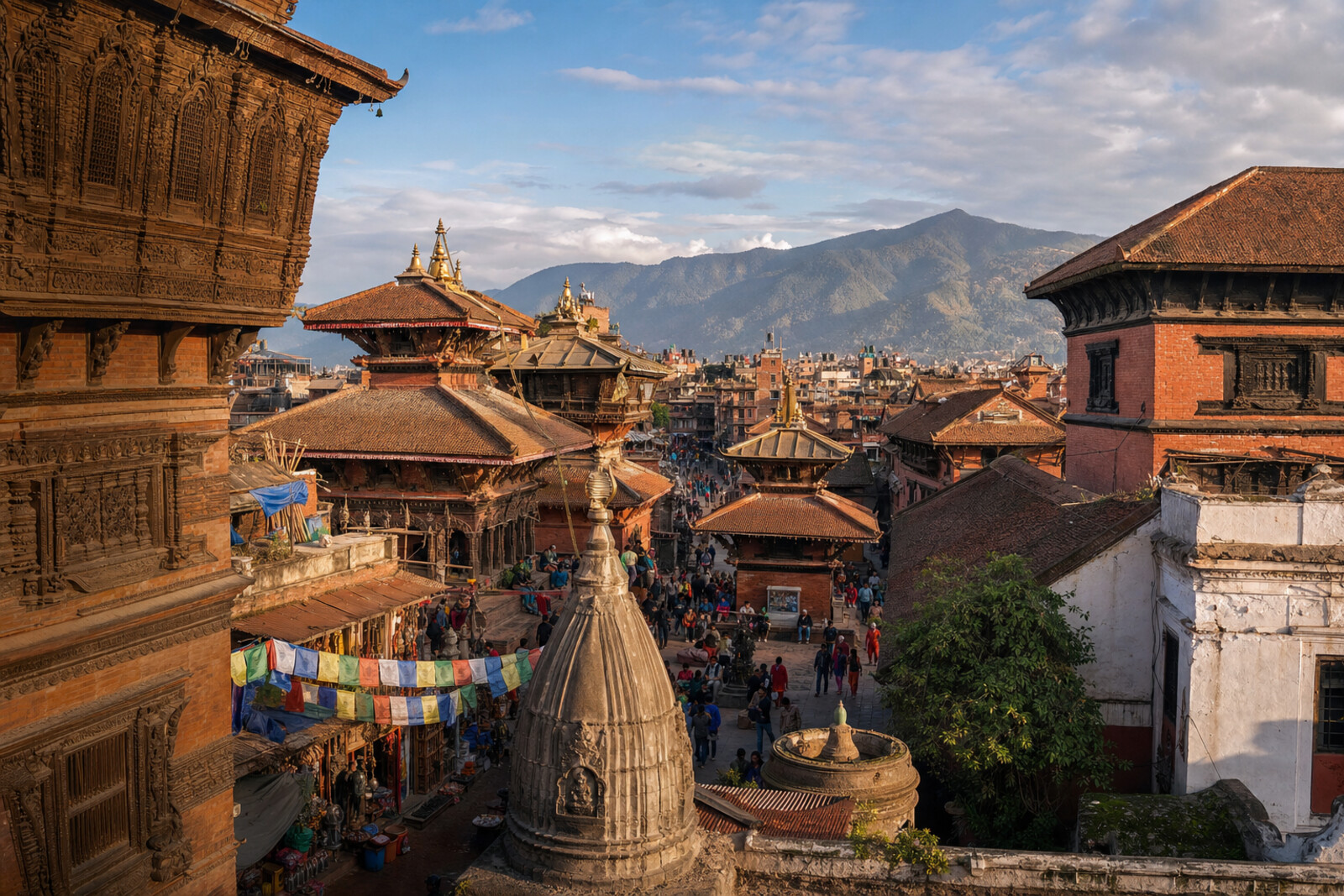
You will begin at the gates of the royal palace, then make your way through Basantapur toward the old road to Asan. On the square, you will find a victor's towers, the house of a living goddess, the tall Taleju Temple, and a rebuilt wooden pavilion standing close together. In its pale timber, dark old beams will catch your eye. But why will one girl be carried out of the carved house through a back exit, while another is brought in on that same day? Beyond the palace, Kathmandu opens into the courtyards of Newar communities and busy trading crossroads. You will see a giant on embossed metal panels, a temple above the shops, and the white face of a deity repainted every winter. The story will separate documents from legend and show how rituals rest on the decisions of families, priests, and guthis. By Asan Tole, you will be able to explain how a royal palace, a Buddhist monastery, and a grain market are connected in old Kathmandu.
Why this order
Hanuman Dhoka Palace first sets the royal frame, while nearby Kasthamandap reveals public life beside the palace walls. From the pavilion, the route leads to Kumari Ghar, where a girl from a Buddhist family becomes part of the royal cult. Next comes Taleju Temple itself, the shrine of the goddess embodied by Kumari. From the royal sanctuary, the route moves into Itum Bahal, where a hereditary rite is upheld by the monastery community and guthis. Leaving the enclosed courtyard, it returns to Indra Chowk to bring community legends into the open market. The trading street then leads to Jana Bahal (Kanak Chaitya Mahavihara), where priests and artists renew a deity every year. The final stretch continues along the same street to Asan Tole, where religious ritual, grain trading, and an urban legend meet at one crossroads.
Those who want to understand Newar Kathmandu beyond the palace facades Those interested in living religious traditions and the workings of urban communities Those who enjoy stories of mistakes, vows, and human decisions
Those looking only for an overview of the main monuments of Kathmandu Durbar Square Those who dislike narrow trading streets and crossings through markets Those expecting a story without legends or religious themes
Before you go
The route passes active shrines, residential courtyards, and a working market, so keep your hands free and do not block the way for a photograph. At temples, follow local signs and the example of other visitors: remove your shoes where that is customary, and ask permission before photographing people or a ritual. Kumari cannot be summoned or scheduled; do not photograph the goddess herself. Taleju is almost always experienced from outside. Do not treat palace and museum rooms as an essential part of the walk: check their availability separately on site, since the full story can be followed through open urban spaces.
When to go
On an ordinary day, the route lets you notice the shift from a ceremonial square to an everyday market at an unhurried pace. During Indra Jatra, the procession of Seto Machhindranath, and other major festivals, these same streets become part of the ritual: the experience is more intense, but movement is slower and more crowded. For your first walk, choose daylight and allow extra time for stops at shrines, trading flows, and sudden processions.
Backup plan
If an entrance to a courtyard, temple, or rebuilt building is closed, do not try to follow the attendants inside: stay outside and listen to the story through the details you can see. If a procession blocks a street, wait for instructions from the organizers, or move to the next stop only along open public passages. If the square or market is too crowded, it is easy to split the walk after Kasthamandap: the palace section stands on its own, and the stretch from Itum Bahal to Asan can be continued later.
Route conditions
Surface. Paved — 1.1 km (data covers 63% of the route)
Facilities. Toilets — 5; drinking water — 1
Elevation. Ascent — 9 m; descent — 5 m
OpenStreetMap extract of June 18, 2026: database data, not a check on the ground. Data © OpenStreetMap contributors, ODbL licence
Walk plan
Open in maps ↗- 1
Hanuman Dhoka and Basantapur
Here, the conquest of the city will turn someone else's palace into the residence of a new ruler. - 2
Kasthamandap
This stop will connect the old purpose of a public shelter with human choice during a disaster. - 3
Kumari Ghar
Here, the fate of one girl will show how a Buddhist family enters a royal cult. - 4
Taleju Temple
This stop will show what remains of a donation made in the hope of a salvation that never came. - 5
Itum Bahal
A monastic legend will explain the vow that the community will fulfill every year. - 6
Indra Chowk and Akash Bhairav
Two temple legends will meet here during a single city festival. - 7
Jana Bahal and Seto Machhindranath
Here you will learn who will prepare the revered image for the coming year, and how. - 8
Asan Tole
The finale links the grain trade with a commemorative marker of a mistaken calculation.
Route features
Everything you need stays in the browser
Progress, saves and your trip plan are stored on this device.
Add Guide On Map to your home screen so the walk opens outside the browser.
How we handle sources, maps and corrections: our editorial standards