 Guide On Map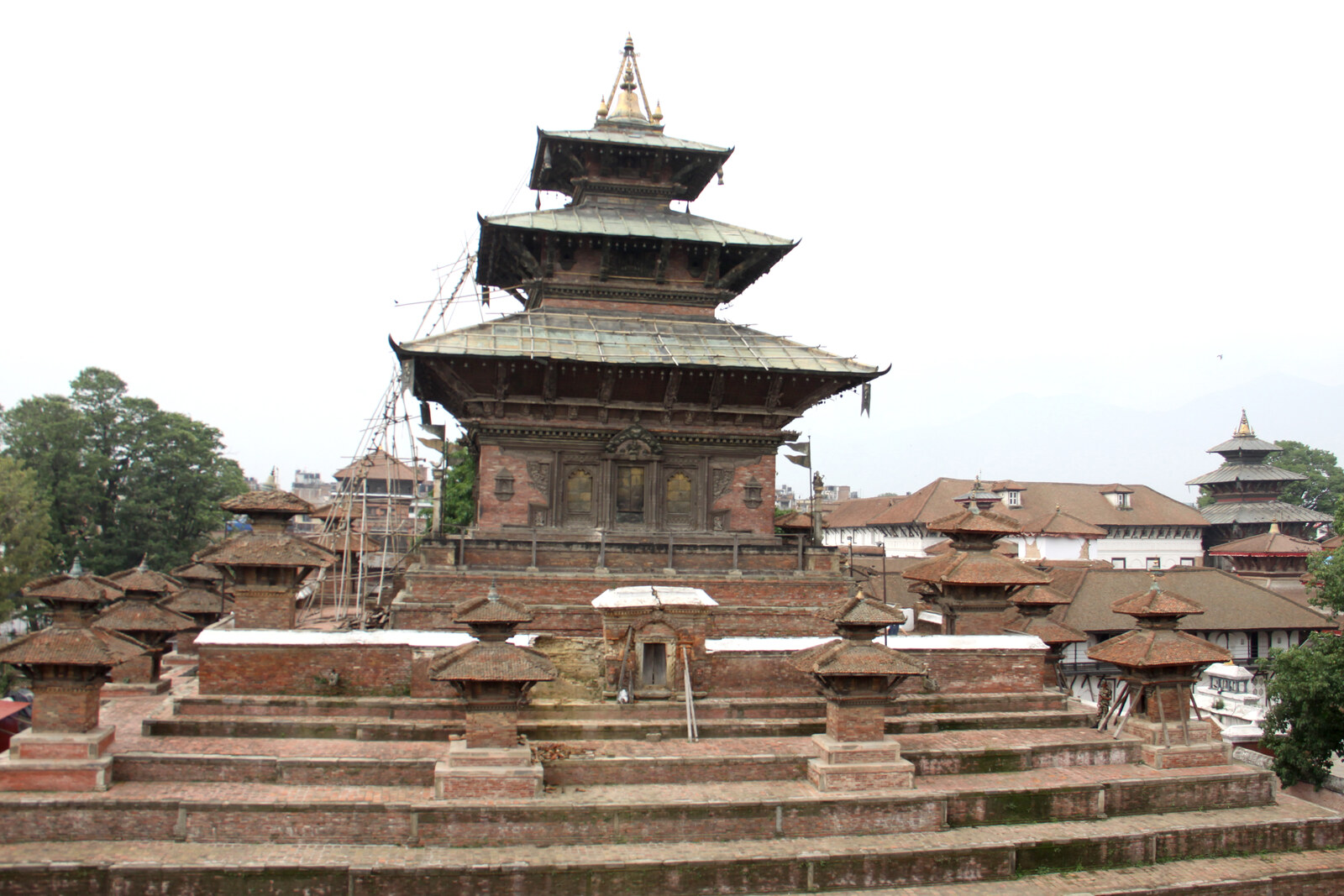
Look around first
What to notice
- Tall three-tiered temple
- Three roof tiers
- Temple gates
The story of the place
On the only day of the year when ordinary worshippers are allowed into Taleju Temple, the main image of the goddess is no longer in the upper shrine. Two days earlier, priests bring it down to the inner courtyard of Mul Chowk for the closed Dashain rites, the main autumn festival. The image will be brought back up on the morning of the tenth day.
This sequence was established for the palace cult. In fifteen sixty-four, Mahendra Malla, the king of Kathmandu, ordered a tall, three-tiered temple built to house Taleju beside the palace—one form of the goddess Durga and the patron deity of his dynasty. The Mallas considered her their family goddess: initiation into her secret cult confirmed a king's right to the throne. The main rites were performed by Newar priests authorized to do so.
After the Gorkha conquest of the palace, the new Shah dynasty retained these priests and incorporated Taleju into its own royal ritual. This is how Rana Bahadur Shah came to stand before the temple: a young king trying to save his gravely ill beloved wife, Kantavati.
For her recovery, he abdicated in favor of their minor son. On October sixth, seventeen ninety-nine, the court formalized large land grants to Taleju and other venerated gods. The harvest from these lands was to pay for annual services; separate charters for the temple were issued in Rana Bahadur's own name. He gave up his crown and distributed income-producing lands, hoping that the sacrifice would be accepted.
Less than a month later, Kantavati died. Rana Bahadur unleashed his anger on the gods he had prayed to. Contemporary accounts report that, on his orders, temples were defiled and images of gods were destroyed or deprived of consecration. According to tradition, the image of Taleju was carried out of this very shrine and sent to the cremation site, as though the goddess had been included in Kantavati's funeral procession.
Supporters of the minor king decided to arrest the former monarch. Rana Bahadur fled to Benares, then returned to Kathmandu four years later. He did not revoke the grants made during Kantavati's illness: income from the lands that had been given continued to fund the services for which the charters had been drawn up.
Today, the image of Taleju is brought down only by initiated priests and only according to the calendar: on the seventh day of Dashain, to the courtyard of Mul Chowk; on the tenth, back up again. Between these movements, on the ninth day, the temple gates are opened to worshippers. They enter the famous shrine during the hours when the royal goddess is in the closed palace below.
Useful on site
Usually viewed from outside; public access to Taleju is limited, especially outside Dashain.
Checked: June 25, 2026. Check the official source before visiting.The temple is closed for most of the year; observe it from outside and do not try to enter staff-only areas.