 Guide On Map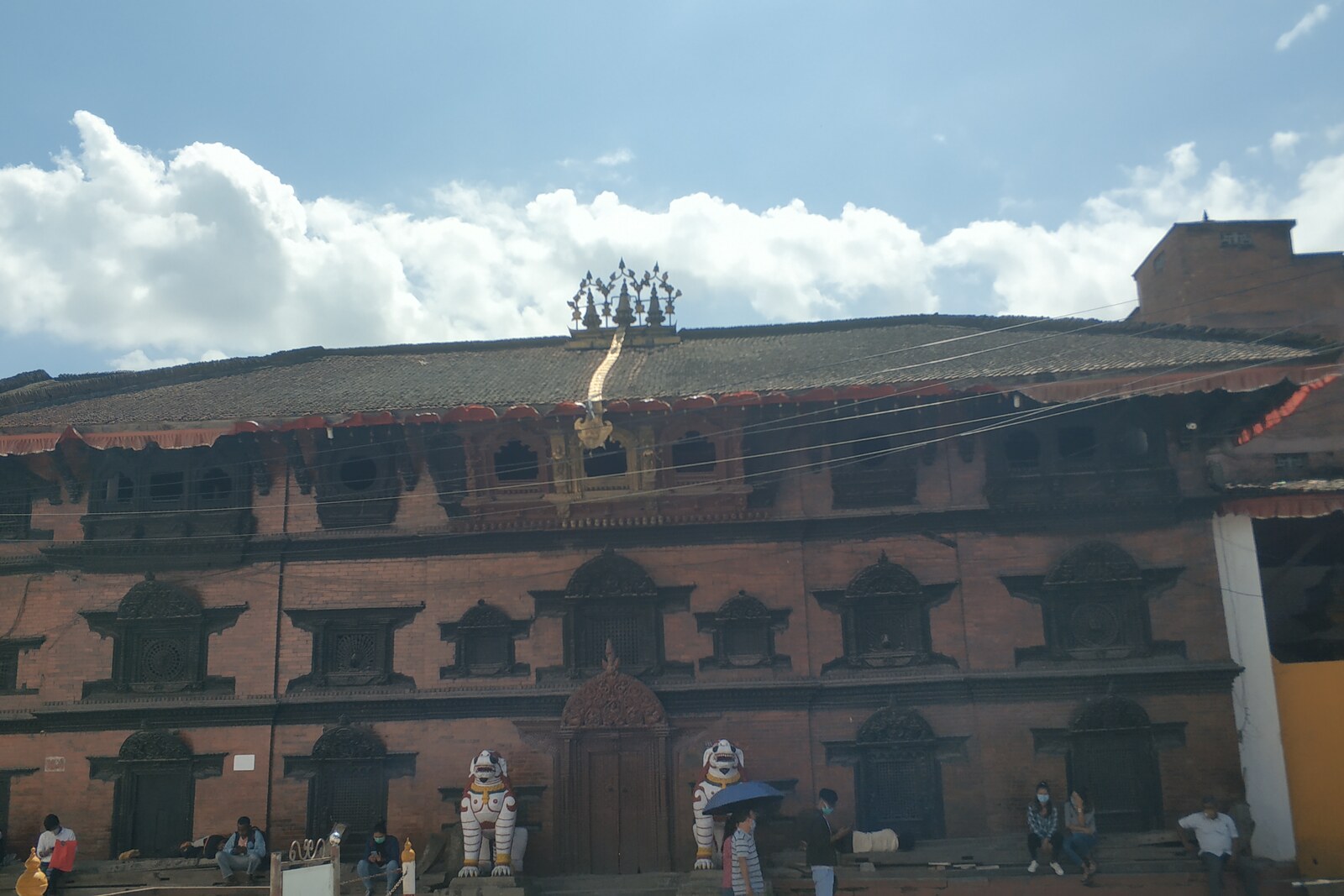
Look around first
What to notice
- Carved windows
- Brick facade
- Main entrance
- Inner courtyard
The story of the place
On September thirtieth, two thousand twenty-five, eleven-year-old Trishna Shakya, Kathmandu's principal Kumari, was carried out of Kumari Ghar. She left the house through the rear exit in a palanquin carried by relatives. Trishna had spent eight years here: she moved in as a three-year-old girl and was now returning to her family. With the onset of puberty, tradition no longer regarded her as an incarnation of the goddess Taleju.
That same day, relatives brought Aryatara Shakya here. She was two years and eight months old. The girl's father, Ananta Shakya, described the change with perfect precision: yesterday she was his daughter, and today she became a goddess.
Kumari means an unmarried girl. Candidates are chosen from Buddhist Newar Shakya families, and both Buddhists and Hindus revere them. After initiation, a girl lives in this house with guardians, studies with private tutors, and receives worshippers. She goes outside only a few times a year, during rituals and processions. Outside the house, she is carried: a Kumari's feet must not touch the ground.
A separate residence opposite the royal palace appeared under Jaya Prakash Malla, the last king of Kantipur, who was trying to hold on to the throne. One legend tells how a young Shakya girl declared herself an incarnation of Taleju. The king decided that she was an impostor, expelled the girl from the city, and confiscated her parents' land. Soon the queen began convulsing and saying that the same goddess had possessed her. Jaya Prakash ordered the exile found. When the girl was brought back, the queen recovered, and the king recognized the Shakya girl as a living Kumari. This is indeed a legend: it preserved no name for the girl, and in other versions the king's quarrel with Taleju happens differently.
The veneration of Kumari girls existed earlier as well. Jaya Prakash gave the city's principal Kumari a permanent home: in seventeen fifty-seven, he built Kumari Ghar—literally, “the house of the Kumari.” At the same time, the king included her ride in a chariot in the Indra Jatra festival. Eleven years later, conquerors replaced the Malla dynasty, but Prithvi Narayan Shah preserved the ritual and received the Kumari's blessing. After Prithvi Narayan Shah, subsequent kings also came here for tika, the mark of blessing on the forehead.
Aryatara Shakya now lives behind the carved windows of the inner courtyard. Trishna, who was carried out of here for eight years without allowing her feet to touch the ground, is no longer in this house.
Useful on site
The courtyard is inside Durbar Square; restrictions on photos and waiting for the Kumari are possible.
Checked: June 25, 2026. Check the official source before visiting.Do not expect the Kumari to appear, do not call to her, and do not photograph her if she appears.