 Guide On Map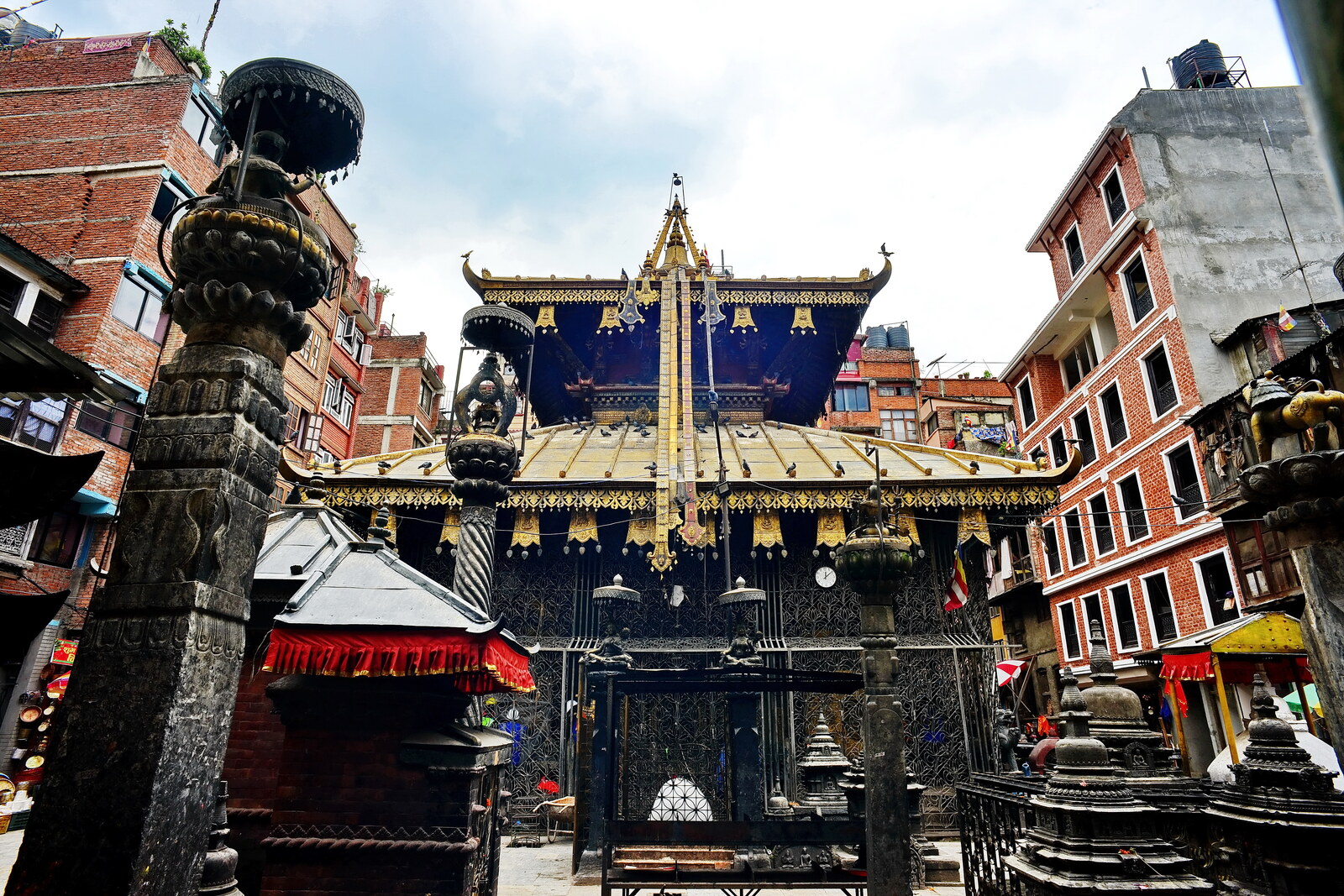
Look around first
What to notice
- The white face of Seto Machhindranath
- Half-closed eyes
- The sanctuary
- The inner courtyard
The story of the place
Every winter, the guardian priests of Jana Bahal remove Seto Machhindranath from the altar and, over one week, take the image through an entire human life—from birth to marriage.
The courtyard is officially called Kanak Chaitya Mahavihara. It is a Buddhist monastery believed to have been founded around the tenth century. The familiar name Jana Bahal became attached to it after the main sacred image was placed here. The Newars call it Janabaha Dyo—the god of Jana Bahal. For Buddhists, it is Arya Avalokiteshvara, the bodhisattva of compassion; many Hindus venerate the same image as Machhindranath, associated with rain and harvests. “Seto” means “white”: the face and body of the image are indeed painted white.
The winter ceremony begins only after Kumari arrives. The chief priest carries the image from the sanctuary to a platform in the southeastern part of the courtyard. The Sangha priestly community is responsible for the sacred image and appoints those permitted to touch it. They remove the jewelry and unwrap the garments layer by layer, then wash the image with water, milk, clarified butter, and honey. The water for the ritual was brought the day before from Bhacha Khushi near Shobha Bhagwati; the final washings are performed with warm water.
After the bathing, the image is not returned to the altar. The next morning it is brought out into the courtyard to dry, and the priests, assisted by chitrakar artists, begin a new painting. The old painted coating is removed from Machhindranath, and the image is made white again. Two small figures of Tara stand nearby: one is painted white, the other green. The appointed craftsmen work until the full moon and observe strict ritual discipline. The eyes are painted last and immediately covered with Nepali paper.
Then the priests perform ten rites of human life over the renewed image. The paper is removed—this is considered birth. The deity is offered its first food, and the initiation rites due to a boy and a girl and the wedding ceremonies of both sexes are performed: Janabaha Dyo is venerated simultaneously in male and female form. After this, the image is dressed in new cloth, its jewelry is restored, and it is carried into the sanctuary. The week ends with a feast of thirty-two dishes—this is how a Newar family welcomes a bride.
In spring, the priests will bring the image out from here again, carry it to Jamal, and place it on a high chariot to take it through old Kathmandu. Then it will return to this very courtyard. The white face and half-closed eyes inside the sanctuary are the result of the most recent winter painting. The two Taras at its feet are uncovered for only a few days after the ceremony; then the priests hide them again beneath the garments of Janabaha Dyo.
Useful on site
An active religious courtyard; free viewing without interfering with rituals.
Checked: date not specified. Check the official source before visiting.Observe the rules of an active temple; when the chariot is moving, do not approach the wheels or taut ropes.