 Guide On Map
Al-Balad: A Pilgrim's Path Through Old Jeddah
From Bab Makkah through markets and merchants' houses to Bab al-Bunt
Guide On Map on your phone
Open the walk like a regular app
It takes about 10 seconds to install. No app store needed.
The whole path
Route map
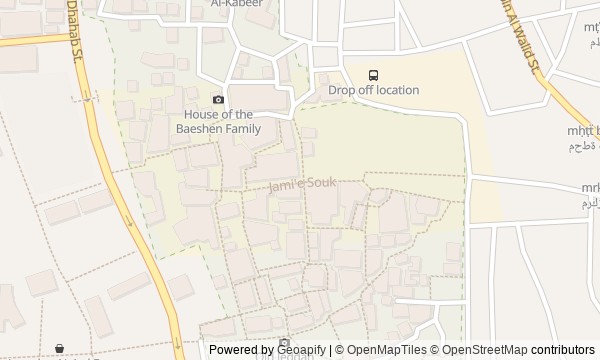
About the walk
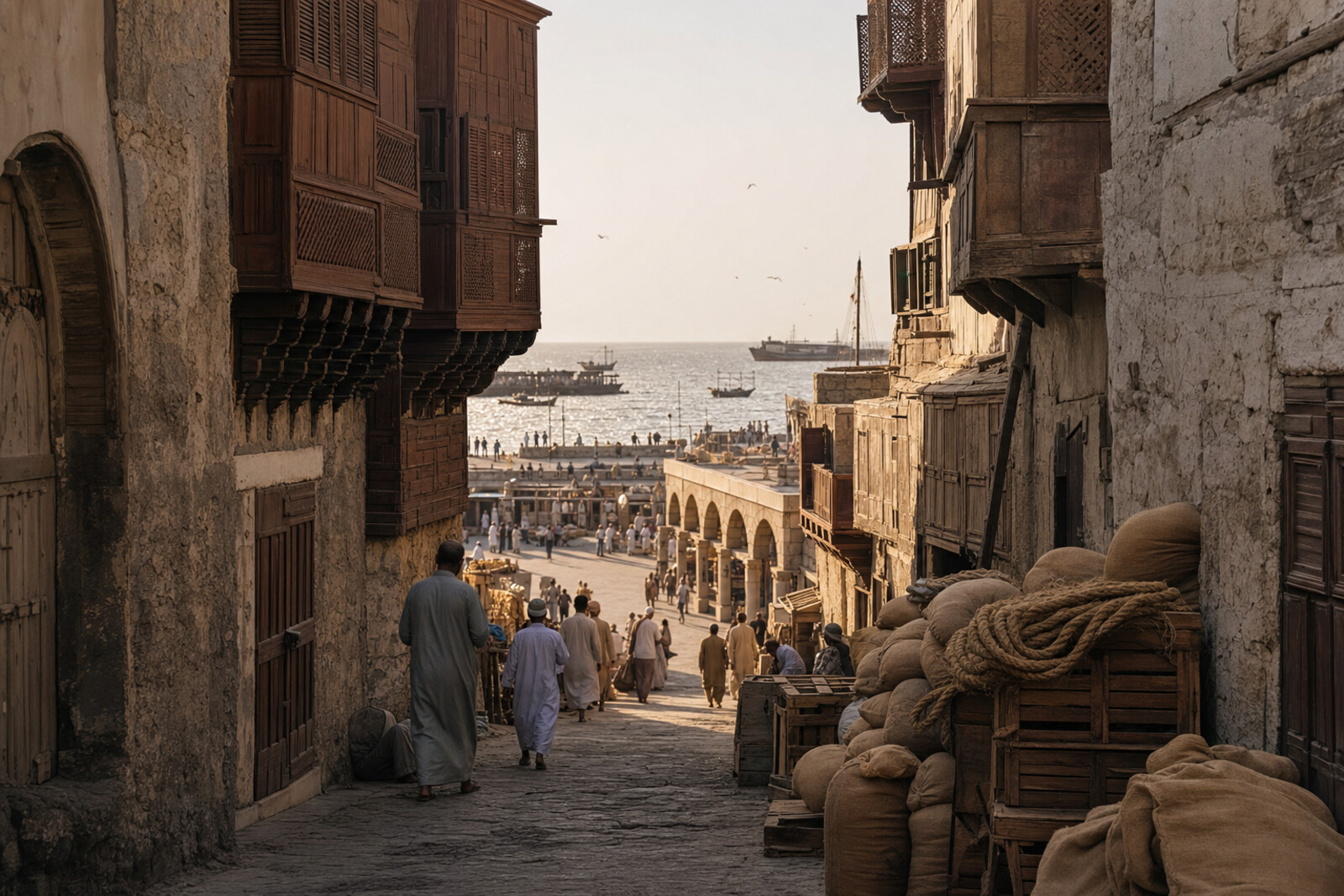
You will cross Al-Balad against the old movement of pilgrims: from the eastern gate where the road to Mecca began to the former Red Sea landing place. First come a caravan market and the closed facade of a ribat. Then an active mosque, trading rows, 2 merchants' houses, and a street born from a deal made during a siege. Behind the familiar roshans, the city of everyday calculations comes into view. Here people hired animals, checked sacks of grain, provided rooms for women with nowhere to live, and decided who would pass through the port. The story stays with such small acts. It does not turn the Hajj into ceremonial scenery, and it separates what is documented from local versions. By the end, you will be standing at a gate with dry land in front of it now. After the walk, you will be able to read Al-Balad as Mecca's port: through its markets, doors, warehouses, and the route from the sea to the eastern wall.
Why this order
The route follows the historical flow of pilgrims in reverse—from the landward exit to the entrance from the sea. From Bab Makkah, you will head northwest to the ribat: just beyond the caravan square, the fate of those with nowhere left to continue becomes visible. Then you will return to Al-Shafi'i Mosque, where the closeness of shelter and mosque connects a private endowment with the city's religious duty. From the mosque, you will go down to Al-Alawi Market, because this was where people arrived between the port and the eastern gate. Inside the market, the entrance to Matbouli House shows where the money to receive pilgrims came from. The next house, Nassif House, expands private hospitality into political reception. From there, Kabil Street leads to the Al-Shona warehouses: household trade becomes urban infrastructure. The final western stretch reaches Bab al-Bunt, where the whole corridor began with a boat, an inspection, and a payment.
Those who want to understand Al-Balad through the Hajj and trade Those interested in merchants' houses as part of an urban system Those who enjoy dense stories built from documents, objects, and disputed versions
Those looking only for an overview of roshans and beautiful facades Those who need a short route through the main photo spots Those who do not want to connect religious history with trade, housing, and port control
Before you go
Bring water, comfortable shoes, and sun protection: a substantial part of the route runs along open, busy streets. Choose modest clothing for the mosque, do not disturb prayer, and ask about access rules on site before entering. Merchants' houses and the ribat can be meaningfully explored from outside; do not treat the option to enter as an essential part of the walk. Check Red Sea Museum visiting conditions separately on the day of the route. Keep passageways clear in the markets, watch your belongings, and ask permission before photographing vendors or visitors.
When to go
The main route takes about 3 hours 30 minutes. If you would like to explore the Red Sea Museum in more detail, add up to 45 minutes; the total duration will be about 4 hours 15 minutes.
Backup plan
If the mosque, ribat, or merchants' houses are not accessible inside, continue in the same order: their role emerges through their facades, materials, and connection to the street. If the museum is closed, finish the walk at the Bab al-Bunt building, look at the combination of coral masonry and the later roof, and reconstruct in your mind the chain from landing to Bab Makkah. In that case, it is best to move the museum visit to another time without rearranging the rest of the route.
Route conditions
Surface. Paved — 996 m (data covers 32% of the route)
Facilities. Toilets — 1
Elevation. Ascent — 34 m; descent — 37 m
OpenStreetMap extract of July 3, 2026: database data, not a check on the ground. Data © OpenStreetMap contributors, ODbL licence
Walk plan
Open in maps ↗- 1
Bab Makkah
Here, the eastern edge of the pilgrimage corridor and the choice that began at the city gate come into view. - 2
Ribat Al-Khunji Al-Kabir
This stop shows how a merchant waqf turned a city house into separate housing for women without support. - 3
Al-Shafi'i Mosque
Here you will encounter a surviving building and an unrealized plan for its permanent upkeep. - 4
Al-Alawi Market
The market will explain how waiting for a favorable wind turned newcomers into traders and residents of Jeddah. - 5
Matbouli House
The house will connect grain inspection, family income, and a month of free hospitality for pilgrims. - 6
Nassif House
Here you will see how mercantile hospitality helped the owner retain his role after the change of power. - 7
Kabil Street and Al-Shona
This point connects a siege-time transaction, the city’s warehouses, and the emergence of an electrified commercial passage. - 8
Bab al-Bunt and the Red Sea Museum
The finale will bring the walk back to the seaward entrance, where the journey began with doctors, customs, and payment.
Route features
Everything you need stays in the browser
Progress, saves and your trip plan are stored on this device.
Add Guide On Map to your home screen so the walk opens outside the browser.
How we handle sources, maps and corrections: our editorial standards