 Guide On Map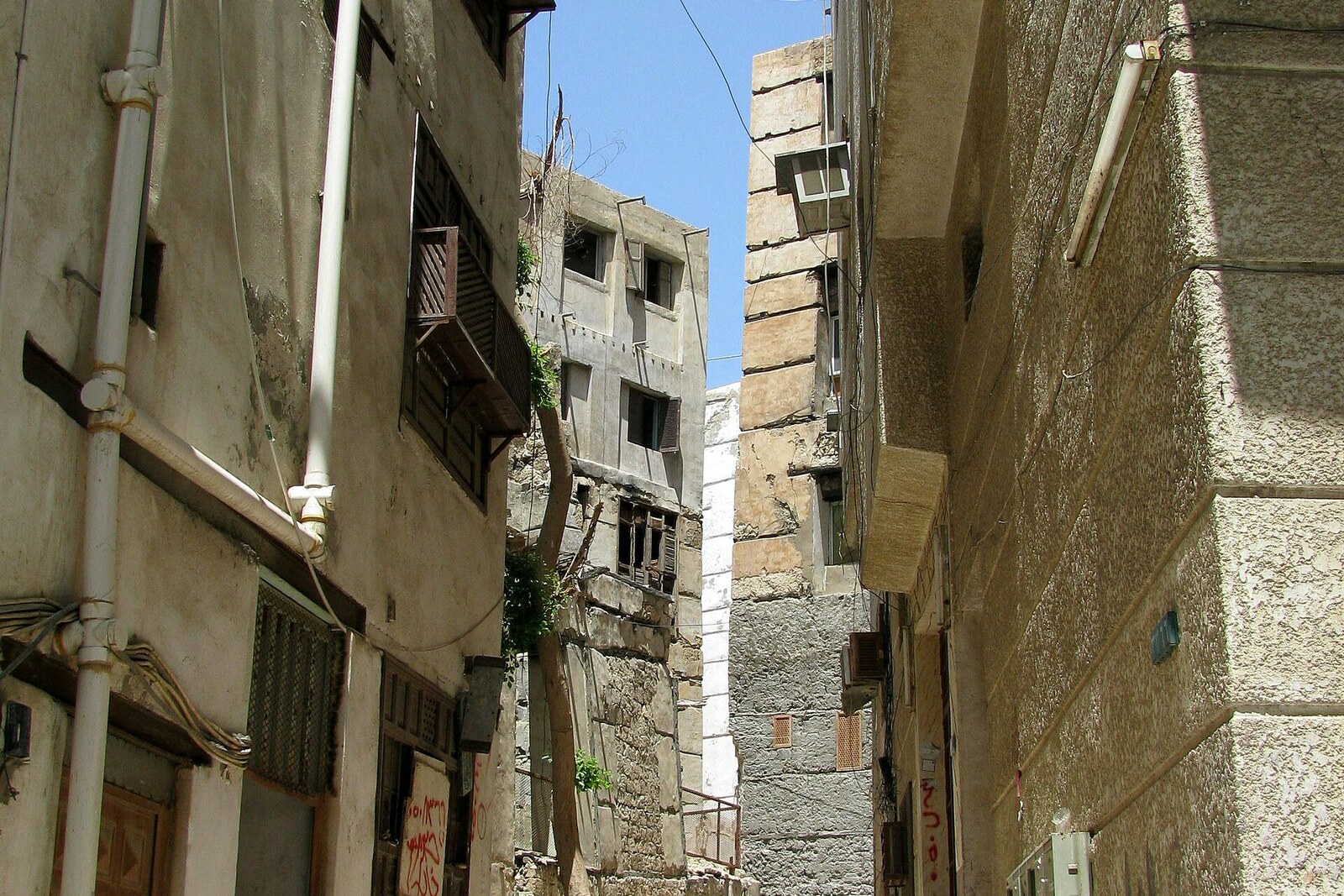
Look around first
What to notice
- Shops selling spices and herbs
- Rolls of fabric
- Sacks of grain
- Household utensils
The story of the place
In the nineteenth century, some Al-Alawi traders arrived here as pilgrims and had no intention of staying in Jeddah at all. They sailed from India, Southeast Asia, and East Africa, performed the Hajj, and then waited for a favorable wind for the return voyage. Sailing vessels depended on the monsoon, so the wait could stretch on for months. For that time, they needed lodging, food, and an income. Some pilgrims hired themselves out to merchants or traded in goods they had brought with them; some never boarded a ship home, married, and settled in the city.
Their surnames later showed where their ancestors had come from: Baghdadi from Baghdad, Isfahani from Isfahan, Bukhari from Bukhara, and Takruni from West Africa. The traveler Johann Ludwig Burckhardt, who found himself in Jeddah in eighteen fourteen, noted that most residents were people from other countries and their descendants, and that they lived mainly by trade. In ordinary times, between ten and twenty thousand people were inside the walls; during the Hajj, the population could increase severalfold. Some needed to hold on until departure, others needed to earn money for the journey home, while still others were already looking for a place in the city.
Merchants gathered specifically at Al-Alawi because of the direction of the flow of people. From the harbor, pilgrims walked along Kabil Street, passed through this entire market, and emerged at Bab Makkah. Residents of eastern Jeddah came here by side alleys. That is why shops selling food, grain, fabrics, and household utensils opened along the road, while merchant houses and warehouses stood behind them. A pilgrim delayed by the wind could simultaneously look here for supplies, a buyer for his goods, and work with someone who had once arrived by sea himself.
Steamships in the second half of the nineteenth century made waiting for the monsoon unnecessary, and direct airport transport to Mecca in the twentieth century shortened pilgrims' stays in Jeddah. The descendants of those newcomers who had settled here remained, and Al-Alawi continued to trade. Today there are especially many shops selling spices and herbs, fabrics, clothing, grain, and household utensils—goods for city residents and for pilgrims buying gifts before departure.
The origin of the name survives in two local versions. According to one, the market was named after the sayyid— a descendant of the Prophet Muhammad—Abu Bakr ibn Ahmad al-Alawi of the Ba 'Alawi family. He is buried in a small cemetery in one of the market's alleys; his death is dated to the beginning of the eighteenth century. According to the other version, the name was given by several al-Alawi families who owned property here. There are still not enough documents to choose between a single burial and family property holdings. The cemetery lay in an alley, merchant houses stood along the street, and the surname of people who settled in Jeddah remained attached to the entire market.
Useful on site
The street axis is accessible at all times; the hours of individual shops vary, and during prayer many close or shorten their hours.
Checked: date not specified. Check the official source before visiting.Stay at the edge of the passage, do not block the work of the shops, and ask people before photographing them. A purchase is not required to continue the route.