 Guide On Map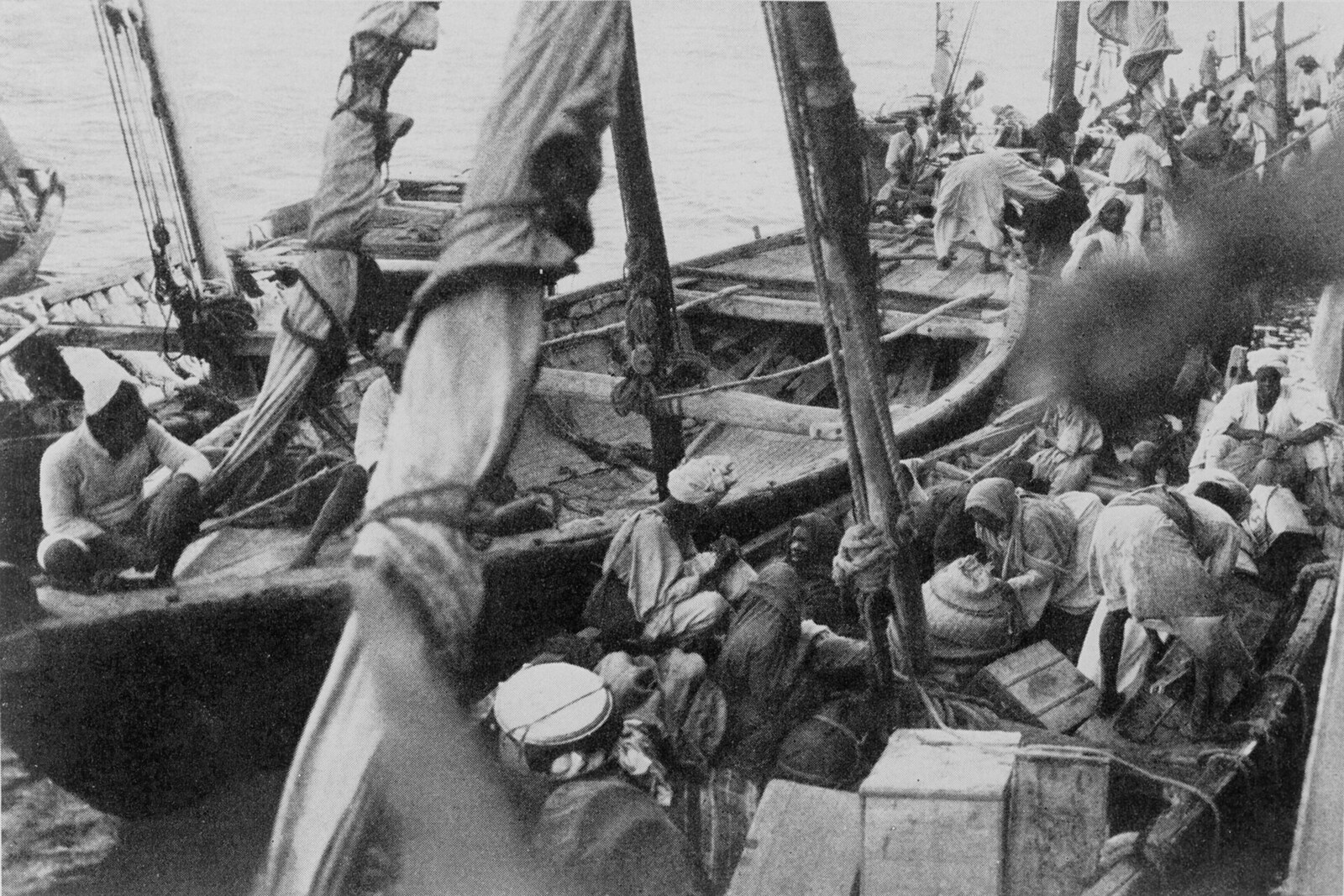
Look around first
What to notice
- Double arches
- Large iron anchor
- Archival photographs of the pier
- Strip of dry land in front of the building
The story of the place
The Red Sea Museum occupies the building at Bab al-Bunt, where the sea route ended at the city gates. The sea now lies to the west beyond a reclaimed strip of dry land, though the edge of the pier once reached the double arches. The building was later expanded for port services, and after restoration its halls display a large iron anchor and old photographs of boats by the shore. “Bab” means “gate,” while “al-Bunt” is linked either to a neighboring money changers' market or to a seal on port papers.
In nineteen oh one, the Egyptian general Ibrahim Rifaat Pasha stepped ashore here from a pilgrim steamship and saw a queue that would have to stand all night. He commanded the military escort of Egyptian pilgrims and was responsible for ensuring that the people and their luggage got from here to Mecca.
Steamships could not pass through the coral reefs and anchored about two miles from shore. Local boatmen transferred passengers into sambuks—small sailing vessels—and brought them to the quarantine pier. Here doctors examined the arrivals, officials collected the quarantine fee and payment for permission to continue the journey, and then people and luggage passed through customs.
There were at least six hundred pilgrims aboard Rifaat's steamship. Each was required to pay eight piastres for quarantine and another two for a travel document. Processing one person took about five minutes. While officials wrote down names, accepted coins, and issued receipts, the pilgrims waited on the damp ground by the pier. They still had the road to Mecca ahead of them, but the same travel money was also needed to pay the boatmen and porters. Arguments over payment began before a person had time to enter Jeddah.
Rifaat proposed that the Egyptian government collect these sums in advance and transfer them in Jeddah as a single payment. Two years later, he returned as Emir of Hajj—the head of the entire Egyptian pilgrimage caravan. With the governor of Jeddah, Ali Yamani Bey, he agreed that the people under his escort would be released from the port before individual payment was made.
For each person, Rifaat printed a card with a serial number and the words “pilgrim of the Egyptian caravan.” As people left the port, the cards were collected and placed together. Rifaat then counted them and paid the total sum for the whole group. Separately, he made advance arrangements with the owners of the sambuks and the porters. Examination by doctors and customs officers remained, but for his pilgrims, the overnight queue and payments at the pier ceased.
The word “bab” means “gate.” The origin of the name “al-Bunt” remains disputed. One version links it to a nearby money changers' market; another, to a seal or imprint on port and customs papers. Both versions concern the procedure here: a person stepped off the boat, presented money and documents, and only then entered the city.
The present building took on its larger form later. In nineteen thirty-three, by order of Abdulaziz, port services, customs, and quarantine were combined in an expanded building. In December two thousand twenty-five, after restoration, the Red Sea Museum opened here. Its exhibits include a large iron anchor and archival photographs of the pier, boats, and medical post.
The sea has now been pushed westward by reclaimed land. Dry land lies before the double arches, but in Ibrahim Rifaat's time the quarantine pier ended here: boats waited on one side, and Jeddah began on the other.
Useful on site
Official information conflicts: the Ministry of Culture lists Sunday–Friday 10:00–22:00; the Historic Jeddah website says closed Monday, Tuesday–Sunday 10:00–22:00. Check on the day of your visit; price and registration may change.
Checked: date not specified. Check the official source before visiting.Visit the museum only when access is available and under current rules; it can be left for a separate visit. From outside, compare the building with the present shoreline.