 Guide On Map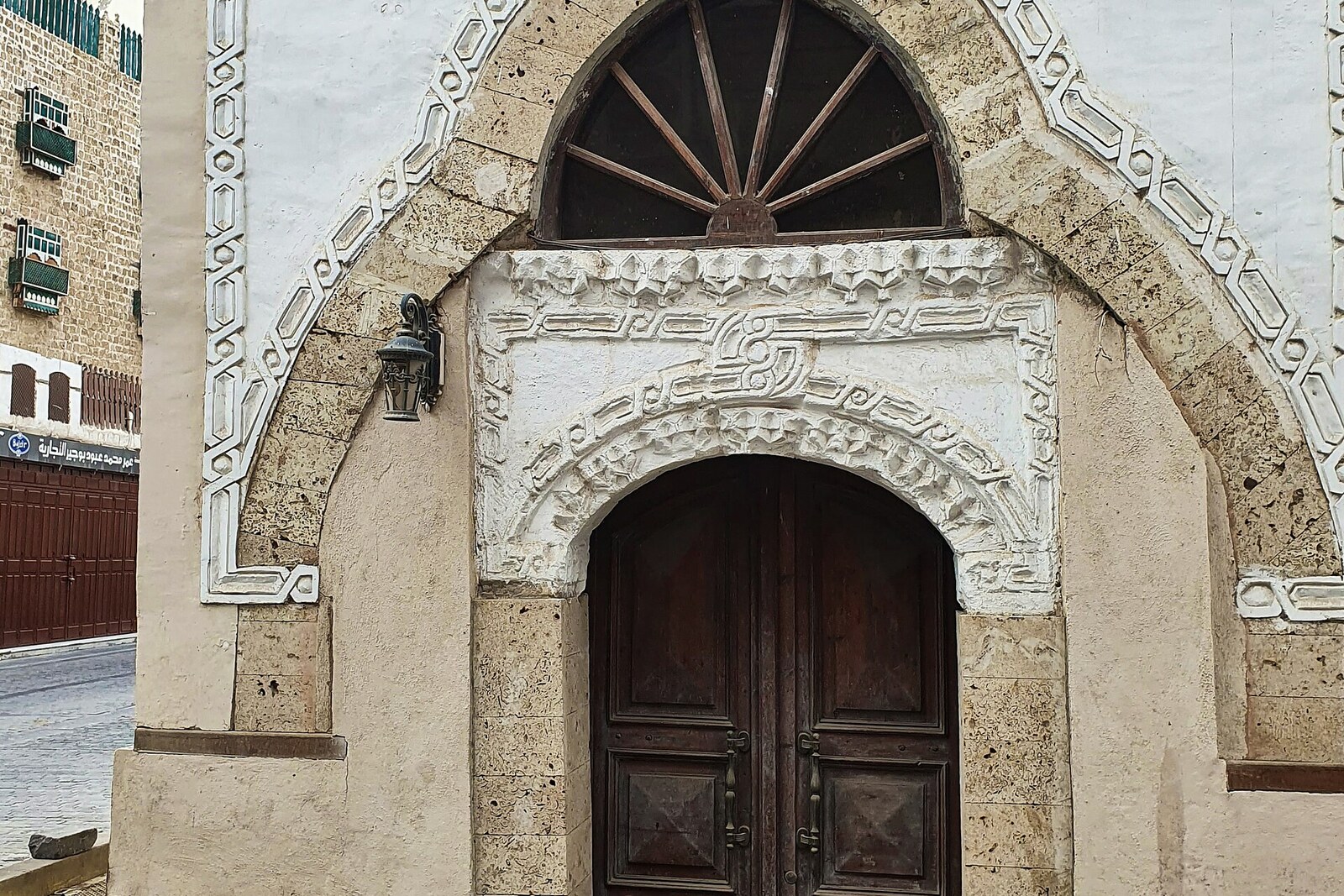
Look around first
What to notice
- Octagonal minaret
- Plaque above the southern entrance
- Wooden columns with floral patterns
The story of the place
Wooden arcades run beneath the vaults of the prayer hall, and columns with floral patterns hold them above the floor. Shafi'i law was taught here, so the mosque became associated with the jurist's name, although there is no evidence that he came to Jeddah. Houses and shops once operated around it, and their income was meant to pay for repairs and everyday needs. The octagonal minaret remained from an earlier building and survived its reconstruction.
In fifteen thirty-three, the Indian merchant Muhammad Ali arrived in Jeddah. He made his living through long-distance trade, but he brought here not goods for sale: money collected from several Indian viziers and wooden columns delivered from India via Yemen. The merchant intended to rebuild the old city mosque.
Its early history is not entirely clear. Local tradition dates the mosque's foundation to the time of Caliph Umar ibn al-Khattab, but the building erected here in the thirteenth century is documented more reliably. By Muhammad Ali's time, it already needed complete reconstruction. The merchant dismantled the former rooms and rebuilt them, retaining the old octagonal minaret. Indian carpenters carved floral patterns on the imported columns; these supports formed the inner arcades of the prayer hall.
Muhammad Ali also provided for how the mosque would be maintained after his departure. Around it, he built houses and shops and placed them in a waqf—property whose income was intended for the mosque's ongoing expenses. Tenants would trade, residents would pay for the houses, and the attendants would receive money for repairs and everyday needs without a new collection of donations.
After the merchant's death, his daughter declared these houses and shops to be family property. Sources have not preserved her arguments, but they report the outcome: the property was transferred to her. The daughter received the real estate, and the mosque lost the permanent income her father had provided for. Thus the merchant's plan survived only halfway: the building he constructed remained, while the maintenance system he created collapsed.
The name Al-Shafi'i Mosque refers to another person. Muhammad ibn Idris al-Shafi'i was a Muslim jurist of the eighth and ninth centuries; his students created one of the four main schools of Sunni law. There is no evidence that he visited this mosque. It was named in his honor because Shafi'i teaching was taught here. Its former name was Al-Jami al-Atiq, the Old Congregational Mosque. After the last major restoration, it reopened for prayer in twenty fifteen, but it never became a museum monument.
Above the southern entrance, a plaque survives with Muhammad Ali's name and the date—fifteen thirty-eight. Beyond the entrance stand the Indian columns he brought, and nearby rises the minaret—the only major part of the old mosque that the merchant did not rebuild.
Useful on site
Accessible from outside at all times; entry inside depends on prayer times, the decision of the attendants, and rules for non-Muslims. There is no tourist schedule.
Checked: date not specified. Check the official source before visiting.This is a place of prayer: observe silence, modest clothing, and the current entry rules. Do not disturb worshippers to inspect details.