 Guide On Map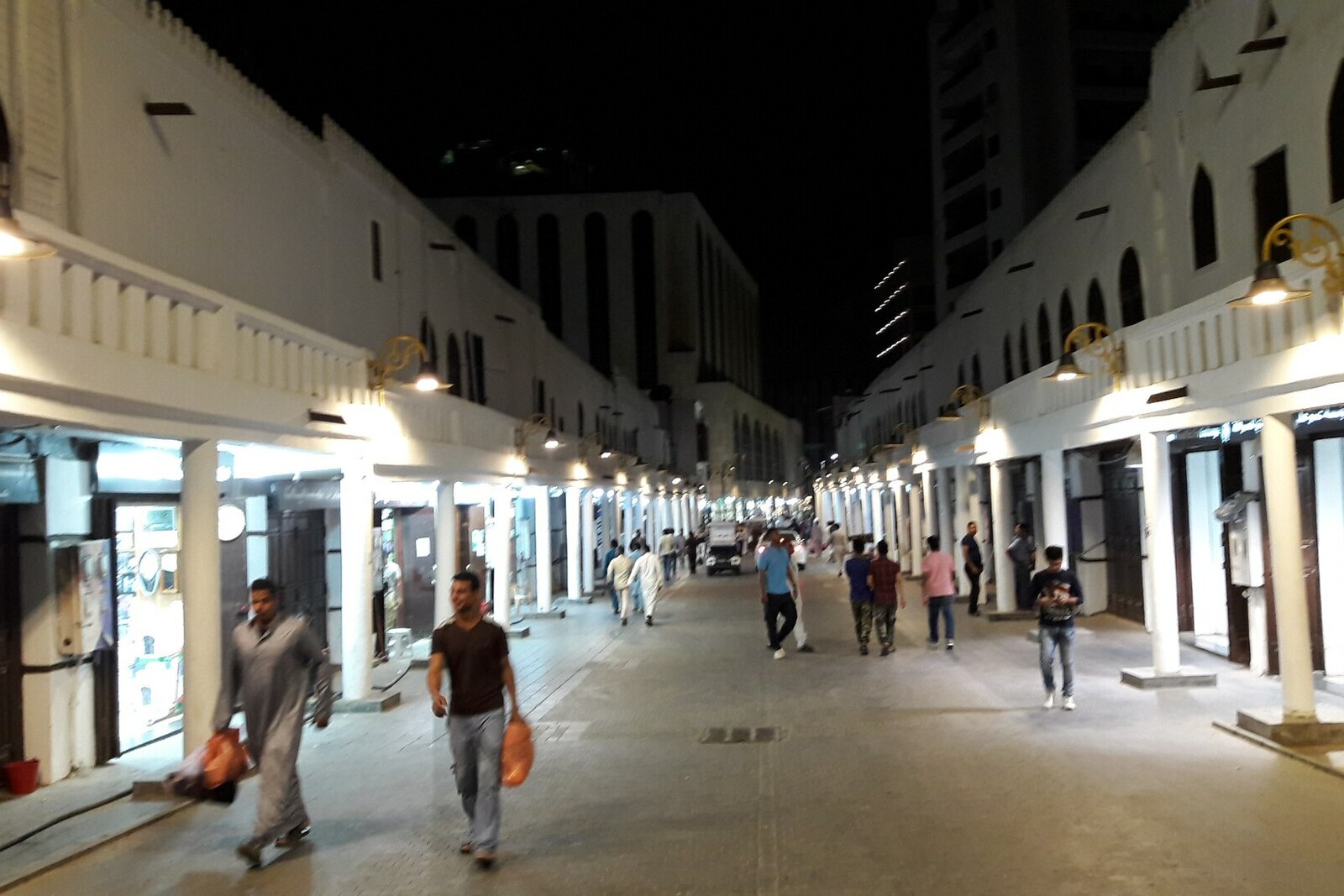
Look around first
What to notice
- Uncovered walls of Al-Shona
- Remains of a tower with loopholes
- Metal vault
- Iron columns
The story of the place
South of Kabil Street, the walls of Al-Shona have been uncovered. This was what a warehouse complex, above all a granary, was called in Jeddah. In the nineteenth century, officials kept grain, timber, and ammunition here; later, merchants stored fabrics, spices, and food supplies brought by sea. In the northwestern corner, archaeologists found the remains of a tower with loopholes, four iron cannonballs, and a stone cannon projectile. They cautiously link the early structure to the fortifications the Mamluks built because Portuguese ships had appeared in the Red Sea. The fortress then became a warehouse, and part of the commercial street occupied its ruins.
The street itself was laid out by Sharif Hussein ibn Ali, ruler of Hejaz. It did not yet have its present name. That name appeared in nineteen twenty-five, when Hussein’s son, Sharif Ali, was trying to hold besieged Jeddah. He needed money and provisions for his soldiers. Ali sold the commercial passage to the merchant Suleiman Kabil, receiving part of the payment in supplies.
This purchase did not save the ruler: in December, Ali surrendered the city. The street remained with Suleiman and took the surname of its new owner.
Kabil made money from sugar, tea, rice, grain, and other goods whose shortage during wars could ruin a supplier within a few weeks or make his fortune. The market he bought was an open passage lined with shops. Kabil invested money in it, hired a German firm, and covered the street with a high vault of corrugated metal supported by iron columns. The height was needed because offices stood above the shops. The merchant then brought in a large generator: every tenant received a lamp and a fan. Kabil personally supervised the work, and his market became Jeddah’s first electrified commercial passage. Tenants began competing for places under the roof; the family charged no fee to sellers who laid out their goods directly on the ground.
One such street money changer was Salim bin Mahfouz. Pilgrims and merchants brought him foreign coins, and he gave them silver riyals that could be used to pay in Jeddah and on the road to Mecca. Longtime market residents recalled that the business began with a small mat by Kabil Street. Later, bin Mahfouz’s currency firm merged with another exchange office and in nineteen fifty-three became the National Commercial Bank—the country’s first officially recognized bank.
Exchange offices still operate on Kabil Street. Nearby lie the uncovered walls of Al-Shona, where grain, goods, and cannonballs were once locked away; above them remains the name of the merchant who gave every tenant a lamp and a fan.
Useful on site
The street is accessible at all times; viewing of sections of Al-Shona depends on restoration and archaeological work. Shops operate on individual schedules.
Checked: date not specified. Check the official source before visiting.View the commercial passage and the warehouse as two different spaces; internal access to Al-Shona is not needed to understand this stop. Do not interfere with unloading or the work of the shops.