 Guide On Map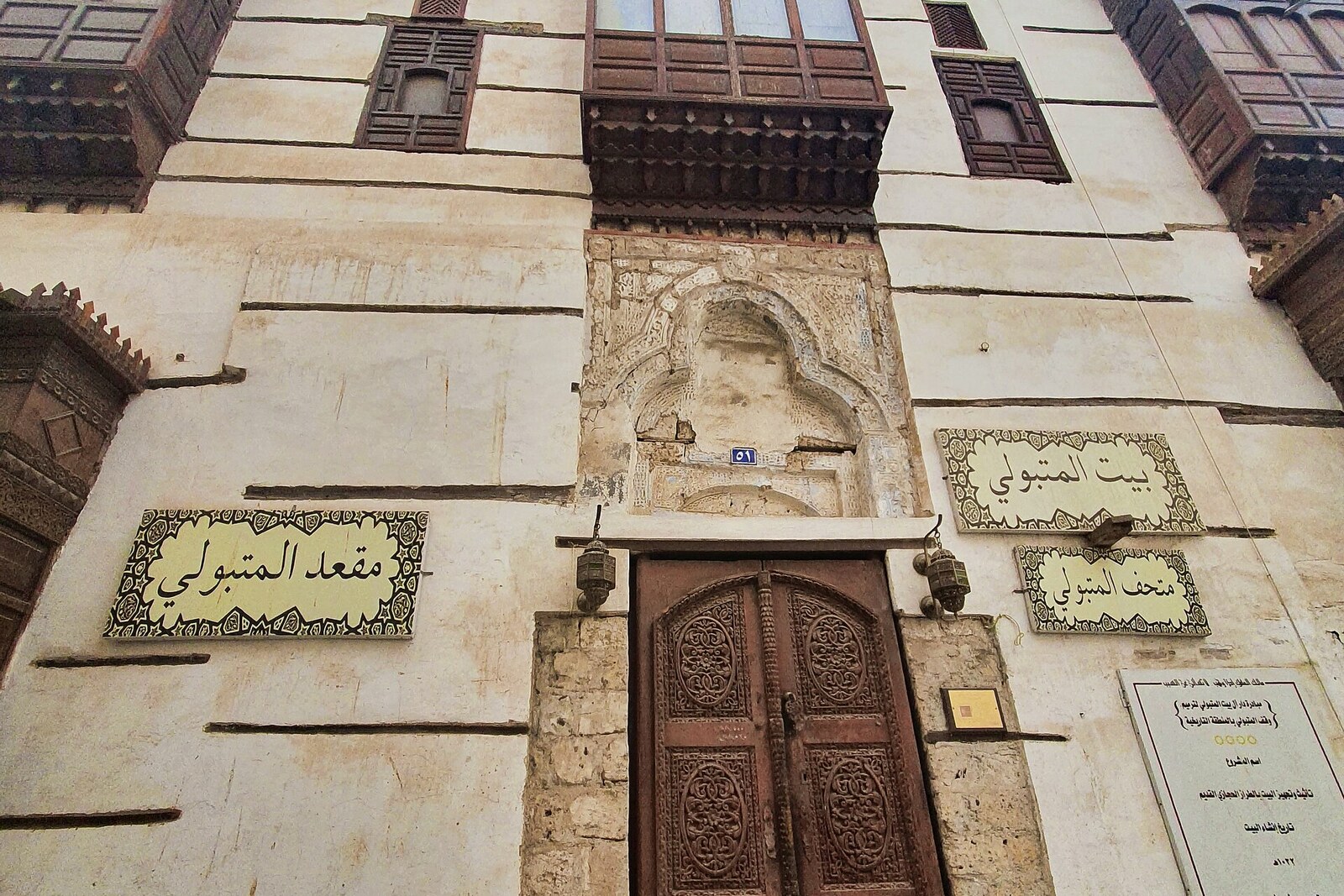
Look around first
What to notice
- Entrance from the market
- Reception hall
- Staircase to the second floor
- Bait Al-Khazin storeroom
The story of the place
The house bears the name of the Matbouli family, who lived and traded here for about four hundred years. According to family and city tradition, it was built in the early seventeenth century by the merchant Mahmoud Matbouli. He chose a site by Al-Alawi Market: goods passed almost at the doorstep, and pilgrims stopped in Jeddah before continuing their journey.
For one month of the Hajj season, the Matboulis gave part of the house to arrivals and paid for their upkeep. The family served as pilgrim agents: they met the people entrusted to their care, housed them, and were responsible for them during their stay in the city. The lower rooms were set aside for guests, while family life continued on the floors above. On the second floor was Bait Al-Khazin, a storeroom with supplies for the season. Water was collected in two reservoirs beneath the house. A month of hospitality required food and water every day, and the Matboulis did not pass the costs on to the pilgrims.
How the family earned its living is known from the account of one of the heirs, Tariq Matbouli. His grandfather was the head of the city’s grain merchants and made sure that goods reached the market with verified weight and quality. Merchants brought sacks directly into the house’s reception hall. Here, Tariq’s grandfather weighed the grain, inspected it, and stamped the sacks before they were sold. He himself earned his living through trade, so along with the stamp, he put his own reputation on the goods. After inspection, the sacks returned to the market, and the income from the trading house made it possible to support a large family household and receive pilgrims.
Later, the rooms were rented to tenants, and then the house remained closed for about twenty years. The Matbouli descendants decided to return it to the public: the engineer Samir Asaad Matbouli led a restoration that took almost a year. The family refurnished the rooms and opened a private museum.
From Al-Alawi Market, the entrance still leads into the former reception hall; one floor above, Bait Al-Khazin survives. Below, Tariq’s grandfather stamped sacks of grain; above, the family kept supplies for the month of guests.
Useful on site
The façade is accessible from the street; as of the date of verification, there is no reliable official regular schedule for the interior. Entry is possible only when the site is explicitly open.
Checked: date not specified. Check the official source before visiting.If you cannot get inside, focus on how the roshans provide shade, air, and privacy. An interior visit requires separate confirmation of access.