 Guide On Map
Nizamuddin: From the Basti to Mughal Gardens
From Hazrat Nizamuddin Auliya Dargah to Sunder Nursery
Guide On Map on your phone
Open the walk like a regular app
It takes about 10 seconds to install. No app store needed.
The whole path
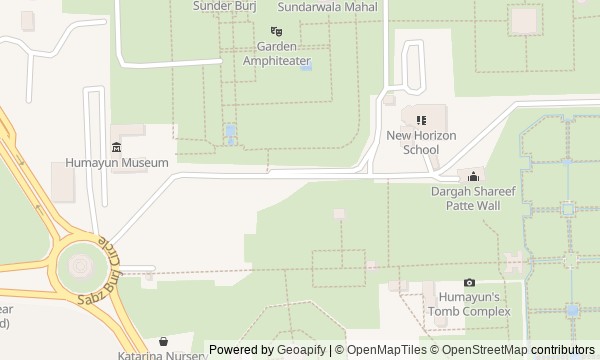
Route map
About the walk
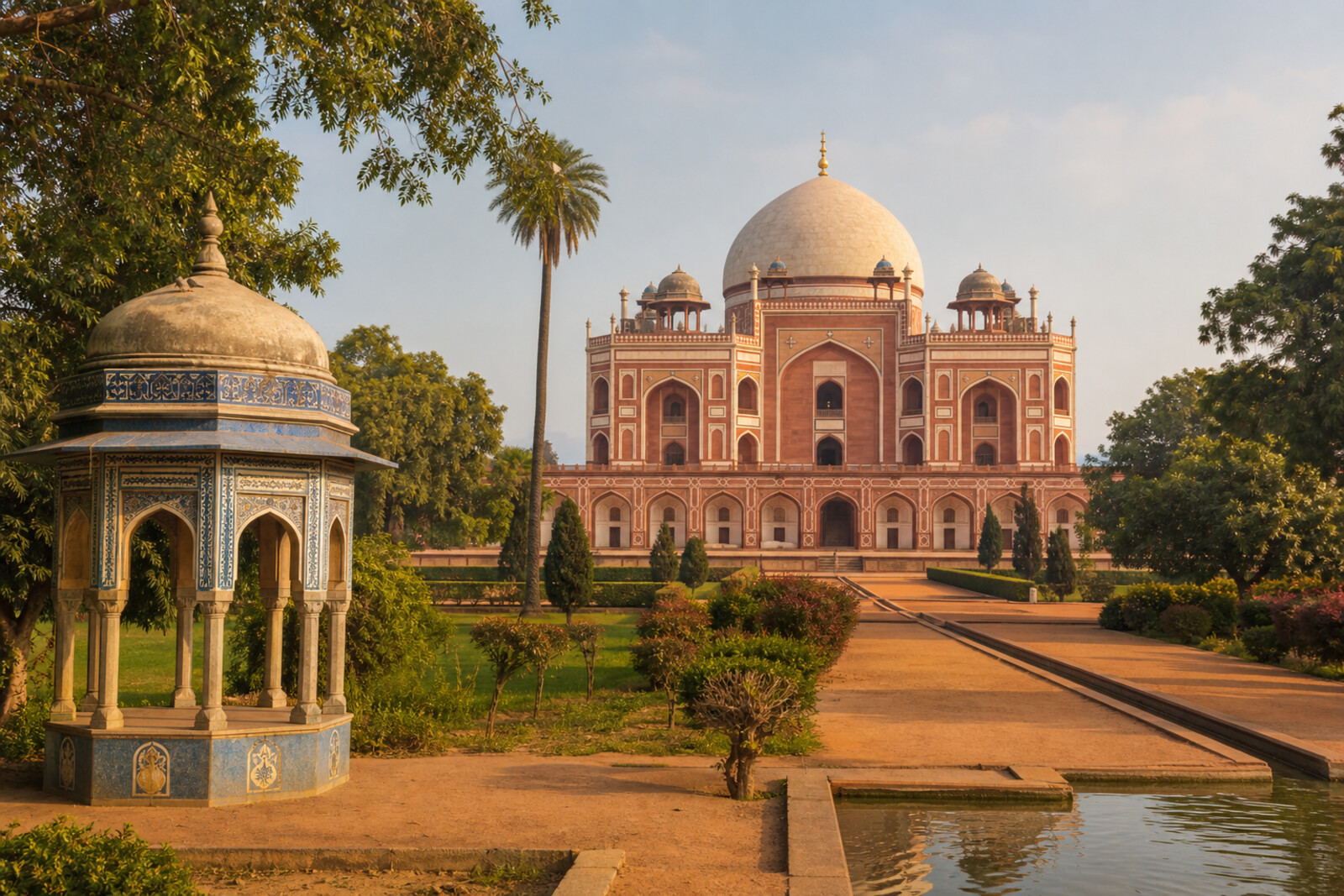
You will begin in Nizamuddin Basti, the neighborhood that grew around a Sufi shrine. From its narrow streets, you will enter the courtyard of Hazrat Nizamuddin Auliya Dargah, then find yourself among white marble, turquoise domes, and garden tombs. After the great imperial complex, the road ends at Sunder Nursery, where old mausoleums stand among new avenues, water features, and a working nursery.
You will learn why someone returns a deed to gardens, why paint is sought beneath later plaster, and why restorers rebuild letters but leave part of a pattern blank. The story will be calm and concrete: people's decisions will be tested against columns, inscriptions, tiles, and unmarked tombstones.
By the end, you will be able to distinguish in Nizamuddin a living shrine, family tombs, an imperial necropolis, and monuments around which architects have laid out an urban park anew.
Why this order
The route begins in the Basti because without the settlement that grew around the khanqah, Hazrat Nizamuddin Auliya Dargah would seem like a separate monument rather than the center of a living neighborhood. From the dargah, you will go straight to Chausath Khamba: the neighboring family tomb shows how proximity to a revered grave came to determine burial sites for the elite. After the white-marble hall, you will leave the dense development for the freestanding Sabz Burj, where the district's story continues through early Mughal architecture and its restoration. Next comes Isa Khan's Tomb: it predates neighboring Humayun's Tomb and lets you see the shift from Afghan to Mughal rule in the right sequence. From the family tomb of a courtier, you will move on to the imperial necropolis, then to Sunder Nursery, where mausoleums become part of a modern park design. The final Sunderwala Burj explains the nursery's name and brings together the route's two threads: old burial gardens and the work of restorers today.
Those who want to see a living shrine, an imperial complex, and a modern park side by side Those interested in human decisions preserved in inscriptions and architecture Those who enjoy restoration stories without museum pomp
Those looking for a walk limited to postcard-perfect sights Those who do not want to enter an active religious setting Those who need a route made up entirely of broad, open spaces
Before you go
Dress appropriately for an active shrine: cover your shoulders and knees, bring a light headscarf, and be ready to remove your shoes where required. At Hazrat Nizamuddin Auliya Dargah, do not treat prayer and music as a performance for tourists; ask permission before photographing people or religious activity. Do not treat the walk as one site with a single entrance: check visiting conditions for Humayun's Tomb Complex and Sunder Nursery separately. Bring water, sun protection, and comfortable shoes, but keep your belongings compact—the passages in the Basti are narrow and crowded.
When to go
Choose a cool morning if you want more time to study the architecture in peace, or the later afternoon, when side light brings out relief work, jalis, and domes. Allow yourself plenty of daylight: after the dense Basti, the pace naturally slows in the gardens.
Backup plan
If Hazrat Nizamuddin Auliya Dargah is too crowded or access is temporarily limited, do not try to squeeze through: explore the accessible part of the Basti, continue to Chausath Khamba, and leave the shrine for another time. If the interior of Sabz Burj is closed, view it safely from outside without stepping into the roadway. If individual spaces in Humayun's Tomb Complex or the park are inaccessible, the route still works through facades, gardens, and comparisons of silhouettes. In intense heat or rain, it makes sense to end the main part at Humayun's Tomb and save Sunder Nursery and Sunderwala Burj for a separate walk.
Route conditions
Surface. Paved — 1.4 km; unpaved — 154 m (data covers 47% of the route)
Access. Wheelchair — limited; stroller — limited
Facilities. Toilets — 4
Elevation. Ascent — 16 m; descent — 17 m
OpenStreetMap extract of July 9, 2026: database data, not a check on the ground. Data © OpenStreetMap contributors, ODbL licence
Walk plan
Open in maps ↗- 1
Nizamuddin Basti
Here you will learn how refusing a regular income created a place of food, shelter, and a new settlement around the khanqah. - 2
Hazrat Nizamuddin Auliya Dargah
This stop will show what happened to the teacher's request for a simple burial and why qawwali is heard nearby. - 3
Chausath Khamba
The white hall will connect a court murder, a separated family, and the choice of a site beside the dargah. - 4
Sabz Burj
Here, restoration becomes an investigation: some later layers will have to be removed, while genuine losses must not be concealed. - 5
Isa Khan's Tomb
The inscription preserves the name of the sultan whose side the courtier chose in the succession dispute. - 6
Humayun's Tomb
The imperial necropolis would become the place where one dynasty's power ended, but not all of its graves were gathered there. - 7
Sunder Nursery Park
The park will show how one project combined a working nursery, old tombs, and new public spaces. - 8
Sunderwala Burj
The final stop will explain why the restored inscription speaks of faith but does not name the person buried here.
Route features
Everything you need stays in the browser
Progress, saves and your trip plan are stored on this device.
Add Guide On Map to your home screen so the walk opens outside the browser.
How we handle sources, maps and corrections: our editorial standards