 Guide On Map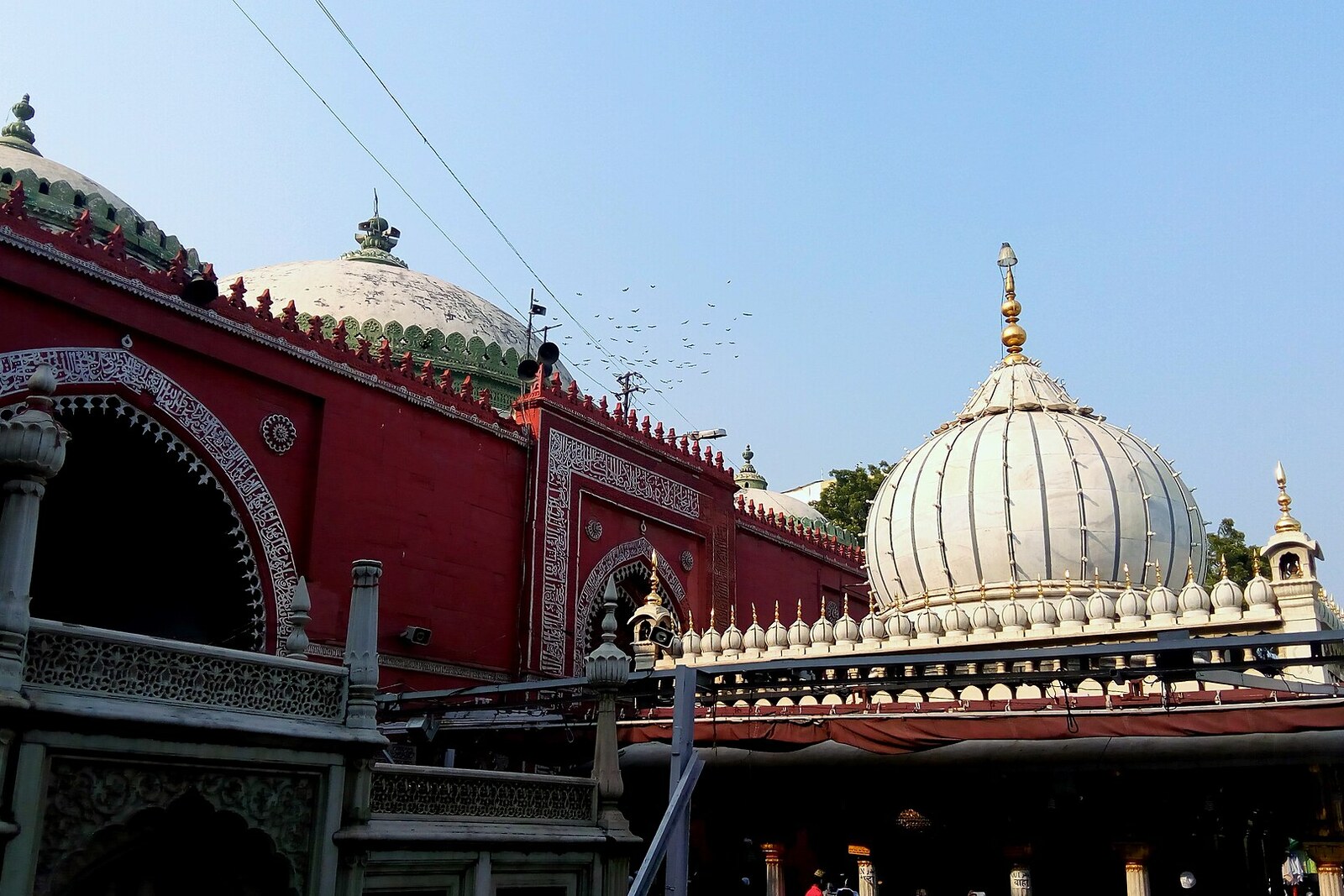
Look around first
What to notice
- Narrow lanes
- Multistory houses
- Patches of old cemeteries among the buildings
The story of the place
The neighborhood by the old course of the Yamuna formed around the dargah, a shrine above the grave of a Sufi saint. Before it, there was the village of Ghiyaspur here, with a khanqah: under one roof lived the teacher's family and his pupils, who prayed, studied, and received travelers. Caretakers and people serving pilgrims settled beside the shrine, and the old village's name gradually gave way to the name of this settlement. Today's narrow lanes, multistory houses, and cemetery plots among the buildings arose mainly when, after the partition of British India, Muslim families remaining in Delhi occupied vacant land and added floors to their homes.
In thirteen thirteen, Nizamuddin Auliya, a Sufi teacher who received pupils here and fed those in need, was sent a deed of gift for two gardens and a large tract of land. Along with the land, everything needed to run it was offered. Such a gift provided a regular income. Nizamuddin returned the deed of gift.
About thirty years earlier, he had settled in Ghiyaspur, a village by the then course of the Yamuna, far from noisy Delhi of the sultans. Such an outlying place suited a man who avoided court service and land grants. Here Nizamuddin established a khanqah: a house where a Sufi teacher lived with his family and pupils, prayed, taught, and gave shelter to guests.
The house consisted of small rooms and a common hall. Nizamuddin himself lived in a cramped cell on the roof. Donations were accepted, but the money and food received had to be distributed by the end of the day. No stores were kept for the next day. These gifts sustained the langar, a free communal kitchen.
Refusing the land was a real risk: the next meal depended on whether anyone brought money or grain. Nizamuddin had known such uncertainty since childhood. After his father died, his family was left with almost no means, and he knew hunger. He agreed to live without a guaranteed income, but then neither ruler nor landowner could decide whom to feed or admit to the khanqah.
Merchants, soldiers, slaves, court poets, travelers, and beggars came here. They ate in one house and turned to one teacher. When people from the surrounding area feared another Mongol attack, they took shelter behind the khanqah's enclosure. The house created through voluntary gifts became their literal refuge.
After Nizamuddin died in thirteen twenty-five, his pupils buried him nearby. A dargah, a shrine to a Sufi saint, appeared above his grave. At first, the families of caretakers lived beside it; then people who served pilgrims settled there. Ghiyaspur was increasingly called by the name of the man people came here to see. The word “basti” means settlement, while “Auliya” is an honorific name for a saint. Nizamuddin Basti literally means Nizamuddin's settlement.
The medieval neighborhood remained small for a long time. Its present density arose mainly after the partition of British India in nineteen forty-seven. Muslim families who decided to remain in Delhi left neighborhoods engulfed in communal violence and sought a safe place. Many chose the land around the dargah: the memory of the old khanqah once again made it a refuge. Temporary residents built permanent houses on vacant plots among cemeteries; later, additional floors rose above them.
Free food is still distributed daily at the dargah. The gardens Nizamuddin refused never appeared at the khanqah. Yet the guests who were fed and sheltered here eventually gave old Ghiyaspur a new name.
Useful on site
The neighborhood is open around the clock; it is best visited during the day or in the early evening.
Checked: June 28, 2026. Check the official source before visiting.Do not block narrow passageways, and step aside when you want to stop. Near water and religious sites, follow local restrictions on access and photography.