 Guide On Map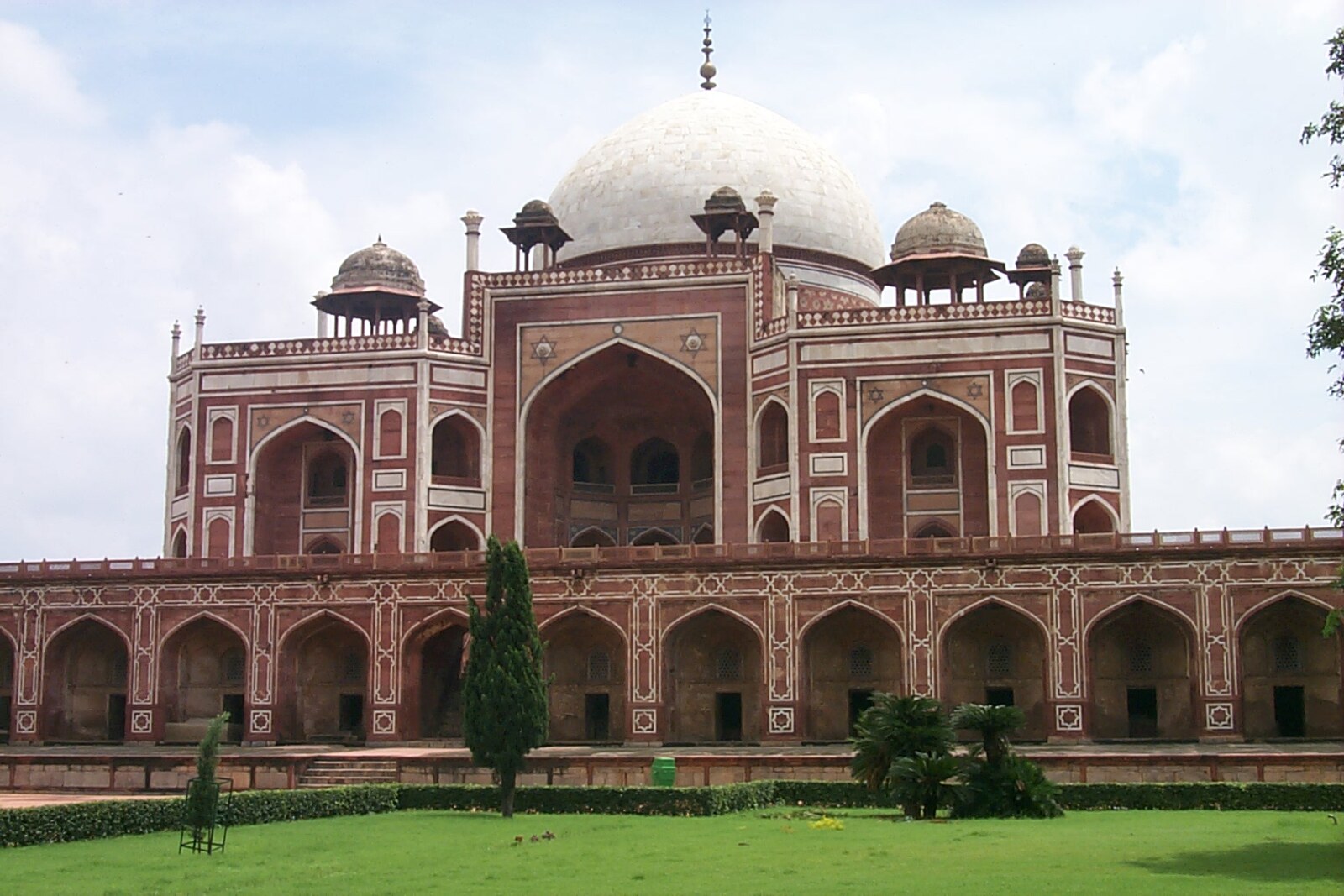
Look around first
What to notice
- The white central cenotaph
- Red sandstone facades
- The octagonal central chamber
- Numerous tombstones in the side chambers
The story of the place
Red sandstone facades surround the garden burial place that the senior wife of the second emperor of the Mughal Empire commissioned for her husband beside Nizamuddin Dargah. Proximity to a revered saint promised a blessing for the deceased, and by fifteen seventy work on the mausoleum had been completed. Deep inside the octagonal hall, a white cenotaph marks the emperor's grave, though his actual burial lies one floor below. Later, the place became a family necropolis, gathering about one hundred fifty burials of the dynasty's relatives.
On September twenty-first, eighteen fifty-seven, eighty-two-year-old Bahadur Shah Zafar waited inside the enclosure of this tomb for the outcome of negotiations. The last emperor of the Mughal Empire needed a guarantee that the soldiers of the East India Company would take him alive.
Before the uprising, Zafar maintained his court on a pension paid by the same Company. His orders barely extended beyond the walls of the Red Fort. Everything changed when rebel sepoys—Indian soldiers in the Company's army—entered Delhi and demanded that the old emperor lead them. Zafar agreed, although he had little control over the troops. When British units retook the city, he left the Red Fort and took refuge here, beyond the city walls as they stood then.
This was Zafar's family burial place. It was named after Humayun, the second emperor of the Mughal Empire. He lost his lands, spent years in exile, regained Delhi, and died in fifteen fifty-six, less than a year after his return. His senior wife, Bega Begum, ordered a mausoleum built for her husband beside Nizamuddin Dargah: burial near a revered saint was considered auspicious. By fifteen seventy, craftsmen had completed the enormous garden tomb. Relatives then buried other members of the dynasty here—about one hundred fifty graves ended up in its chambers and on its platform.
At the center of the octagonal chamber stands Humayun's white stone tomb marker. It is a cenotaph, an empty commemorative sarcophagus; the actual burial lies one floor below. It was around the grave of the founder of the family necropolis that Zafar, his wife Zinat Mahal, princes, courtiers, and soldiers gathered.
Zinat Mahal sought to save the lives of her husband and her son. She sent people to East India Company officer William Hodson, who had arrived to arrest the emperor. The negotiations lasted about two hours. Zafar agreed to surrender only after Hodson personally repeated the promise to spare his life. The emperor handed over his weapons, and the soldiers carried him back to the Red Fort in a palanquin—now a prisoner.
The next day, Hodson returned to the tomb for two of Zafar's sons and his grandson. They surrendered without a guarantee of safety. On the road to Delhi, Hodson personally shot all three. Zafar was tried at the Red Fort and sent with Zinat Mahal and her son to Rangoon—present-day Yangon. He died there in eighteen sixty-two.
Humayun's cenotaph still stands in the central chamber, while the neighboring chambers are filled with the graves of his descendants. Bahadur Shah Zafar's grave is not among them: it remained in Yangon.
Useful on site
ASI lists Humayun's Tomb as open from sunrise to 21:00; rates differ for online and ticket-office tickets, and children under 15 enter free.
Checked: June 28, 2026. Check the official source before visiting.Do not head straight for the stairs: first read the mausoleum through the garden's axes and the reflections in its channels. The climbs and open areas require comfortable shoes and sun protection.