 Guide On Map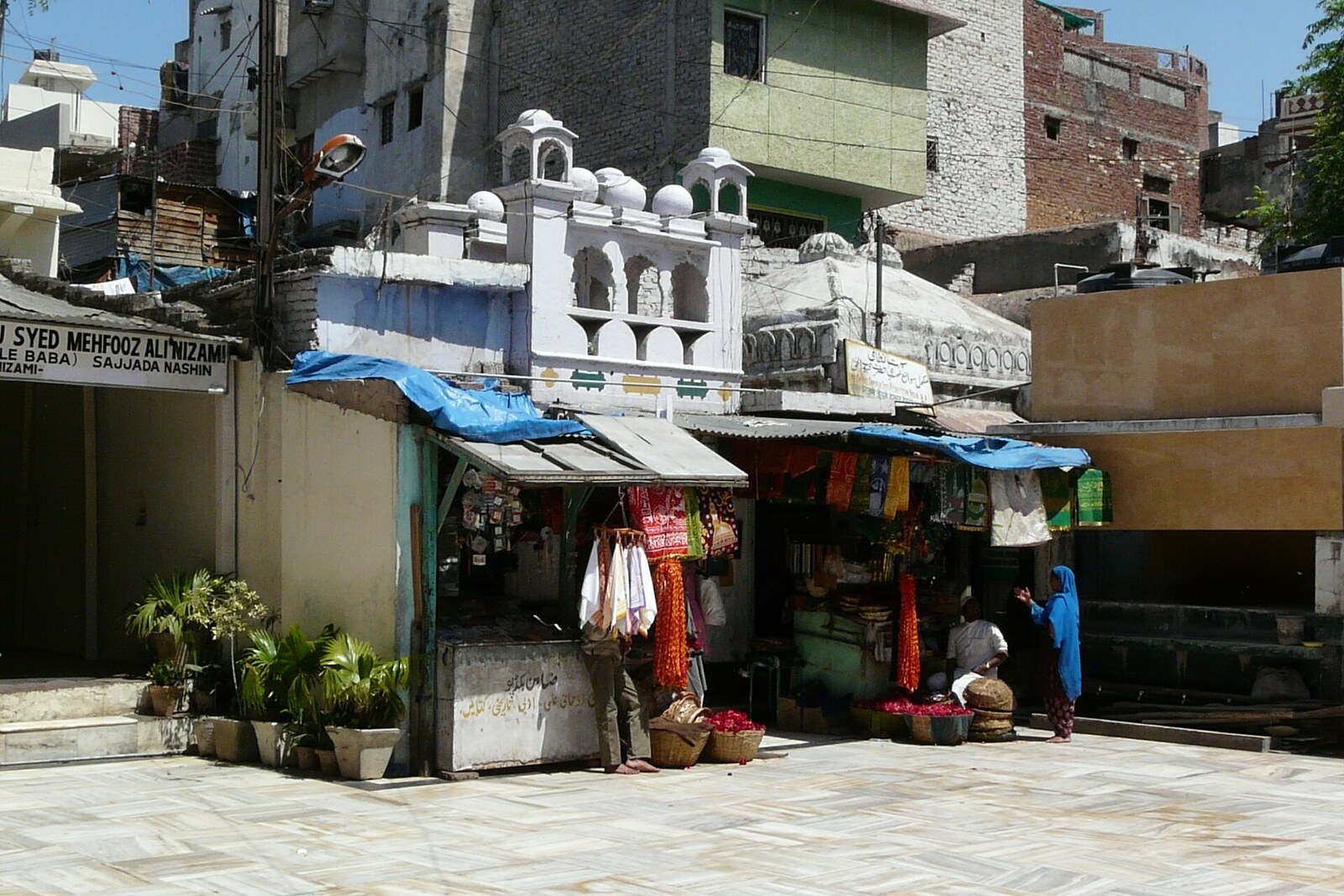
Look around first
What to notice
- White dome
- Marble screens
- Chadar coverings and petals
- Amir Khusrau's tomb opposite
The story of the place
Beneath the white dome stands the dargah, a shrine around the grave of a venerated Sufi saint. The present pavilion was built in the sixteenth century on the site of an earlier mausoleum and was later altered many times. Marble screens surround the tombstone, which pilgrims cover with chadar cloths and scatter with petals as they ask for barakat, blessing. Opposite rests the court poet Amir Khusrau, and on Thursdays qawwals sit between the two tombs and begin their singing with qaul.
Before his death in the spring of one thousand three hundred twenty-five, Sheikh Muhammad Nizamuddin asked his disciples to bury him in the open air, in the courtyard beside the congregational Jamaat Khana Mosque. He led the Delhi branch of the Chishti Order and tried not to depend on the sultan's court: he did not visit rulers, did not accept land grants, and his community lived on unsolicited donations. They distributed these without turning them into wealth, so a quarrel with the sovereign could leave the sheikh without protection or means.
The disciples carried out the request and made a simple open grave. But Muhammad bin Tughluq—the new sultan of Delhi—came to the funeral, deciding to honor publicly the man who had avoided sultans during his lifetime. He himself helped carry the funeral bier from the khanqah to the grave, and soon ordered the first dome to be erected over it. The burial remained open to the sky for only a short time.
Nothing remains of the first mausoleum. In the sixteenth century, a pavilion was built over the same burial place; after numerous alterations, it has survived to the present day. Beneath its dome and marble screens lies the man who had asked to do without a roof.
“Hazrat” in the name means “revered,” and “Auliya” means “friend of God,” that is, a venerated saint. A dargah is a shrine that has formed around such a person's grave. Pilgrims cover the tombstone with chadar cloths and petals, read prayers, and ask for barakat—blessing. The anniversary of a saint's death is called an urs, a “wedding”: Sufis understand it as a meeting with God, so people gather here both for prayer and for singing.
This music has a second burial place. Amir Khusrau was a court poet, earning his living by composing for sultans while also remaining Nizamuddin's disciple. His service took him on a campaign to Bengal at the very time his teacher died. Khusrau returned to Delhi; according to dargah tradition, he gave away his possessions and spent his days by the grave. Half a year later the poet died and was buried beside Nizamuddin, at his feet.
Khusrau gave a special form to Sufi gatherings for listening to poetry and introduced qaul, a chant based on a saying of the Prophet. The qawwals of this dargah still begin their performances with qaul. On Thursdays they sit in the courtyard between the two tombs: beneath the white dome is the teacher's grave, and opposite is the grave of the court poet whom service once prevented from reaching him in time.
Useful on site
Open daily approximately from 5:00 to 22:30; on Thursdays, qawwali continues until late at night. Admission is free.
Checked: June 28, 2026. Check the official source before visiting.This is an active shrine: follow the dress rules, remove your shoes in the designated place, and do not walk in front of people who are praying. Music may not be playing during your visit.