 Guide On Map
Art Nouveau in Saint-Gilles and Ixelles
From Horta Museum through the townhouses of Ixelles to Parvis de Saint-Gilles
Guide On Map on your phone
Open the walk like a regular app
It takes about 10 seconds to install. No app store needed.
The whole path
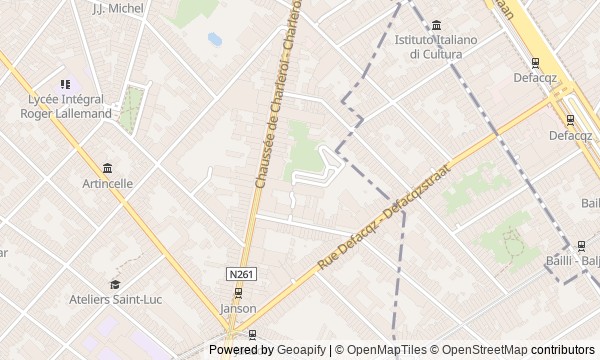
Route map
About the walk
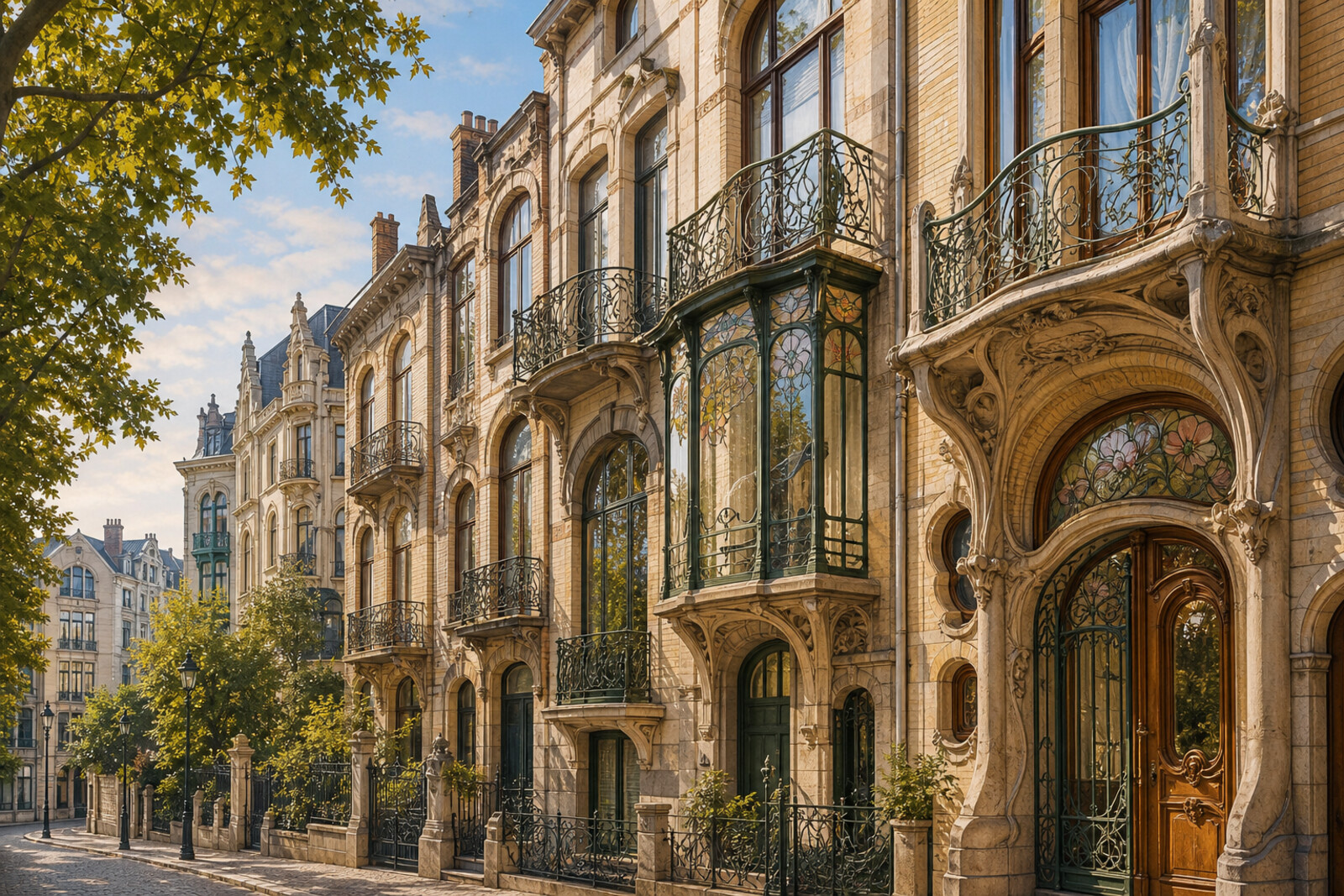
You will set out from an architect's house and workshop along the residential streets of Saint-Gilles and Ixelles, then reach Avenue Louise and finish beside a parish church. Along the way come brick facades, sgraffito, metal bay windows, private townhouses, and house museums.
But this is not a catalog of flourishes. You will hear how new rooms were adapted for work, family routines, guests, and the automobile. On one facade, an architect leaves his name and profession. In another house, the doorbell becomes part of a much larger commission. Behind a green grille lies a trace of an early garage, while museum furniture has the strange status of a guest.
The story moves through practical decisions and alterations: what was divided, raised, enclosed in display cases, dismantled, and assembled again. By the end, you will read Brussels Art Nouveau not through ornament, but through the way work, family, money, and new technology were arranged behind the facade—and through what it took to keep these houses from disappearing.
Why this order
Horta Museum establishes the first pairing: home beside work. Next, Hankar House shows the same problem through an architect just opening his practice; the comparison belongs here, while two personal addresses functioning as portfolios are still close together. Roosenboom House then shifts the focus from architect to client: instead of a workshop, the plan begins to depend on the automobile. Along Rue Paul-Émile Janson, you reach Hôtel Tassel, where the alteration of a narrow house becomes a whole system of rooms. Hôtel Solvay must follow it: the success of Hôtel Tassel brought the next major commission and made it possible to carry the system all the way to the doorbell. Maison Hannon then shows Art Nouveau entering the family of a Solvay Company employee, and how an incomplete interior was put back together. The final stretch to Parvis de Saint-Gilles takes you from private houses to a parish setting, where it becomes clear that Saint-Gilles began long before these facades.
Those who want to distinguish Art Nouveau solutions, not just decoration Lovers of stories about private houses and restorations Anyone interested in daily life behind famous facades
Those looking for the main squares of the historic center Those who quickly tire of comparing facades and floor plans Those expecting an overview of every architectural style in Brussels
Before you go
Check visiting conditions for Horta Museum, Maison Hannon, and Hôtel Solvay separately in advance: the chance to see an interior cannot be treated as part of an ordinary walk. Treat Hankar House, Roosenboom House, and Hôtel Tassel primarily from the street, and respect private entrances, residents, and staff. Leave extra time between building visits: modern interiors do not reveal themselves well in a rush. For the facade section, comfortable shoes and a camera that can bring upper floors closer without stepping into the roadway will help.
When to go
Allow 2–3 hours to view all the facades in sequence. Museum visits and access to available interiors require additional time; it is better to choose 1 or 2 main interiors than try to visit them one after another without pauses.
Backup plan
If you cannot get inside, do not cancel the walk: every building has its own street-level story. At Horta Museum, compare the neighboring volumes of the house and workshop; at Hankar House, read the facade through its materials and changing light; at Roosenboom House, look for everyday metal details. View Hôtel Tassel and Hôtel Solvay as 2 different public faces of Victor Horta's architecture, and linger at Maison Hannon over the corner conservatory and sculpture. Finish at Parvis de Saint-Gilles: cafes, passersby, and the market, if it is running during your visit, bring the architecture back into ordinary city life.
Route conditions
Surface. Paved — 3.4 km (data covers 93% of the route)
Facilities. Toilets — 1; drinking water — 5
Elevation. Ascent — 17 m; descent — 54 m
OpenStreetMap extract of June 18, 2026: database data, not a check on the ground. Data © OpenStreetMap contributors, ODbL licence
Walk plan
Open in maps ↗- 1
Horta Museum
Here you will understand why the architect needed two entrances and one interior passage. - 2
Maison Hankar
This stop shows how an architect’s own address became his first portfolio. - 3
Roosenboom House
The garage explains why the familiar rooms had to be raised above street level. - 4
Hôtel Tassel
Here, the layout shows how a narrow Brussels plot stopped dictating a dark center to the house. - 5
Hôtel Solvay
This stop connects the freedom of a wealthy client with the long rescue of an intact interior. - 6
Maison Hannon
Here, the family’s interests must be reconstructed through fabric, glass, furniture, and archives. - 7
Parvis de Saint-Gilles
The finale returns the district to the church site from which Saint-Gilles grew.
Route features
Everything you need stays in the browser
Progress, saves and your trip plan are stored on this device.
Add Guide On Map to your home screen so the walk opens outside the browser.
How we handle sources, maps and corrections: our editorial standards