 Guide On Map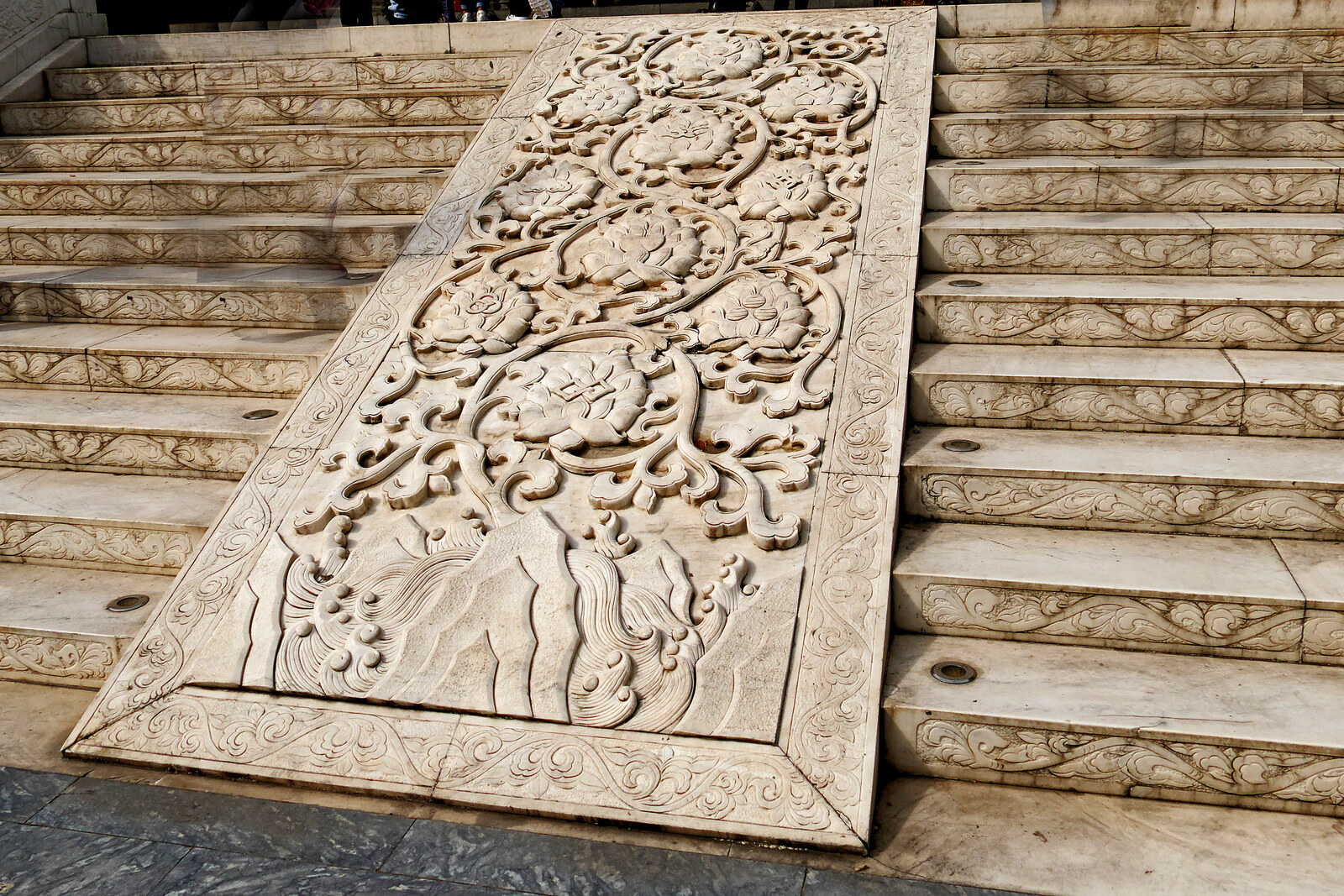
Look around first
What to notice
- Stone steps
- The inscription “Daci'en” above the gate
- The monastery gate
The story of the place
Above the gate is the inscription “Daci'en”—“Great Kindness of a Mother.” Li Zhi, heir to the Tang throne, gave the monastery this name. His mother, Empress Wende, died when her son was eight years old. In six hundred forty-eight, Li Zhi ordered a monastery built here for her well-being after death and in gratitude for her maternal care. The name on the gate is dedicated to a particular woman.
The gate itself belongs to a different family story. The enormous Tang monastery occupied nearly half a city block: it was said to contain thirteen courtyards and almost one thousand nine hundred rooms. After wars and abandonment, what mainly survived of this space was the western courtyard with the pagoda. It was on this site that the Daci'en reached by today’s steps appeared.
In the mid-fifteenth century, the appanage Prince of Xingping, Zhu Zhinie, saw the dilapidated buildings and the cramped prayer hall. He wanted to restore the monastery, invested his own funds, and, together with the palace eunuchs Chen Bao and Deng Ming, began collecting donations. The prince lived on a court-assigned stipend paid in grain and paper money; the construction record specifically distinguishes his contribution from the offerings that were collected.
Zhu Zhinie did not live to finish the work. He died in fourteen fifty-seven, leaving his son a title and an unfinished obligation. A year later, Zhu Gongshuo became Prince of Xingping. His annual stipend was one thousand measures of grain: half was issued in grain, and half was replaced with paper money. Zhu Gongshuo again entrusted Chen Bao and Deng Ming with overseeing construction and brought his father’s plan to completion.
By fourteen sixty-six, the builders had erected front and rear halls of five bays each, a gate, galleries, the abbot’s quarters, and rooms for monks. They gilded the statues, painted the beams and eaves, and replaced the pagoda’s missing bricks. Thus, a compact monastery arose on the site of a single western courtyard, determining the location of today’s entrance. Ten years later, Zhu Gongshuo died childless, and the Principality of Xingping was abolished; the buildings completed on his orders remained.
Li Zhi and Xuanzang did not climb these stones: the ceremonial entrance to the Tang monastery stood in another part of the long-vanished complex. Today’s steps lead into the former western courtyard. The name above them preserves the memory of Li Zhi’s mother, while the location of the gate is the result of the work of a son who completed his father’s construction.
Useful on site
Access to the temple area depends on the complex’s current rules; check entry on site.
Checked: date not specified. Check the official source before visiting.Before entering, turn off loud sound and be ready to follow the rules of the active monastery. If you cannot go inside, this story is easy to listen to by the steps without blocking the way.