 Guide On Map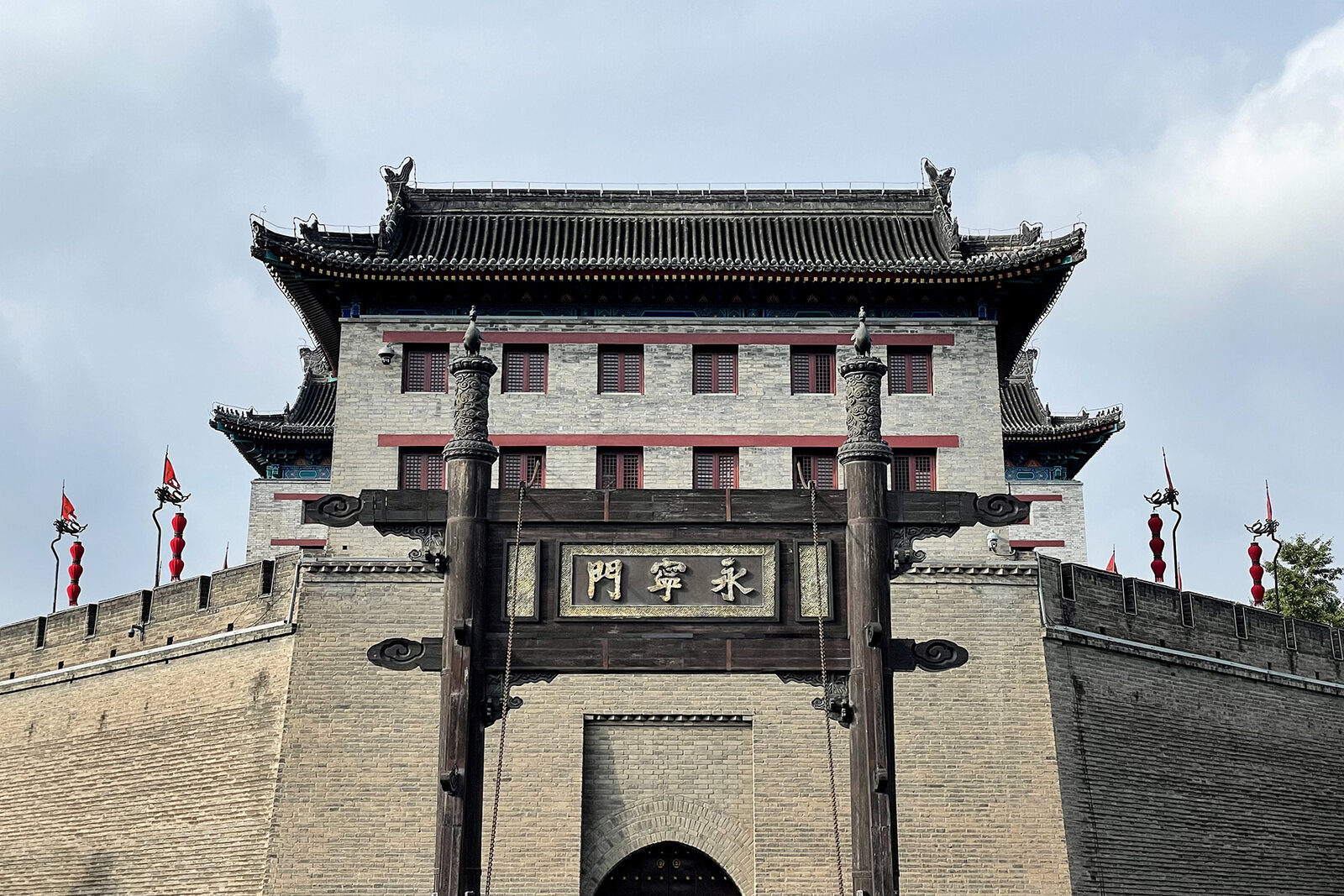
Look around first
What to notice
- Outer archery tower
- Rows of embrasures
- Bridge over the moat
- Direct route to the gate
The story of the place
Yongningmen South Square took its present form in the autumn of two thousand fourteen. Before the reconstruction, reaching the gate meant making your way through traffic. Designers led by architect Zhao Yuanchao moved through traffic into a tunnel, connected the square to the metro by underground passages, and left a direct route to Yongning Gate—the “Gate of Eternal Peace”—at ground level.
This is now where Dream of Chang'an: Grand Tang Dynasty Welcoming Ceremony begins. It is a modern production created from old ceremonial treatises. The procession crosses the square, passes over the moat, and moves inside the gate. The open space before the wall was needed precisely for this kind of movement.
In the spring of nineteen twenty-six, the site of the square was the southern approach to the city. China was divided among military factions. Liu Zhenhua, commander of the Zhensong Army, was leading several tens of thousands of fighters against Xi'an and seeking to regain lost positions in Shaanxi.
Li Huchen, the province's military leader and commander of a small Xi'an garrison, first tried to remove the very pretext for the invasion. On March twenty-ninth, he announced that he was leaving his post and proposed preserving neutrality. Liu Zhenhua rejected the concession and demanded that Li's troops leave Xi'an by April thirteenth.
Li Huchen had fewer than five thousand fighters left. On April eighteenth, Yang Hucheng broke through to him. Yang was the commander of a division stationed north of the city and had decided not to surrender Xi'an without a fight. He brought about five thousand more men. Li became commander in chief of the defense, and Yang became his deputy. Their names are translated in different ways, but both contain the word “tiger,” so the siege was remembered as “Two Tigers Defend Chang'an”—the former name of Xi'an.
By mid-May, Liu Zhenhua's troops had closed the ring. On the southern front, artillery fired at the gate, before which the square has now been cleared. On June nineteenth, Yongning Gate's archery tower burned down—the part of the fortification from which defenders could fire on the approaches. Later accounts link the fire to enemy shells; the city chronicle is more cautious and reports only that the tower burned during the siege.
Li Huchen and Yang Hucheng did not surrender the city. By the end of autumn, Xi'an had run out of food: residents boiled oilcake residue, gathered wild greens, and stripped bark from trees. Tens of thousands of people died from hunger, disease, and fighting. When the army of Feng Yuxiang—a commander who had decided to lift the siege—approached Xi'an, the defenders broke through the encirclement near the Giant Wild Goose Pagoda on November twenty-seventh and joined forces with it. The next day, Liu Zhenhua's troops retreated. Li and Yang kept their detachments and became known as the “two tigers,” but Yongning Gate no longer had an archery tower.
For almost ninety years, an empty space remained between the outer and main towers. In two thousand fourteen, restorers reconstructed the lost volume, but declined to place a heavy wooden structure on the old wall: the present tower is made of lightweight materials and can, if necessary, be dismantled without damaging the masonry. From Yongningmen South Square, its outer wall with rows of embrasures is visible. The welcoming procession now moves toward this tower—where the besieging troops stood in nineteen twenty-six.
Useful on site
The open square is accessible as an outdoor public space. According to local information from 2026, the climb onto the wall at Yongning Gate operates from 8:00–22:00, but events and seasonal restrictions should be checked on the day of your visit.
Checked: June 29, 2026. Check the official source before visiting.Do not hurry to the entrance: the overall silhouette is easier to make out from a distance. Routes may change because of events, so follow temporary signs.