 Guide On Map
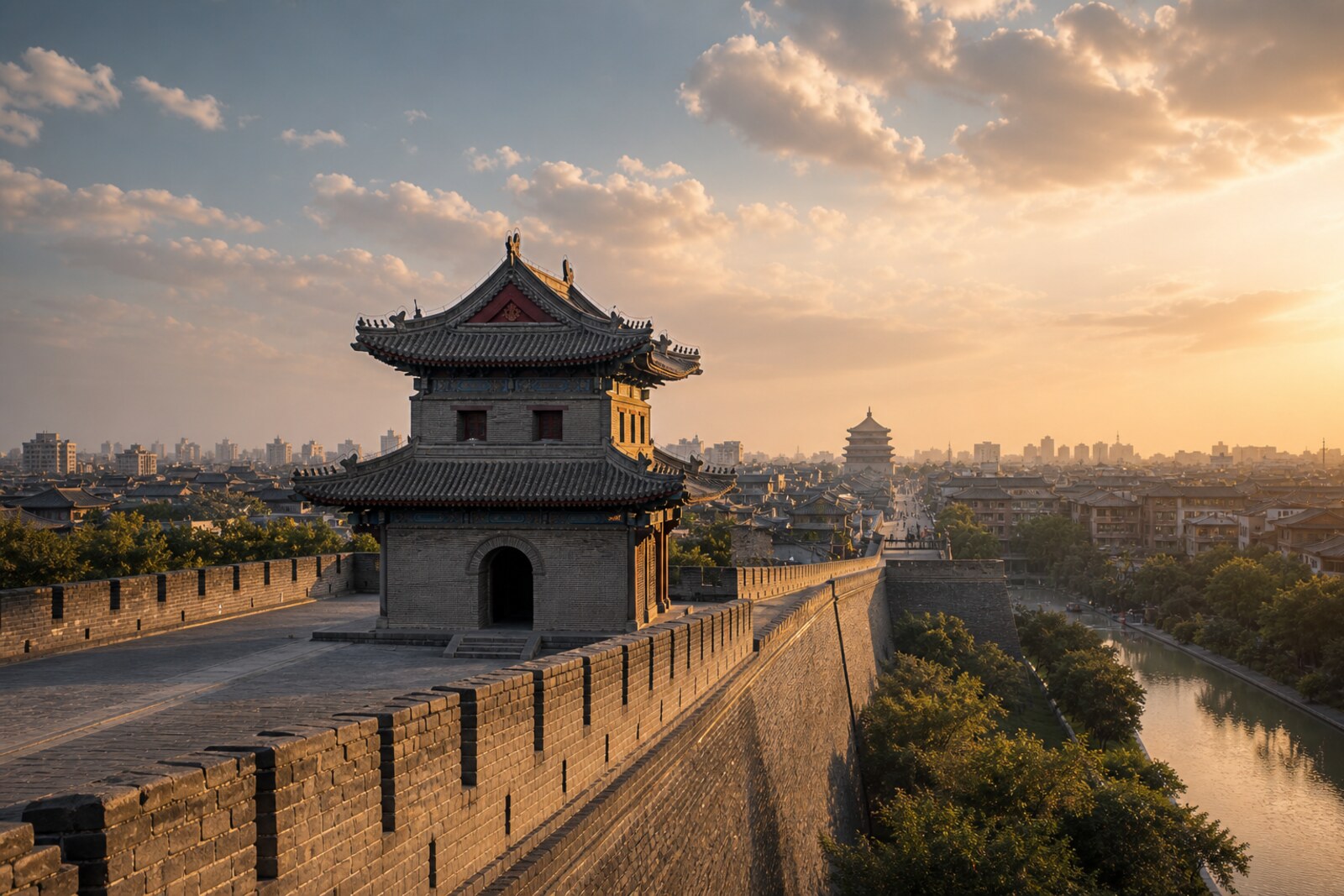
The Wall and Towers of Old Xi'an
From Yongning Gate through Defu Alley to Beiyuanmen Street
Guide On Map on your phone
Open the walk like a regular app
It takes about 10 seconds to install. No app store needed.
The whole path
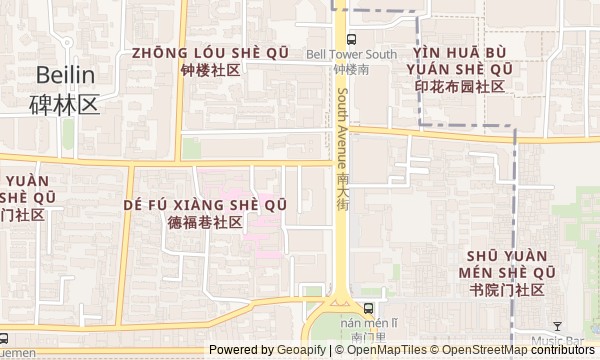
Route map
About the walk
You will begin at Xi'an's Yongning Gate, climb the wall, then come back down to the water. From there the route heads inside the old city: past a crossroads with a Taoist temple and a coffee alley, then on to the Xi'an Bell Tower, an open square, and the Xi'an Drum Tower. The finish comes at the entrance to Beiyuanmen Street.
You will find out why a tower above the moat burned while the storehouses survived; how two similar bell towers stood in one city at the same time; and why commercial floors were hidden beneath the open space between the towers. The story follows people's decisions rather than a list of dynasties. It weighs city legends against chronicles and shows old Xi'an through its later rebuilds, losses, and fortunate turns.
After the walk, you will be able to read central Xi'an through its gates, empty spaces, and street directions—and explain why the route from Yongning Gate to Beiyuanmen Street took this particular shape.
Why this order
Yongningmen South Square first gives you a frontal view of Yongning Gate; climbing the wall from here puts you above the same gateway and reveals the line of the former city boundary. After the height, you will descend to the southern moat: the water and outer bridge explain the approach to the defenses, which is harder to read from above. Through the gate, the route enters the wall and immediately turns west toward the crossroads of Xiangzi Temple and Defu Alley: after the defensive edge, the story shifts to residential and commercial lanes. Xiangzi Temple brings you back to South Street, which leads in a straight line to the Xi'an Bell Tower—the center for which the city's signal was moved. From there, an underground passage brings you to the open space between the towers, where you can see them as a pair. A short walk across the square reaches the Xi'an Drum Tower; its northern arch opens onto Beiyuanmen Street, and the final commercial street continues the square's theme along the route to the former courtyard.
Those who want to walk through the old center from the wall to the commercial quarters Those interested in the human decisions behind familiar landmarks Those who enjoy separating city legend from documented history
Those looking for a route focused only on Tang dynasty palaces and temples Those who prefer a single historical period Those who need a detailed food route through the Muslim Quarter
Before you go
You can follow the route without going inside every tower: the key links between gates, streets, and squares are clear from outside. Climbing the wall and visiting the towers may require separate tickets and can depend on events, so check access before you leave and do not build the whole walk around the interior displays. Near the Xi'an Bell Tower, use the underground passages rather than trying to cross the transport hub directly. For Defu Alley, look for the lanes themselves west of South Street, near Xiangzi Temple, rather than the similarly named point by the gate. Wear comfortable shoes for stairs, stone paving, and long periods of standing.
When to go
It is best to start in the afternoon: see the wall and moat in daylight, catch Defu Alley as the evening lights begin to appear, and reach the Xi'an Drum Tower when the nearby streets are already filling with people.
Backup plan
If the top of the wall is inaccessible, spend more time in Yongningmen South Square, look at the gate from below, and continue to the outer line of the moat: the story of the defenses will still be clear from the height of the masonry and the distance to it. If the Xi'an Bell Tower or Xi'an Drum Tower is closed, view them from the square—their position matters more to the route's logic than going inside. If Defu Alley is too crowded, it is enough to see the crossroads by Xiangzi Temple and walk a short stretch of the alley. In a dense crowd at Beiyuanmen Street, end the route by the tower itself rather than continuing into the commercial rows.
Route conditions
Surface. Paved — 599 m (data covers 18% of the route)
Facilities. Toilets — 4
Elevation. Ascent — 26 m; descent — 22 m
OpenStreetMap extract of June 25, 2026: database data, not a check on the ground. Data © OpenStreetMap contributors, ODbL licence
Walk plan
Open in maps ↗- 1
Yongningmen South Square
Here, the ceremonial entrance to the city becomes the starting point for the story of the defense of Yongning Gate. - 2
The Wall above Yongning Gate
This stop shows the scale of what remained after Chang'an was reduced. - 3
Southern Moat
The moat helps explain a military ruse in which visible fire concealed untouched supplies. - 4
Defu Alley and Xiangzi Temple
Here, the route shifts from military history to the entrepreneurial turnaround of a single alley. - 5
Xi'an Bell Tower
This stop will examine what in Xi'an was actually moved and what was built anew. - 6
The Axis Between the Xi'an Bell Tower and Xi'an Drum Tower
Here you will understand the cost of clearing the direct view between the two towers. - 7
Xi'an Drum Tower and Beiyuanmen Street
The finale will connect the road to the imperial court with the commercial fate of Beiyuanmen Street.
Route features
Everything you need stays in the browser
Progress, saves and your trip plan are stored on this device.
Add Guide On Map to your home screen so the walk opens outside the browser.
How we handle sources, maps and corrections: our editorial standards