 Guide On Map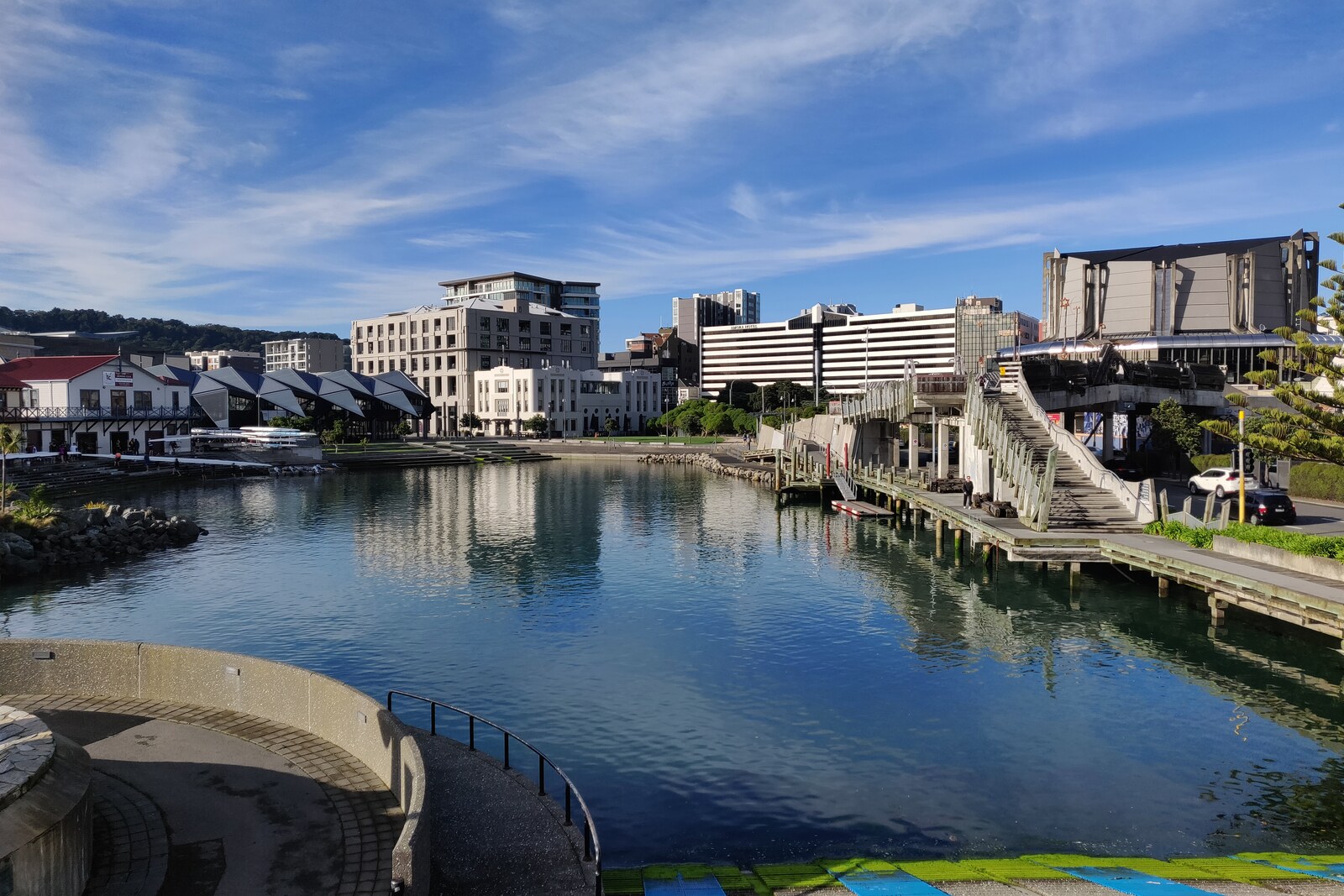
Look around first
What to notice
- The “Whairepo” inscription on the wooden boards
- The rowing-club buildings
- The narrow channel to the harbour
The story of the place
Whairepo Lagoon is an artificial saltwater body connected to Wellington Harbour by a narrow channel. During land reclamation, begun in nineteen sixty-nine, builders created a sheltered inlet here, protected from open water. In nineteen eighty-nine, two old rowing-club buildings were moved one hundred meters and turned toward the lagoon so rowers could launch their boats into calm water. Kayaks, pleasure boats, and waka now also set out from here.
For a long time, the lagoon had no official name. It was proposed by Sam Pouto Jackson, a Taranaki Whānui elder, who wanted the name to preserve his community's knowledge of the inhabitants of this water. Jackson knew the waterfront not from desk-bound papers: he earned his living at a meatworks and on the wharves, and later became an adviser and peacemaker whom city leaders turned to.
In the warm months, eagle rays enter the lagoon. They feed and shelter here; at times, up to a dozen animals gather in the water. Eagle rays have pointed fins, which they flap as they move. Taranaki Whānui regard these rays as kaitiaki—guardians of waka and people on the water. The name “Whairepo” refers specifically to them.
Jackson began the conversation about ensuring that the rays' presence remained in the lagoon's name, but he did not live to see this story concluded. He died in two thousand thirteen. Representatives of Taranaki Whānui and the city council submitted his proposal to the New Zealand Geographic Board, and in December two thousand fifteen, Whairepo became the official name.
Three years later, Jackson's son Peter was present when the inscription was installed. It was carved directly into the wooden boards near the boat club and deliberately left unpainted: the letters were meant to gradually fade as the name entered common use. In warm weather, those very rays for which Sam Pouto Jackson began this conversation sometimes swim beneath these boards.
Useful on site
An open public area by the water. Access may change during events, works, or restrictions on neighboring walkways.
Checked: June 30, 2026. Check the official source before visiting.The rays appear according to tidal conditions, not on a schedule, so their absence is a normal part of the experience. Watch from the shore, do not feed the animals, and do not enter the water with them.