 Guide On Map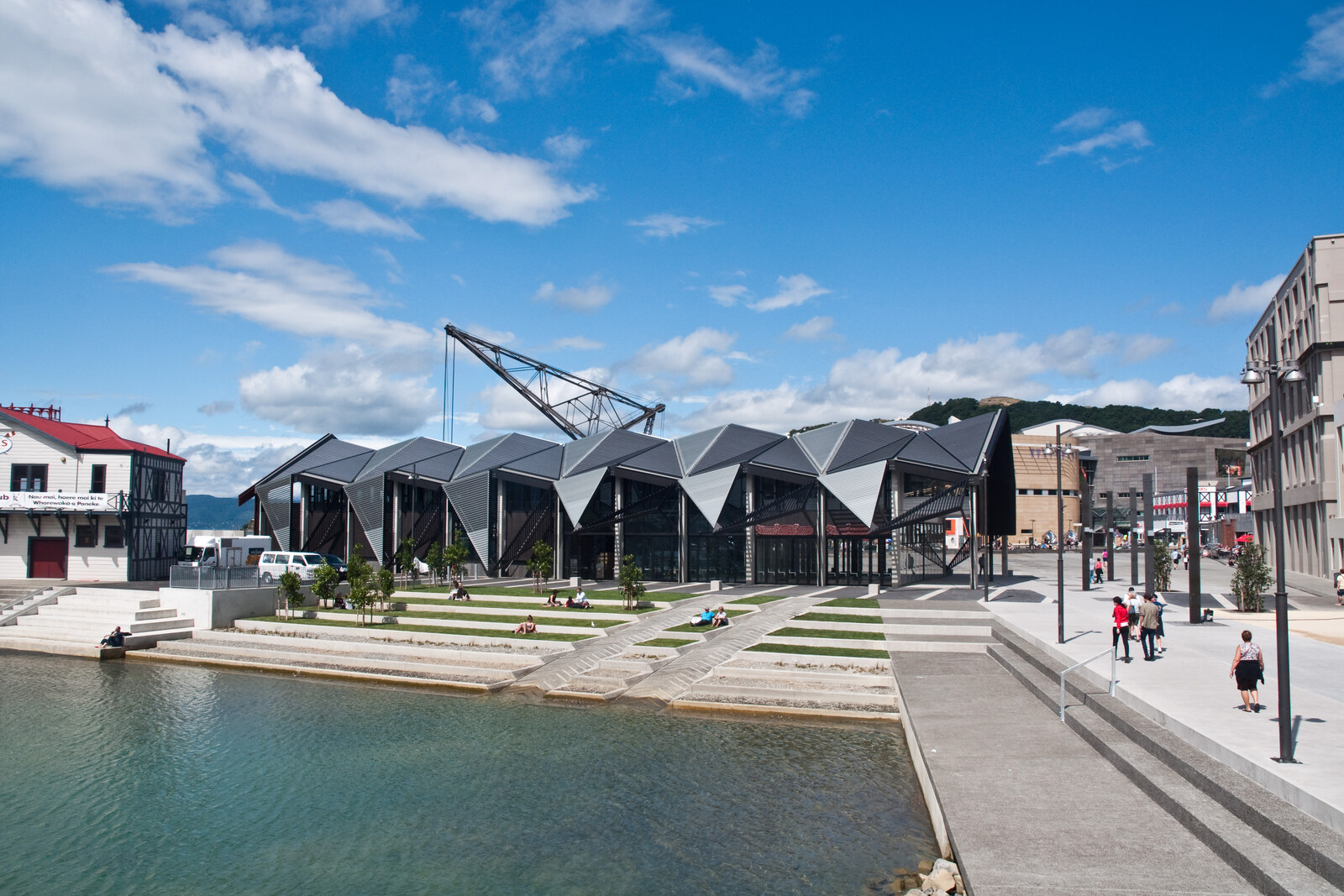
Look around first
What to notice
- The glass walls of the boat house
- Waka behind glass
- The exit to the lagoon
The story of the place
Behind the glass walls by the lagoon stand waka that are regularly launched for ceremonies and outings; meetings, traditional welcomes, and cultural tours take place in neighboring rooms. The boat house was built on a reclaimed site by the former shoreline, beside the Māori village of Te Aro Pā. Taranaki Whānui lived here, having moved to Wellington from Taranaki in the first decades of the nineteenth century, and their permanent presence by the water later disappeared. Their descendants sought the return of a working boat house to the waterfront, rather than a single memorial marker.
At dawn on February sixth, two thousand eleven, a house was opened here for a boat that was not in the house. Two waka, urgently brought from the Bay of Plenty, were placed in the lower hall. They stood in for Te Raukura—a large carved boat for which the glass storage space right by the water had been designed.
The city council commissioned Te Raukura to mark one hundred fifty years since the signing of the Treaty of Waitangi. The master carver Rangi Hetet and six assistants built it in Waiwhetū, a Te Āti Awa settlement in the Hutt Valley. At the end of nineteen eighty-nine, the boat was launched from Petone Beach. It took part in ceremonies, but water later damaged its hull. The council handed the waka over to Waiwhetū for restoration and storage.
There it was repaired, taken out on the water, and cared for over the years. When the new boat house on the Wellington waterfront was completed, the council demanded the return of the waka it had paid for. A Te Āti Awa group led by Kara Puketapu refused to hand it over without guarantees about how the boat would be stored and used. For them, it was an object the community had worked with since its creation; for the council, it was the main exhibit of an already completed building. The dispute reached court.
They did not cancel the opening. Two guest waka took the place of the absent Te Raukura, a dawn ceremony was held, and its name was fixed to the building. A few months later, the sides reached an agreement: the Waiwhetū community paid the council one hundred fifty thousand New Zealand dollars and kept the boat.
New waka occupied the empty space in the hall. The master Hekenukumai Busby led their construction from ancient swamp kauri wood, and Takirirangi Smith led the carving. Te Hononga arrived first, a waka for transport and fishing that men and women can paddle. Then the ceremonial waka taua Te Rerenga Kōtare was brought in. Both were placed behind glass walls, but they did not become motionless museum objects: they are launched into the lagoon for ceremonies and outings. Later, the fleet here grew to four boats. Meetings, traditional welcomes, and cultural tours are held in other rooms.
The site was chosen because of this direct connection with the water and the former shoreline. The building itself stands on reclaimed land, but before the waterfront was extended, the harbor-facing village of Te Aro Pā stood nearby. Taranaki Whānui lived here—descendants of several peoples who moved from Taranaki to Wellington in the eighteen twenties and eighteen thirties. By the eighteen eighties, their permanent presence by the water had disappeared. Their descendants pressed for the waterfront to once again have a working Māori boat house, rather than a single memorial marker.
The boat and the building bear a name whose meaning arose long before either of them. Te Raukura is the white feather of an albatross, the emblem of the Parihaka community in Taranaki. Its leaders, Te Whiti o Rongomai and Tohu Kākahi, sought to stop the division and settlement of confiscated land. From eighteen seventy-nine, their supporters plowed plots occupied by settlers and rebuilt fences across roads laid through their fields. Te Whiti and Tohu insisted on doing without weapons. Arrested plowmen and fence builders were replaced by new ones.
More than four hundred campaign participants were imprisoned without trial. In November eighteen eighty-one, about fifteen hundred soldiers and volunteers entered Parihaka. The residents were dispersed, homes and crops were destroyed, and Te Whiti and Tohu were sent into confinement. In early eighteen eighty-three, they returned and rebuilt the settlement together with the surviving residents. The white feather remained a sign of their refusal to give an armed response; Taranaki descendants still wear it today.
The name Te Raukura remains above the entrance here, while other working waka stand behind the glass. The original boat, for which this hall was intended, never moved here.
Useful on site
The outdoor stop is accessible as part of the waterfront. Interior spaces, tours, the café, and events depend on schedules and bookings.
Checked: June 30, 2026. Check the official source before visiting.This is a living cultural space, not a museum display. Observe from accessible public areas, do not disrupt events, and do not enter without an explicit invitation or open access.