 Guide On Map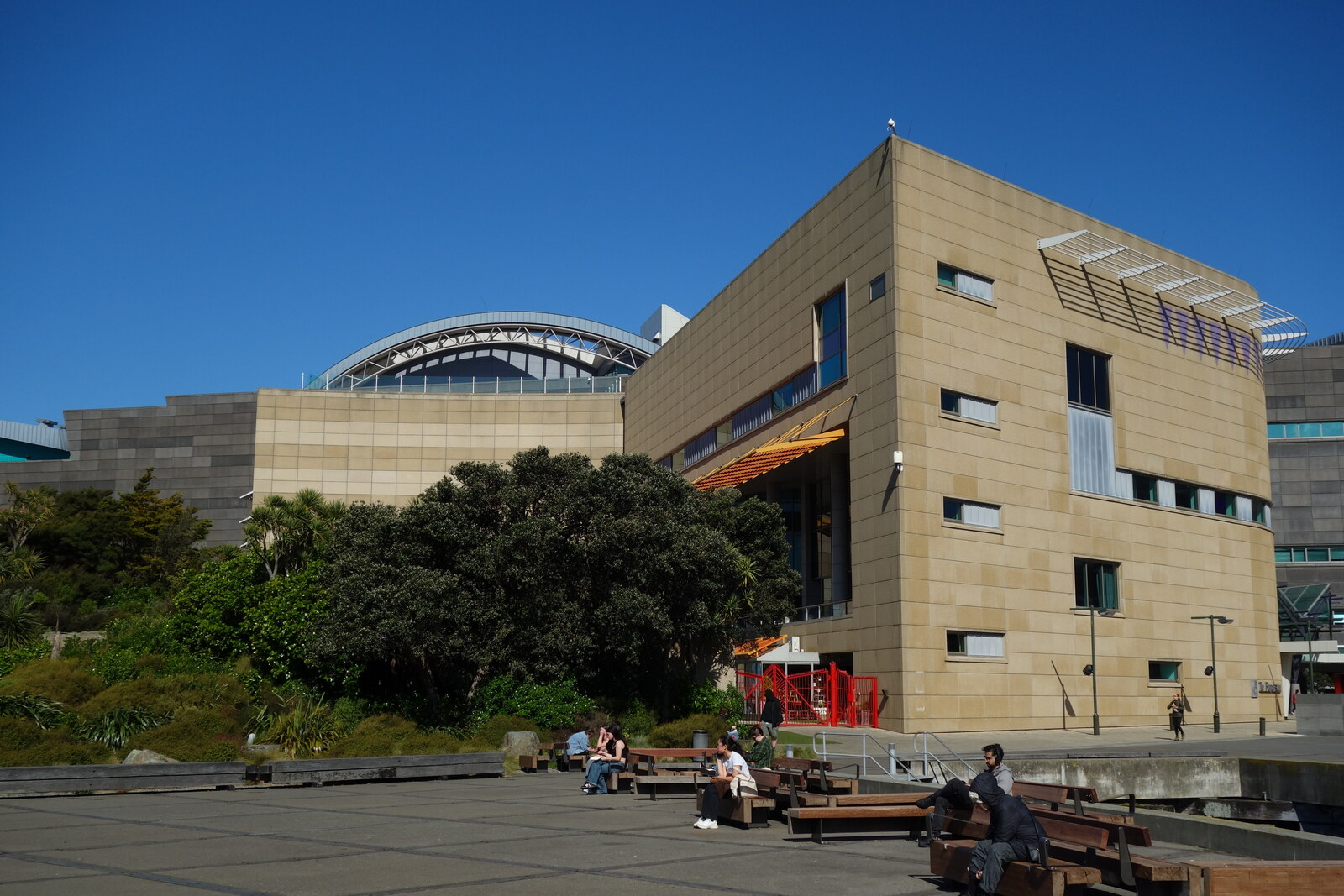
Look around first
What to notice
- Entrance to Museum of New Zealand Te Papa Tongarewa
- Bent panels of Rongomaraeroa
- Carved figures in the meeting house
The story of the place
On the fourth floor of Museum of New Zealand Te Papa Tongarewa, there is a functioning meeting house where the National Museum of New Zealand welcomes people from different tribes and cultures for ceremonies, performances, celebrations, and official meetings. The bent painted panels and carved figures here are not made solely of valuable timber: the work also includes glass and modern fibreboard panels. Alongside the ancestors in the house are farmers, teachers, clergy, artists, and families who came to New Zealand over the past two centuries. During welcome ceremonies, access there is closed because the hall continues to operate by marae rules.
In nineteen ninety-three, master carver and Māori art teacher Cliff Whiting joined the team preparing the future National Museum of New Zealand. Two earlier institutions—the National Museum of New Zealand and the National Art Gallery—had already been merged, and their collections were to be moved into a new building on reclaimed land at the former port. Whiting was to ensure that Māori took part in decisions about their taonga—objects connected with ancestors and family memory—instead of remaining the subject of someone else's exhibition.
Two years later, he became the first kaihautū, Te Papa's Māori co-leader. For a man who made his living through teaching and restoring carved meeting houses, the main challenge was his own hall on the fourth floor. Whiting conceived a functioning marae here—a place for ceremonies, meetings, and discussions conducted by Māori rules. An ordinary marae belongs to a particular kin community. The National Museum of New Zealand was to welcome people from different tribes and cultures whose treasures were in the collections.
Whiting named the entire complex Rongomaraeroa. In Māori tradition, this is the name of a place in the heavens where deities gather peacefully and settle their disagreements. The meeting house inside was named Te Hono ki Hawaiki—“the connection with Hawaiki,” the ancestral homeland from which Māori trace their descent.
Whiting then did something especially risky for a master carver. Instead of valuable tōtara timber, he chose painted fibreboard panels, adding glass and other modern materials. The decision caused controversy: the national marae differed too sharply from familiar carved meeting houses. Whiting explained his choice pragmatically. No trees that are themselves considered taonga would have to be cut down for the building; the panels could be bent and remade, and people without years of carving training could be brought into the work.
Under his direction, forty carvers from different training workshops made the panels and figures. Alongside the ancestors in the house appeared images of farmers, teachers, clergy, artists, and families who had come to New Zealand over the past two centuries. On November thirtieth, nineteen ninety-seven, Rongomaraeroa opened—three months before the entire museum.
The name Te Papa Tongarewa is literally translated as “a container of treasures”; the word “tongarewa” can refer both to a precious object and to a person especially dear to people. That is why the fourth floor does not merely hold silent carved panels. It hosts welcome ceremonies, performances, celebrations, and official meetings. When such a ceremony begins, ordinary access to the hall is closed: Whiting's controversial fibreboard panels surround a functioning marae.
Useful on site
Checked on 2026-06-30, Te Papa is open daily from 10:00 to 18:00, except Christmas Day. Paid admission is listed for international visitors aged sixteen and over; some exhibitions may charge separately.
Checked: June 30, 2026. Check the official source before visiting.The story of the seismic isolation can be heard outside. The exhibitions are viewed separately; if you decide to go in, check access in advance and do not try to fit a full museum visit into the usual pace of the walk.