 Guide On Map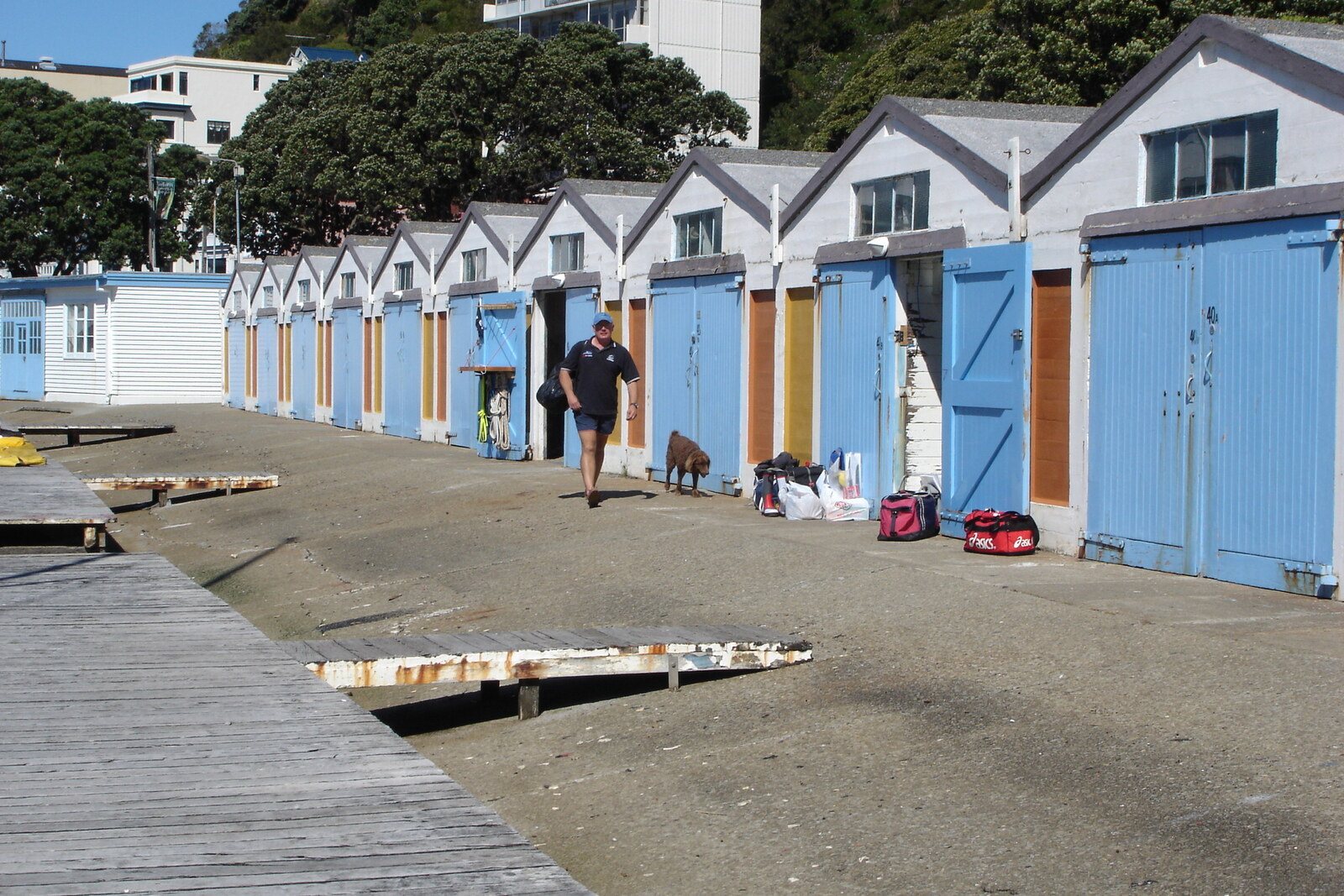
Look around first
What to notice
- Rows of concrete sheds
- Colorful double doors
- Low roofs behind the parapet
The story of the place
The low roofs barely rise above the parapet, while rows of concrete boat buildings stretch along the water. They were built beside a purpose-designed harbour after the city’s reclamation of the shoreline deprived owners of large wooden yachts of sheltered moorings. The owners secured a harbour near the city, contributed a large share of the funding, and gained a place where vessels did not have to be left in open water. The roofs were deliberately hidden behind the parapet so that the road would not lose its view of the bay.
Behind the colorful double doors are workshops and storage spaces for boats, sails, and rigging. In shed forty-six, a yacht was once reassembled—a yacht for which an entire fund was established in Wellington.
Lizzie was built in nineteen oh nine by the professional boatbuilder Edwin, or Ted, Bailey. The client, Wellington yachtsman Charles Ward, wanted a fast racing boat. Bailey made a twenty-two-foot yacht with low sides; before the First World War, it became the best in its class. The owners then changed, Lizzie left Wellington, and eventually ended up in Auckland.
By twenty ten, nobody was looking after the yacht anymore. It broke free from its moorings, sank, was raised by the harbour service, and declared unclaimed. The hull was being prepared for disposal. Gavin Pascoe, a yachtsman and expert in traditional boatbuilding, decided to return Lizzie to its first port. Within several hours, his acquaintances pledged more than three thousand New Zealand dollars, and that evening he spoke at the annual meeting of the Royal Port Nicholson Yacht Club. There, they raised as much again—enough for the salvage work and transport.
A slip at Clyde Quay was provided free of charge for the yacht, and shed forty-six was turned into a workshop. Pascoe led the volunteers; materials were bought with donations. Over two and a half years, they dismantled later alterations and restored the original rigging, retaining the old keel and planking. In March twenty thirteen, Lizzie was launched. The following season, the former unclaimed hull raced again and won the summer and winter classic-yacht series.
This kind of work had been part of the design of Clyde Quay from the outset. At the end of the nineteenth century, reclamation of the coastal areas of Te Aro and Pipitea destroyed sheltered moorings. Owners of large wooden yachts had to leave their expensive vessels at open moorings. The Wellington Harbour Board offered Evans Bay, but yachtsmen considered it too remote, feared theft, and objected to the local winds. A delegation of wealthy owners secured the construction of a harbour at Clyde Quay and paid a substantial part of the cost. In nineteen oh four, New Zealand’s first harbour specifically designed for pleasure craft opened here.
The first twenty-four concrete sheds were built in two groups in nineteen oh five. Their roofs were set below the parapet so that the buildings would not block the view from the road. At first, there were few tenants: maintaining a yacht and paying for a shed were expensive. Later, a waiting list appeared, and in nineteen twenty-two another row was added. The spaces still serve as workshops and storage facilities—shed forty-six has retained the very work for which Lizzie was brought here.
The name Clyde Quay is older than the harbour. It appeared on a plan of Wellington as early as eighteen forty. An old local version links it to the vessel Clyde, allegedly damaged on its way from Whanganui and hauled ashore at Kaiwharawhara. Researchers have found no record of such a vessel; they also reject a possible confusion with the barque Clydeside—it arrived later, when the name already existed. In nineteen twenty-six, Clyde Quay Road was incorporated into Oriental Parade, while the old name remained with the boat harbour.
Useful on site
Exterior viewing is available from the open waterfront. The sheds remain private or leased workspaces; entry inside is not provided.
Checked: June 30, 2026. Check the official source before visiting.View the buildings from the public side and do not block owners’ access to their boats. The interiors of the sheds are not open for public viewing.