 Guide On Map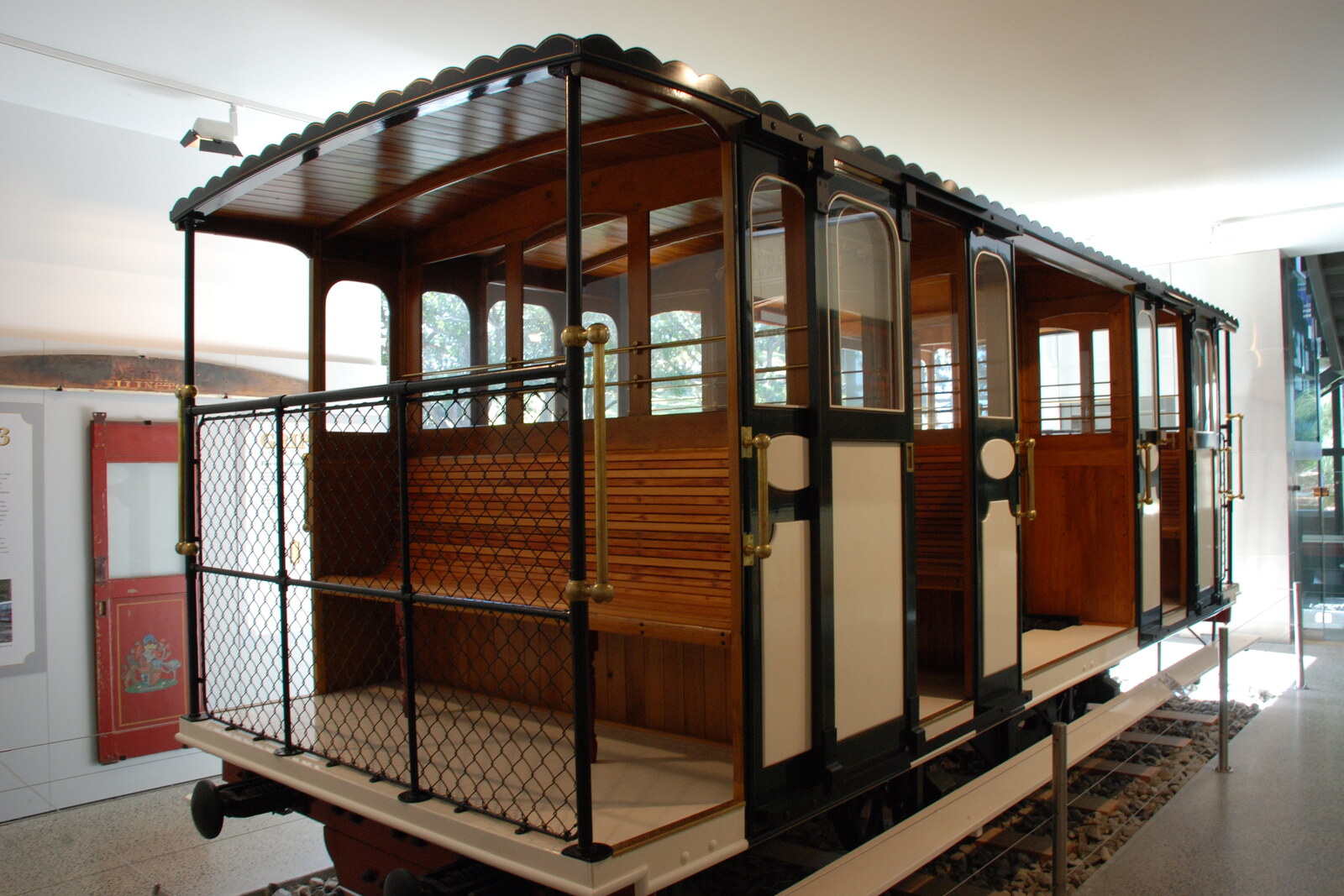
Look around first
What to notice
- Red wooden Car No. 1
- Green Car No. 3
- Electric drive
- Old machine hall
The story of the place
The green car and the heavy electric drive occupy the former machine hall of the Wellington Cable Car. Since the beginning of the twentieth century, the entire line was powered from here: the machine turned an endless haulage cable, which the cars gripped with clamps. One car descended while the other was raised up the hill by a rope; at first the drive ran on steam, and later on electricity.
On September twenty-second, nineteen seventy-eight, the old red car made its final ascent to this upper terminus. Passengers sang a Scottish farewell song, students from the neighboring residence hall threw eggs and water bombs at the car, and bagpipers greeted it at the top.
Michael Fowler opposed the removal of the wooden cars. An architect by profession and then mayor of Wellington, he himself enjoyed riding on the open side seats: in the tunnels, passengers amused themselves by brushing their feet against the walls. Fowler argued for preserving the cars familiar to the city, but the Council responsible for safety was given entirely different reasons.
In nineteen seventy-three, a builder of the new city motorway stepped in front of a car. After the incident, the Ministry of Works inspected the line and found the old rolling stock unsafe. The trailer cars were removed and the equipment was rebuilt, but specialists gave the remaining cars no more than ten years. The Council ordered a new Swiss system. Fowler lost the argument: after the farewell trip, the old cars never carried passengers again.
For the building beside the terminus, this meant losing its former purpose. Since nineteen oh two, it had housed the drive station. The machine turned an endless haulage cable; the descending car gripped it with a clamp and, through a second balancing rope, pulled the paired car uphill. At first the drive was steam-powered, then it was replaced by an electric one. When the line was rebuilt, the new mechanism was moved away, and the old machine hall stood empty.
The farewell proved more useful than the protest itself: the cars and part of the equipment were saved with a future museum in mind. But the promised museum did not appear for a long time. The building served as an information center for the city parks department and as civil defense headquarters, and in nineteen ninety-three it faced demolition.
A year earlier, Peter O'Neil had founded the Cable Car Heritage Society. Its members now pressed the City Council for a decision without which both the machine hall and the possibility of leaving the heavy drive in its operating location would disappear. The Council accepted their arguments and confirmed the building's museum purpose. After restoration, the museum opened in two thousand.
Red Car No. 1 was preserved as it had been when it was seen off in the seventies. Five years later, a separate wing was added for Car No. 3, and the car's early twentieth-century green livery was restored. One floor below stands the restored electric drive. It was left in the very hall where, until the final trip, it turned the cable for the entire line.
Useful on site
Daily 10:00-17:00, general admission is free.
Checked: June 26, 2026. Check the official source before visiting.Do not limit yourself to looking at the car body: walk around the car and compare the cab with the winch mechanism. Whether you can see the equipment in motion depends on the museum's operations.