 Guide On Map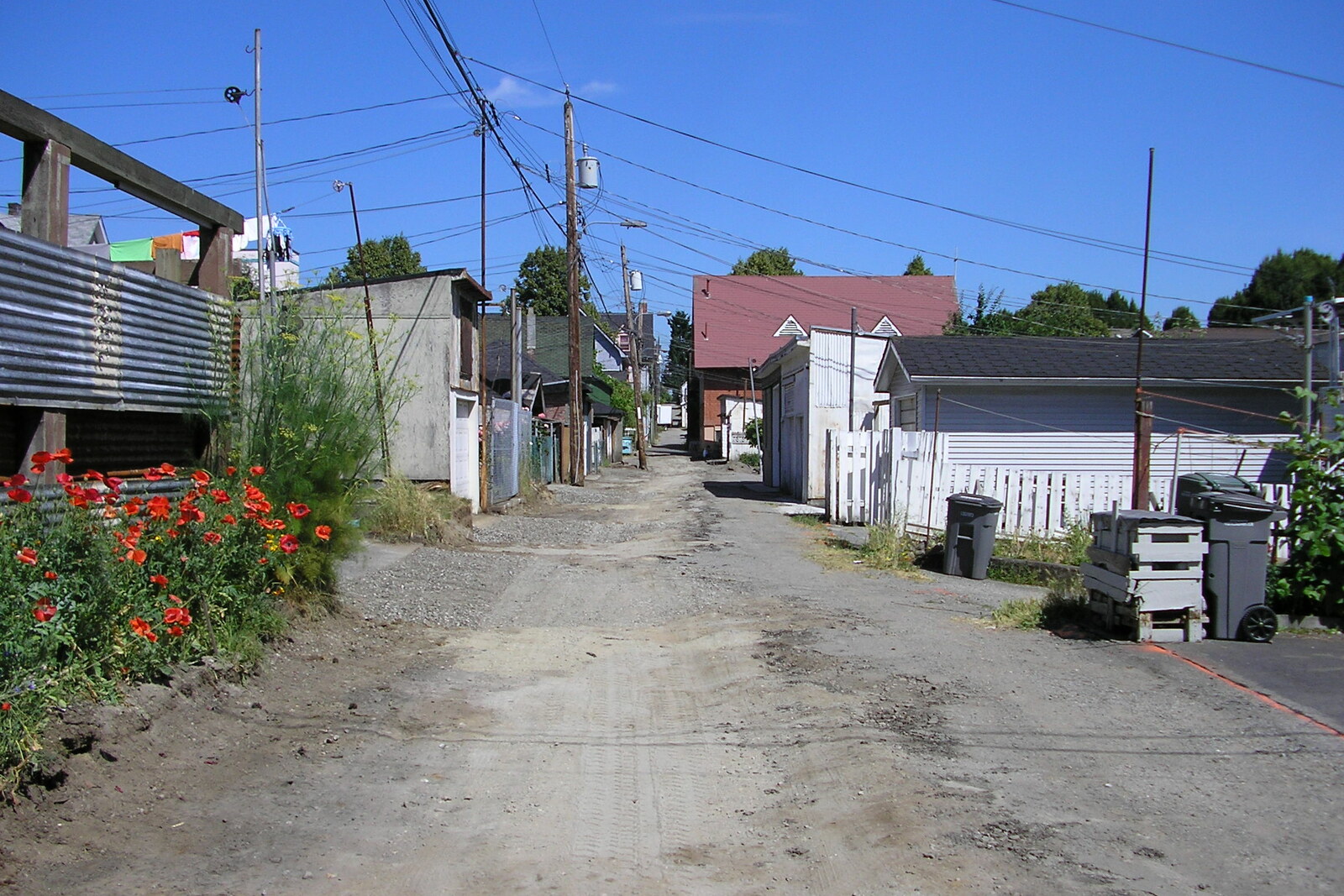
Look around first
What to notice
- Commemorative plaque
- Map of Park Lane on the plaque
- Lane east of Main Street
- House facades on Union Street
The story of the place
Hogan did not live here. Hogan’s Alley was the name of narrow, unpaved Park Lane, which ran between Union and Prior Streets from Main Street toward Jackson Avenue. The nickname was already in use by nineteen fourteen. Historians link it to a newspaper comic about a poor New York neighborhood: the name of the fictional alley was applied to this part of Vancouver, at first with a disparaging connotation.
Two railway stations stood nearby. Black men found work there as sleeping-car porters—one of the few occupations open to them. Homeowners often would not let them find housing in other neighborhoods, so families, a church community, and their own businesses formed around Park Lane. The alley’s name gradually came to refer to this whole small neighborhood.
On its north side, at two hundred nine Union Street, Viva “Vie” Moore, whom everyone called Vie, and her husband Bob opened Vie’s Chicken and Steaks in nineteen forty-eight. The dining room occupied the ground floor of a small residential house. Vie kept a short menu: fried chicken, steaks, potatoes, salad, peas, and fresh biscuits. They were open from five in the evening until five in the morning. Vie cooked, while female relatives waited tables; she recruited the other women employees from local women as well.
Those hours shaped the clientele. After midnight, taxi drivers, newspaper workers, police officers after their shifts, and performers after appearances at the city’s clubs came here. Ella Fitzgerald, Duke Ellington, and Sammy Davis Jr. ate at Vie’s tables, but celebrities were served the same menu as railway workers and neighbors. Vie herself came out of the kitchen to greet visitors. The restaurant became a source of income for the family, gave work to women in the neighborhood, and brought to Union Street people who had previously almost nowhere in the city found themselves at neighboring tables.
When blocks south of the restaurant were cleared for the viaduct, the house at two hundred nine survived at the edge of the construction zone. Vie continued cooking until her death in nineteen seventy-five. Her daughter, Adeline Clark, then took over the business; in the fall of nineteen seventy-nine, she closed the restaurant.
The house itself was later demolished. A plaque in the lane east of Main Street stands beside the former address: it shows the shape of Park Lane and marks the block where Vie’s restaurant stood. Neither its dining room nor its kitchen remains here.
Useful on site
Residential street area; come during the day and do not enter the yards. The stop has been re-anchored to the plaque by the former alley.
Checked: June 28, 2026. Check the official source before visiting.Listen to the story from the public street: do not enter vacant lots, go beneath viaducts outside designated passages, or enter railway property.