 Guide On Map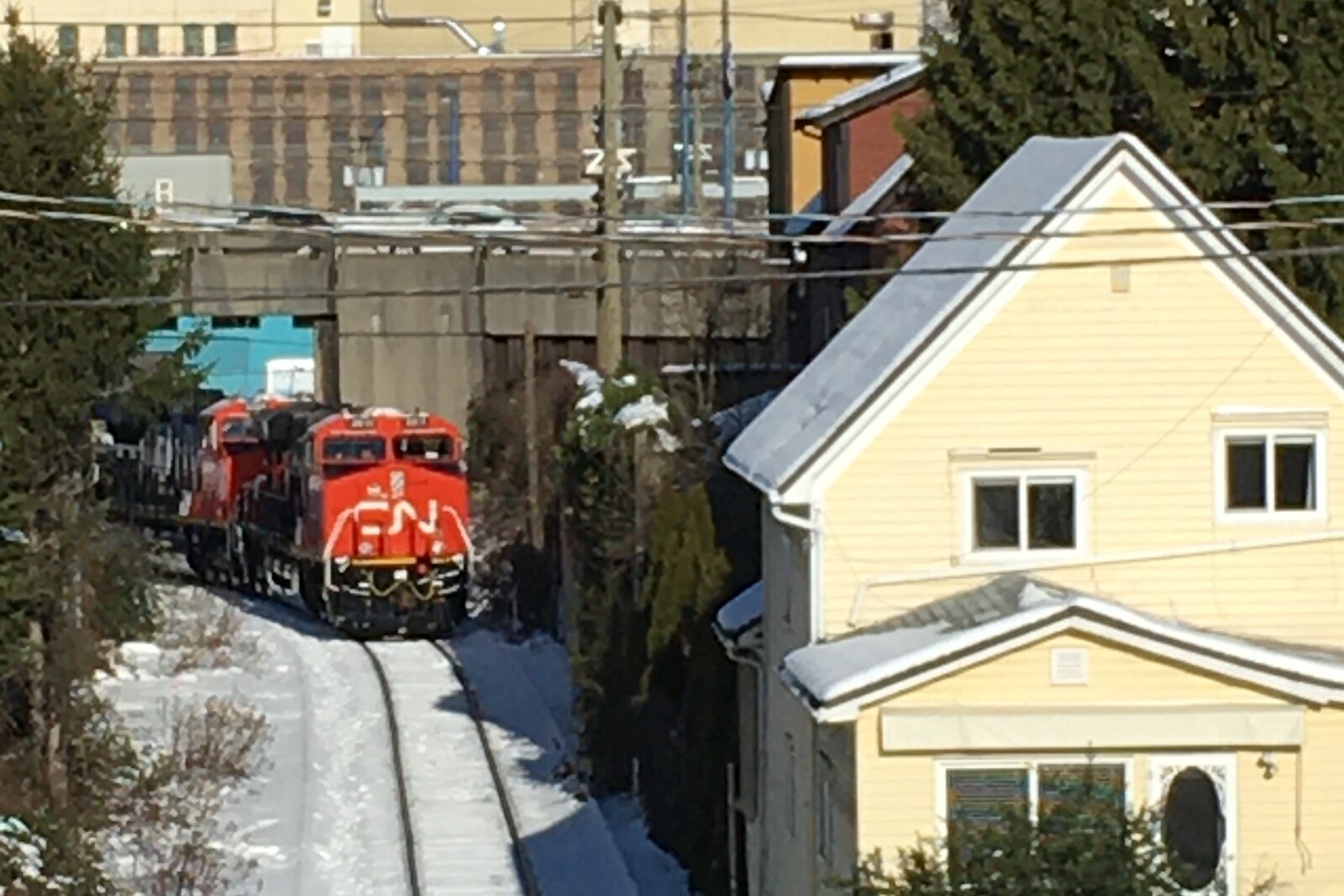
Look around first
What to notice
- The MacLean Park playground
- Residential buildings around the park
- Freight railway tracks
- The pedestrian overpass above the tracks
The story of the place
Today's MacLean Park is the second park to bear that name. The first opened three blocks to the west in nineteen eleven: it was Vancouver's first supervised public playground. It was named after Malcolm Alexander MacLean, the city's first mayor. In the nineteen sixties, officials began demolishing local blocks for a social-housing program. A housing complex was built on the site of the old park, and another block was cleared for the new one. MacLean's name moved along with the playground.
Under the same program, Raymur Place, now Stamps Place, was built to the east. A freight railway to the port docks ran between its buildings and Admiral Seymour Elementary School. There was no pedestrian crossing. Children climbed over the couplings of stationary railcars or crawled underneath them, sometimes while trains were being shunted. In nineteen sixty-seven, a twelve-year-old boy was struck by a train and lost six toes. A study for a future crossing was commissioned afterward, but no overpass appeared.
In the fall of nineteen seventy, Carolyn Jerome's six-year-old daughter started school. Carolyn was raising two girls on her own and lived in a subsidized high-rise on Campbell Avenue. From her apartment, she could see the tracks her older daughter had to cross on the way to class. Together with her neighbor Judith Stainsby, a mother seeking a safe route for the same children, Carolyn began going door to door, handing out leaflets, and calling city officials and railway executives. Earlier petitions had already gone nowhere. Even among Raymur residents, more than half initially did not support the proposal to stop the trains.
In January nineteen seventy-one, four mothers linked arms in front of an approaching train. The engineer braked. For several hours, trains could not reach the port, and railway executives agreed not to send them through this section before classes, at lunchtime, and after school. The promise lasted about two weeks.
On March twenty-fourth, the women brought a large tent, warm clothing, bedding, and cooking utensils onto the tracks. Now they demanded documents: confirmation of federal funding, land legally secured for the overpass, and a financial guarantee that the temporary schedule would be observed. Verbal assurances were no longer enough for them. The tent remained for two nights and three days. The railway companies went to court to demand that the women be removed from the tracks and pay damages and legal costs. Seven lawyers argued against the mothers, who at first did not even have a representative.
A young lawyer, Bruce McCall, volunteered to read the papers and found that the request to prohibit the blockade had been filed improperly. The judge dismissed it, and McCall helped the parties draw up a binding agreement. While the tent remained on the tracks, the city council began acquiring the required parcel, federal funds arrived, and the contract was put out to tender. Only then did the women leave. In September, before the new school year began, the children crossed above the tracks on the completed overpass.
Newspaper reporters first called the women the Militant Mothers of Raymur; the women then adopted the name themselves. After the overpass campaign, participants organized a food co-operative, which grew into the Ray-Cam Co-operative Centre, opened in nineteen seventy-six. In two thousand nineteen, the former pedestrian crossing on Keefer Street was officially named the Militant Mothers of Raymur Overpass.
In February two thousand twenty-six, the overpass was temporarily closed after a structural inspection. The same freight tracks remain below it. The former Raymur Place stands on one side, and Admiral Seymour Elementary School on the other.
Useful on site
The park is open as a public space; the spray park operates seasonally from 09:00–21:00. The Militant Mothers of Raymur Overpass is temporarily closed under a city notice dated 2026-02-06 and requires another check.
Checked: June 28, 2026. Check the official source before visiting.Remember that the park is surrounded by housing, and do not disturb local residents. Use only the permitted crossing; if access is restricted, stay by the fence and do not go onto the tracks.