 Guide On Map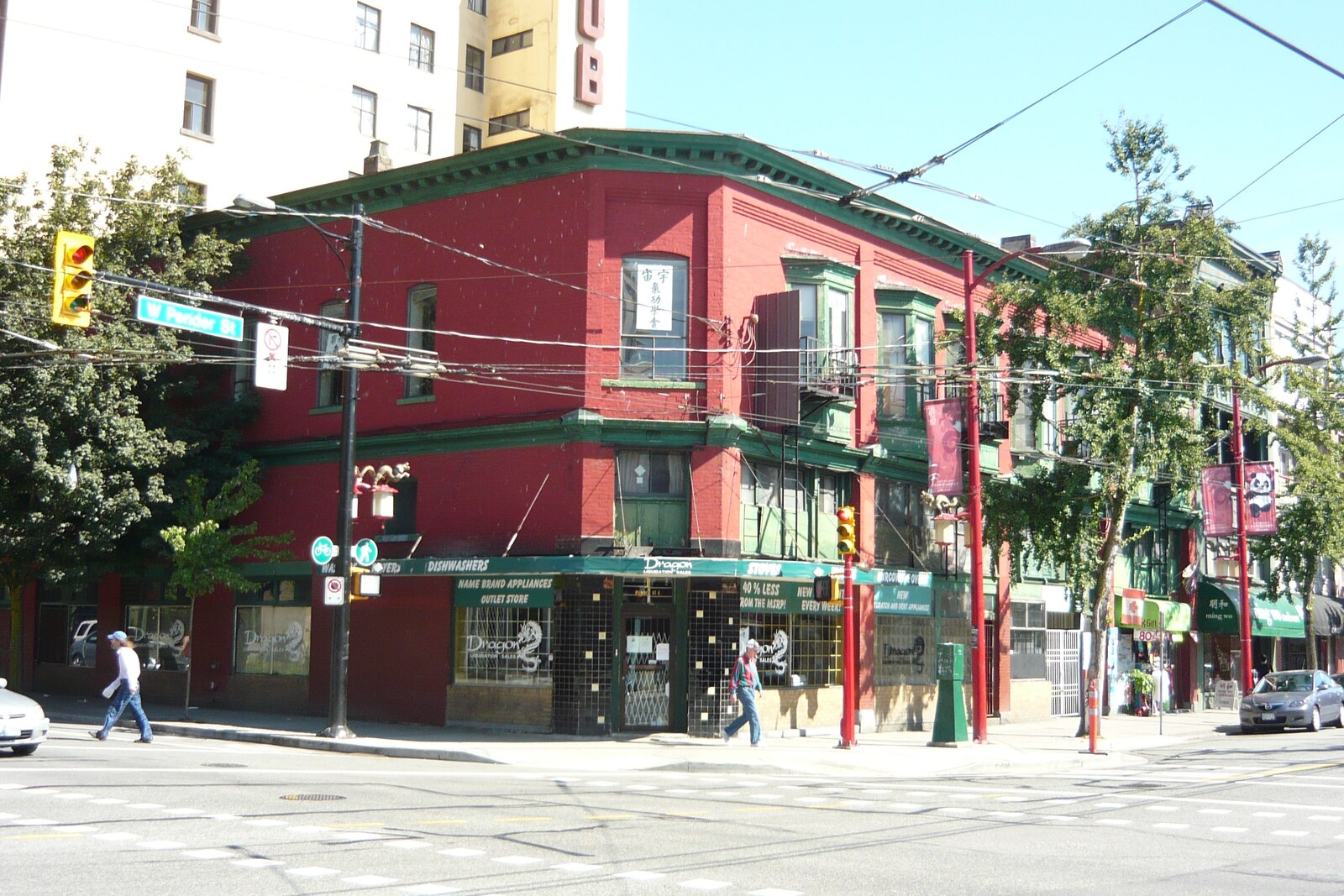
Look around first
What to notice
- Surname society signs
- Recessed balconies
- Ground-floor commercial spaces
- Windows of the upper meeting hall
The story of the place
On the hundred block of East Pender, signs for the Wong, Lee, Ma, and other Chinese surname societies run above the shops. These organizations stood in for family for newcomers: a person was admitted through a family line or the county they came from, helped to find a room and a job, and had disputes settled. The commercial spaces below brought in rental income, while offices and meeting halls occupied the floors above.
The four-story building with recessed balconies belongs to the Chinese Benevolent Association of Vancouver. It was created as a general association for Chinatown: people could turn here regardless of surname, birthplace, or membership in one of the neighboring societies.
In nineteen forty-seven, the Canadian Parliament repealed a law that had almost completely banned Chinese immigration since nineteen twenty-three. Yet families still could not reunite freely. Men who had lived in Canada for decades continued to support wives and children in China, unable to bring them over.
The campaign to change the rules was led by Wong Foon Sien, the association’s leader. He trained as a lawyer, but a law license depended on being added to the voters’ list, from which Chinese Canadians were then excluded. He had to earn a living through translation and court mediation. Most of Foon Sien’s community positions went unpaid. When he invited needed contacts to Chinatown restaurants, the owners often did not present a bill, considering the meal their share of the campaign. His wife, who worked in a factory, covered the household expenses.
From nineteen forty-eight to nineteen fifty-nine, Foon Sien traveled across the country to Ottawa eleven times. He met with federal politicians and explained again and again that the repealed ban continued to operate within families. The rules were eased gradually: Chinese Canadians gained the right to invite spouses, fiancées, unmarried children, and elderly parents. As a result, hundreds of families in Canada, previously separated for decades, were reunited.
The association still occupies the floors above the commercial spaces, and its meeting hall survives on the fourth floor. Separate surnames still stand on the neighboring facades; above them is the organization on whose behalf Wong Foon Sien sought the return of wives, children, and parents.
Useful on site
Exterior viewing is always available; the societies’ interior spaces are usually private.
Checked: June 28, 2026. Check the official source before visiting.Treat the societies as active or private spaces: listen from the sidewalk, and do not try to enter without an explicit invitation.