 Guide On Map
Dadaocheng: Dihua Street and River Trade
From Ten Consecutive Buildings along Dihua Street to Dadaocheng Wharf
Guide On Map on your phone
Open the walk like a regular app
It takes about 10 seconds to install. No app store needed.
The whole path
Route map
About the walk
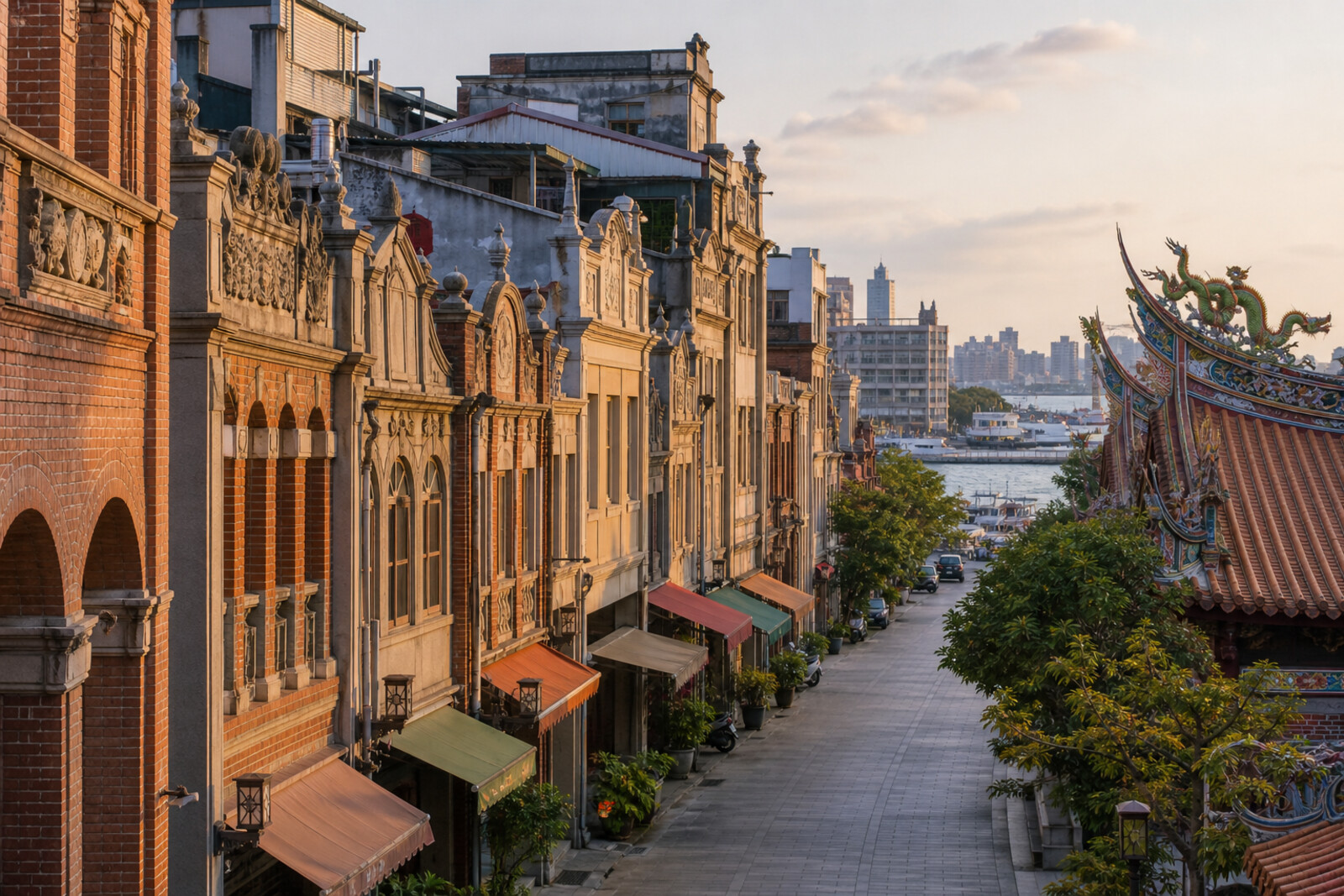
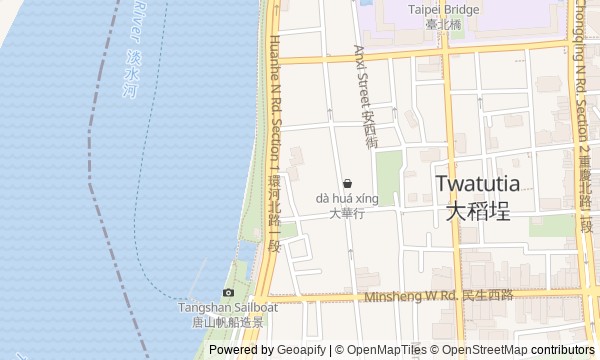
You will begin at the northern end of Dihua Street, beneath a red-brick arcade, then head south through old commercial Dadaocheng. Along the way, you will come across a former salt mansion, a compact temple, the floors of a fabric market, a theater above the stalls, and the building of a pharmacy with a foreign name. The walk ends at the Tamsui River—where the city once received cargo from boats and sent tea across the ocean.
This is not a walk through Taipei's grand landmarks, but through places where trade came right into the family home. You will hear about coins used to test an apprentice, wedding cookies beside a small statue, and a ban on copying a sign carved into a facade. The answers emerge only at the stops themselves.
The story stays calm and close to its objects. It follows inscriptions, arcades, rolls of fabric, and the riverbank. By the end, you will read Dihua as a chain of old deals: from the back gates of rice mills to today's wharf.
Why this order
The northern row of houses establishes the basic pattern: goods moved from the river through a long family plot to the street-side counter. A turn toward Koo's Dadaocheng Residence shows a neighboring version of the same connection between water, trade, and home—this time through salt and a residence-office. Returning to Dihua Street brings you to the temple, because merchants who had resettled needed not only a new wharf but also a shared sanctuary. Yongle Market then carries the commercial thread forward through imported fabrics. Going up within the same building to Dadaocheng Theater places side by side two crafts preserved through apprentices. After the theater, the A.S. Watson & Co. Building reveals the other side of trade in foreign goods—a dispute over a supplier's name. From there, the route heads through Fifth Water Gate to the river, where the stories of rice, salt, fabric, and medicines meet the final gamble on tea exports.
Those who want to understand commercial Dadaocheng through specific houses and crafts Those interested in markets, temples, and family stories without museum formality Those who like to end a city walk by the water
Those looking for panoramic views and Taipei's major symbols Those who do not enjoy entering an active temple and a multi-story market Those who want only a walk along the waterfront
Before you go
Wear comfortable shoes and expect to listen to much of the story while standing outside. Do not block shop entrances or shoppers' paths, especially near the market and temple. Koo's Dadaocheng Residence and the facade of the former pharmacy are intended mainly for viewing from outside. At Yongle Market, access to the shopping floors depends on market hours, while the theater above follows its own schedule: plan a show or exhibition separately. In the temple, speak quietly, do not stand between worshippers and the altar, and check photography rules on site.
When to go
Start in the first half of the day if seeing the working fabric market matters most; choose the second half if you want to finish by the water in softer light.
Backup plan
If the market, theater, or individual spaces are closed, you can still follow the route as a street walk: take a close look at the red-brick row, the exterior of Koo's Dadaocheng Residence, the temple facade, the Yongle Market building, and the stone symbols of the former pharmacy. In heavy rain, shorten stops in exposed sections and leave the wharf for when the weather improves: the riverbank is open to the wind and offers almost no shelter from rain. If the temple is crowded inside or a ceremony is underway, listen to the story from the side and return to the details after people leave.
Route conditions
Surface. Paved — 1.5 km (data covers 77% of the route)
Facilities. Toilets — 7; drinking water — 4
Elevation. Ascent — 13 m; descent — 24 m
OpenStreetMap extract of June 18, 2026: database data, not a check on the ground. Data © OpenStreetMap contributors, ODbL licence
Walk plan
Open in maps ↗- 1
Ten Consecutive Buildings
Here, the vanished route of goods from riverboats through family-run production to street stalls will come into view. - 2
Koo's Dadaocheng Residence
This stop connects the family's fortune in salt with the kindergarten and choir that took over the empty house. - 3
Xiahai City God Temple
Here, the shared shrine of migrant merchants will be joined by personal pleas for marriage. - 4
Yongle Market
The story of one apprentice will show how the trade in fabric rolls became help for those who cannot find what they need among ready-made goods. - 5
Dadaocheng Theater
This stop shows how stagecraft had to be broken down into lessons in order to pass it on to people outside the troupe. - 6
A.S. Watson & Co. Building
The surviving emblem makes it possible to read a dispute on the façade between the supplier, the owner, and his former apprentice. - 7
Dadaocheng Wharf
The finale will connect the route’s houses and warehouses with the trade wager that brought Formosa Oolong onto the American market.
Route features
Everything you need stays in the browser
Progress, saves and your trip plan are stored on this device.
Add Guide On Map to your home screen so the walk opens outside the browser.
How we handle sources, maps and corrections: our editorial standards