 Guide On Map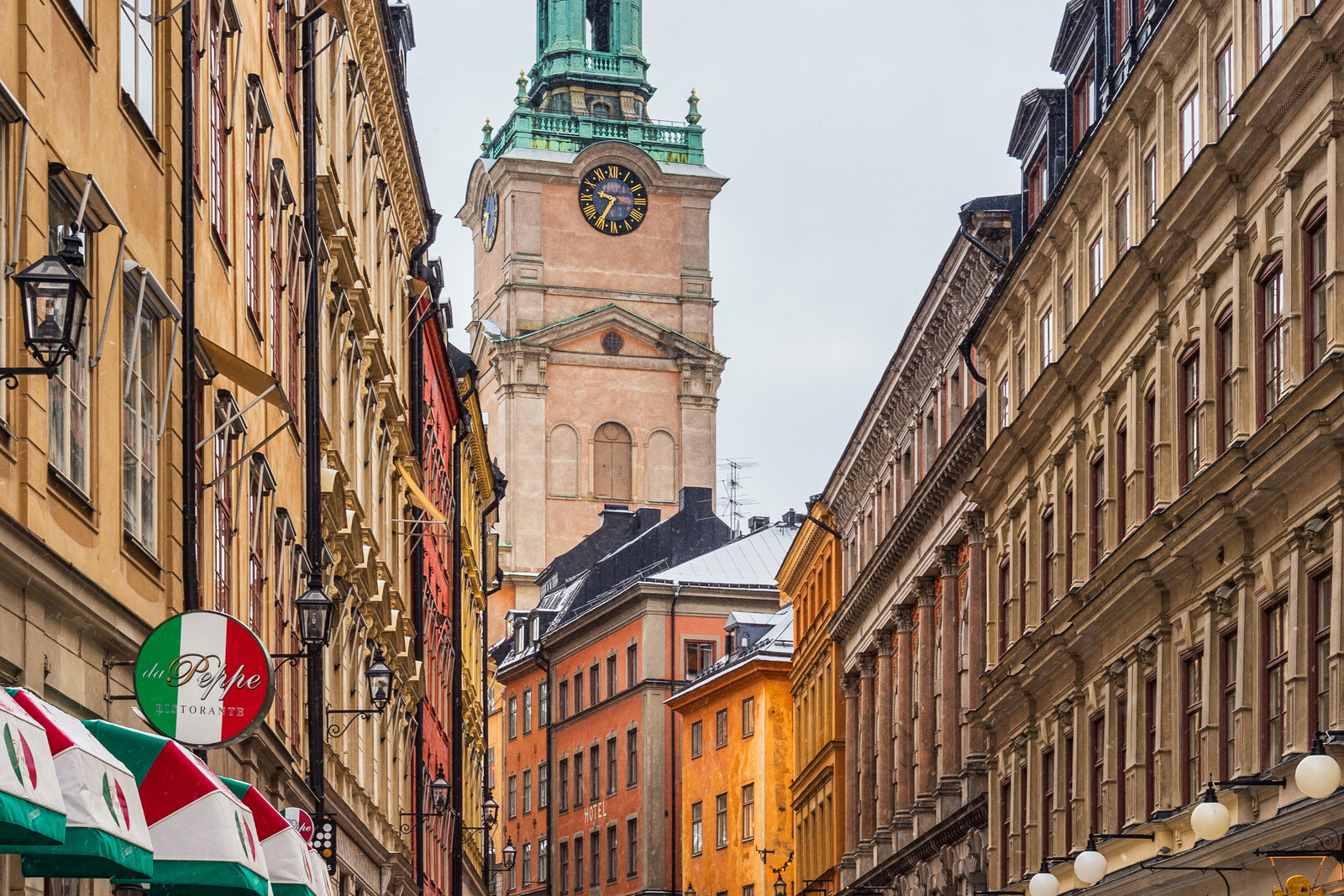
Look around first
What to notice
- The sculptural group “Saint George and the Dragon”
- Elk antlers on the dragon's spikes
- Rope tendons on the horse's body
The story of the place
While Stockholm still fit within the fortress walls, people came here for services from across the city: the church was dedicated to Saint Nicholas, the patron saint of merchants and seafarers. When other major parishes appeared in the capital, it acquired the name Storkyrkan, meaning the Great Church; it was called a cathedral only in nineteen forty-two. To the left of the choir stands a huge wooden group: a knight on a rearing horse raises his sword over a dragon, while a princess waits aside. During the Reformation, almost all medieval images of saints were removed from the church, but the king ordered this work to be preserved; the dragon's spikes are made from elk antlers, and the tendons on the horse's body from ropes.
On the eve of the battle, Sten Sture the Elder gathered his warriors in this church. He was the regent of Sweden—a ruler elected by the nobility in place of a king—and he sought to prevent the Danish king Christian I from controlling the country. Christian was backed by the Kalmar Union, which united Denmark, Norway, and Sweden under one monarch. Sten's position depended on the support of Swedish nobles, the peasant militia, and the people of Stockholm. Defeat would have cost him his office, the income from lands granted to him, and the ability to remain at the head of the country.
The army was gathered here precisely because, in fourteen seventy-one, this was the common city church within the fortress walls. It was dedicated to Saint Nicholas, the patron saint of merchants and seafarers. The name Storkyrkan—“the Great Church”—became established only in the seventeenth century, when growing Stockholm acquired other major parishes. It became a cathedral later still, in nineteen forty-two.
According to church tradition, Sten Sture prayed here to Saint George and promised to erect an altar to him if the army won. According to Christian legend, Saint George was a warrior who killed a dragon and saved the princess intended as its sacrifice. For people preparing to march against Christian's army, the choice of protector was quite practical.
The next day, Sten's troops attacked the enemy's positions at Brunkeberg, beyond the city walls as they stood then. Christian's army was defeated, and the king himself left Sweden. Sten retained the office of regent and, after this victory, governed the country for another quarter century.
He fulfilled the promise eighteen years later. Sten and his wife, Ingeborg Tott, gave the church the huge sculptural group “Saint George and the Dragon.” In it, the knight raises his sword, the horse rears above the monster, and the princess waits aside. The craftsmen made the dragon's spikes from elk antlers and the tendons on the horse's body from ropes. Saint George is dressed in Sten Sture's colors: the victor secured his own role within a familiar legend, in which the princess represented the saved country and the dragon the defeated enemy.
During the Reformation, people removed most medieval images of saints from the church. King Gustav Vasa ordered this group to be preserved: the knight could now be seen as Gustav himself, and the dragon as his Danish opponents. The original wooden sculpture from fourteen eighty-nine still stands inside Storkyrkan, to the left of the choir.
Useful on site
At the time of checking, the cathedral was open 09:00–18:00; the listed summer adult admission ticket was 100 SEK, the reduced ticket 90 SEK, and admission was free up to age 18. The schedule of services and events may affect access.
Checked: June 17, 2026. Check the official source before visiting.Only the architectural context is accessible from outside; the sculpture and the painting are inside. Before visiting, check whether the cathedral is open to visitors.