 Guide On Map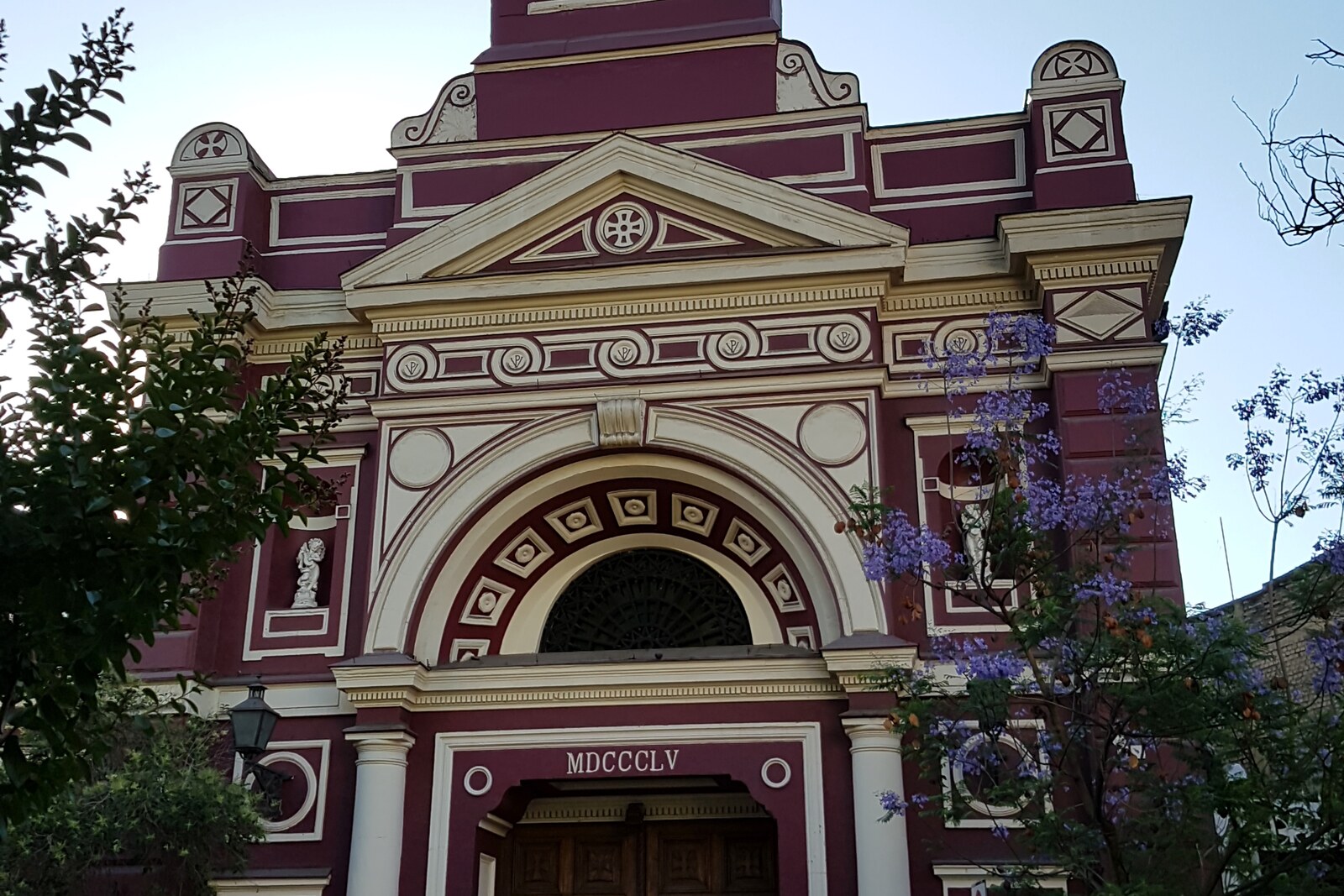
Look around first
What to notice
- The church facade
- Two low parish buildings
The story of the place
A low house of unbaked brick with a tiled roof once stood on this site. It has long been gone: the church facade and two low parish buildings keep this address in the city’s fabric. The church was created for the few families living on the eastern slope of Santa Lucía Hill; people came here for Mass, sermons, and confession. A neighborhood later grew up around the parish.
In the fall of eighteen fifty-two, a ceremonial procession set out from Santiago City Hall for this place: the archbishop, the city council, military personnel, and representatives of monastic orders. Chilean and Spanish flags were carried side by side. Salvador de Tavira, a diplomat of Spanish Queen Isabella II, was one of four honorary participants in the laying of the first stone.
The site was chosen because of an old house belonging to the Barril family. It was a modest structure of unbaked brick with a tiled roof. The Barrils came from the city of Valdivia; the coincidence of names likely helped rumor turn their home into “Pedro de Valdivia’s palace.” The Spanish conquistador Pedro de Valdivia founded Santiago in fifteen forty-one and became Chile’s first governor. Townspeople came here as if it were his home, and artists captioned images of the building with the founder’s name.
No documents existed to confirm this tradition. But Tavira needed to improve relations between Spain and its former colony. Spain recognized Chile’s independence in eighteen forty-four; three years later, the diplomat arrived with a treaty of peace and friendship. Honoring a Spanish conquistador after the war of independence was risky: such a gesture might recall the former subordination. Tavira proposed preserving Valdivia’s presumed house by building a church beside it. The idea was supported by Colonel Francisco Ángel Ramírez, the intendant of Santiago—the head of the city administration, responsible for the capital’s spending and development.
The municipality allocated money, and the Spanish side added its own funds. At the foundation ceremony, Tavira stood beside Chilean officials and then sent a report to Madrid. There, a government newspaper printed his account: the queen received the Chileans’ action with approval. The disputed address fulfilled its diplomatic purpose even before the builders had finished the walls.
Ramírez sought to make the memorial chapel a public church for the several families then living on the eastern slope of Santa Lucía Hill. In eighteen fifty-five, Archbishop Rafael Valentín Valdivieso permitted Masses, sermons, and confession to be held here. He gave the church the name Vera Cruz—“True Cross.” In the founding act, the archbishop linked this name to the spread of Christianity in the Americas and to the veneration of the cross on Good Friday. Work was completed in eighteen fifty-seven; a new city quarter subsequently grew up around the parish.
Later, Benjamín Vicuña Mackenna checked the tradition against an old plan of Santiago. The founder’s house stood by Plaza de Armas, on the site of today’s Santiago Central Post Office; Pedro de Valdivia had no estate beyond Santa Lucía Hill. The Barril house, still shown beside the chapel in an image from eighteen seventy-two, disappeared. At its presumed address, Vera Cruz Church and two low parish buildings remained, erected after the city had mistaken someone else’s house for its founder’s dwelling.
Useful on site
An active church without a stable daily visitor schedule. The doors open for services and individual cultural events; access to the interior is not guaranteed.
Checked: June 29, 2026. Check the official source before visiting.Examine the facade from the street. Go inside only if the doors are open; keep quiet and do not disturb the service.