 Guide On Map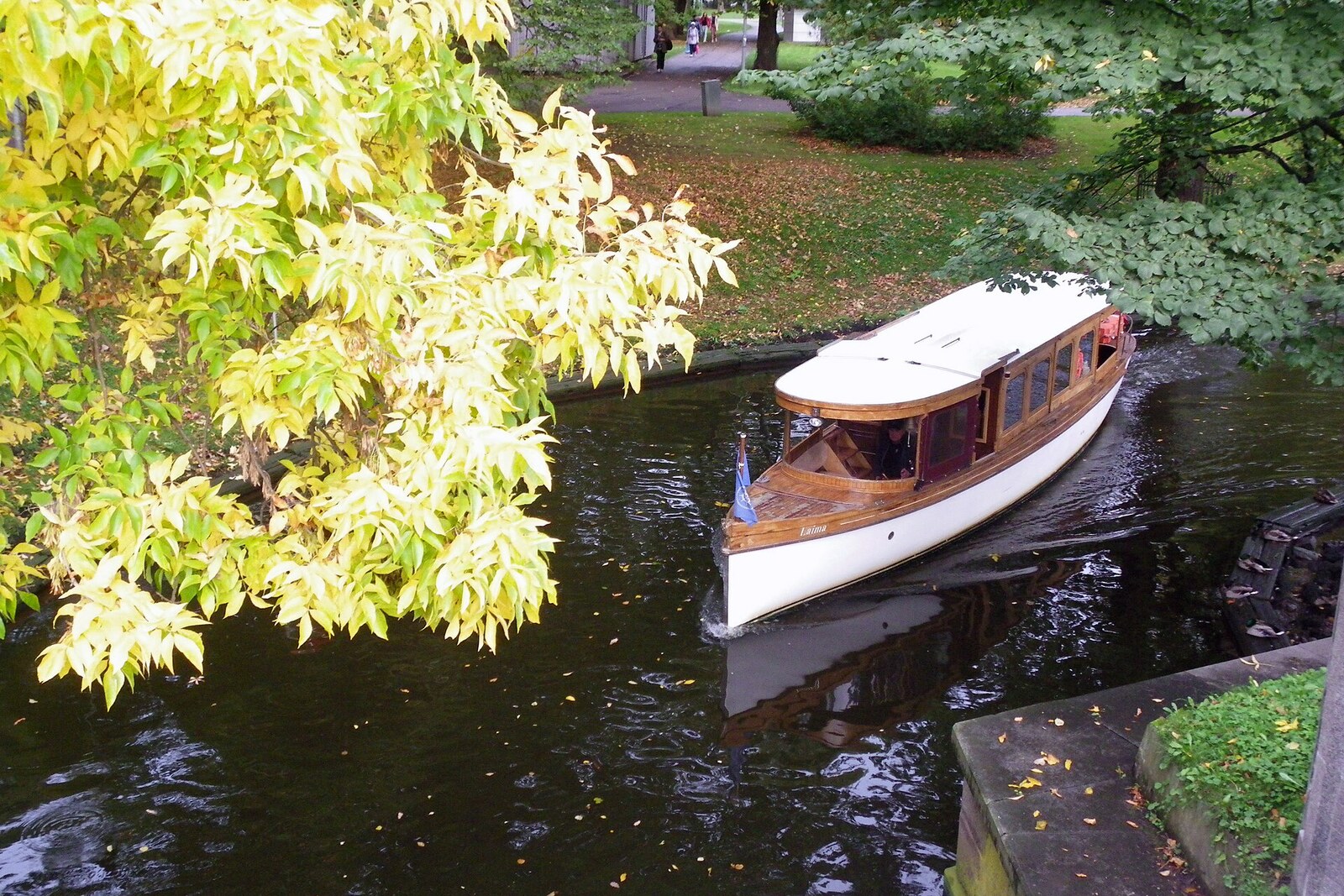
Look around first
What to notice
- Riga Canal
- Latvian National Theatre building
- Park avenues
The story of the place
In eighteen ninety-six, the teacher and cartographer Matīss Siliņš was commissioned to map the boundaries of the Latvian regions and the connections between them. The maps were intended for an exhibition being built here, between what are now Kronvalda Boulevard and the Riga Canal, from Krišjāņa Valdemāra Street to Miķeļa Street.
Siliņš earned his living by publishing the Atbalss calendar and his own maps in Latvian. In the year he began publishing the calendar, he had another twenty-eight competitors. He prepared almost all the content himself, while the maps were sold both as supplements and as separate products. What provided his income was now needed for a more risky undertaking: for one month, the exhibition would have to show thousands of people who could be called Latvians at all and where they lived.
The occasion was the 10th All-Russian Archaeological Congress, which brought researchers from various countries to Riga. The Riga Latvian Society decided to welcome them with its own Latvian Ethnographic Exhibition. Preparations began two years in advance. Members of expeditions traveled through different regions, buying and accepting as gifts clothing, jewelry, tools, household utensils, and manuscripts. They collected more than six thousand objects.
On two hectares beside the canal, nine temporary full-scale buildings were constructed: a Vidzeme threshing barn, an old Kurzeme dwelling house, a modern peasant house, a bathhouse, the main pavilion, a stage, a restaurant, and a music pavilion. Siliņš prepared maps for the main exhibition. For the first time, they attempted to present the Latvian lands as a connected space made up of different historical regions, rather than as several scattered provincial borderlands of the Russian Empire.
About forty-five thousand people visited the exhibition during August. They included participants in the archaeological congress, but far more of the visitors were Riga residents themselves. A month later, all nine structures were dismantled. The collected objects were preserved: the exhibition gave the Riga Latvian Society a collection for a permanent ethnographic museum. In nineteen oh two, Siliņš became the museum's director and the curator of the very objects that he had helped present beside the canal. He later headed the collection of the State Historical Museum. A substantial part of the exhibition collection entered the holdings of today's Latvian National Museum of History.
Not one structure remains on the site of the pavilions. The Latvian National Theatre building occupies the main part of the site, while the Riga Canal runs along the same boundary where the exhibition buildings once stood.
The canal predates the exhibition. It is a surviving, remodeled section of the fortress moat. In eighteen fifty-seven, the demolition of Riga's earthwork fortifications began; the moat was narrowed, its banks were reinforced, and it was surrounded by a green belt. On the opposite side of the canal, the Union of Riga German Riflemen received a plot for a shooting range, a clubhouse, and a garden. This area was called Strēlnieku Garden, and for a long time entry remained a privilege of the union's members.
The garden was opened to all visitors only in nineteen twenty-seven. Ten years later, it was named after Atis Kronvalds. Kronvalds himself had no connection to this garden. He was a schoolteacher, a journalist, and one of the leaders of the New Latvians movement; he campaigned for Latvian to be used in education and the press and created new words for the language. The garden, by then open to the public, was named after him. To this day, the canal separates the riflemen's formerly closed grounds from the bank where Siliņš laid out his map of the Latvian regions.
Useful on site
Free access to the park paths and canal; checked 29.06.2026.
Checked: June 29, 2026. Check the official source before visiting.Stay on the paths and approach the water carefully; view the pavilion from outside and do not expect access to the interior.