 Guide On Map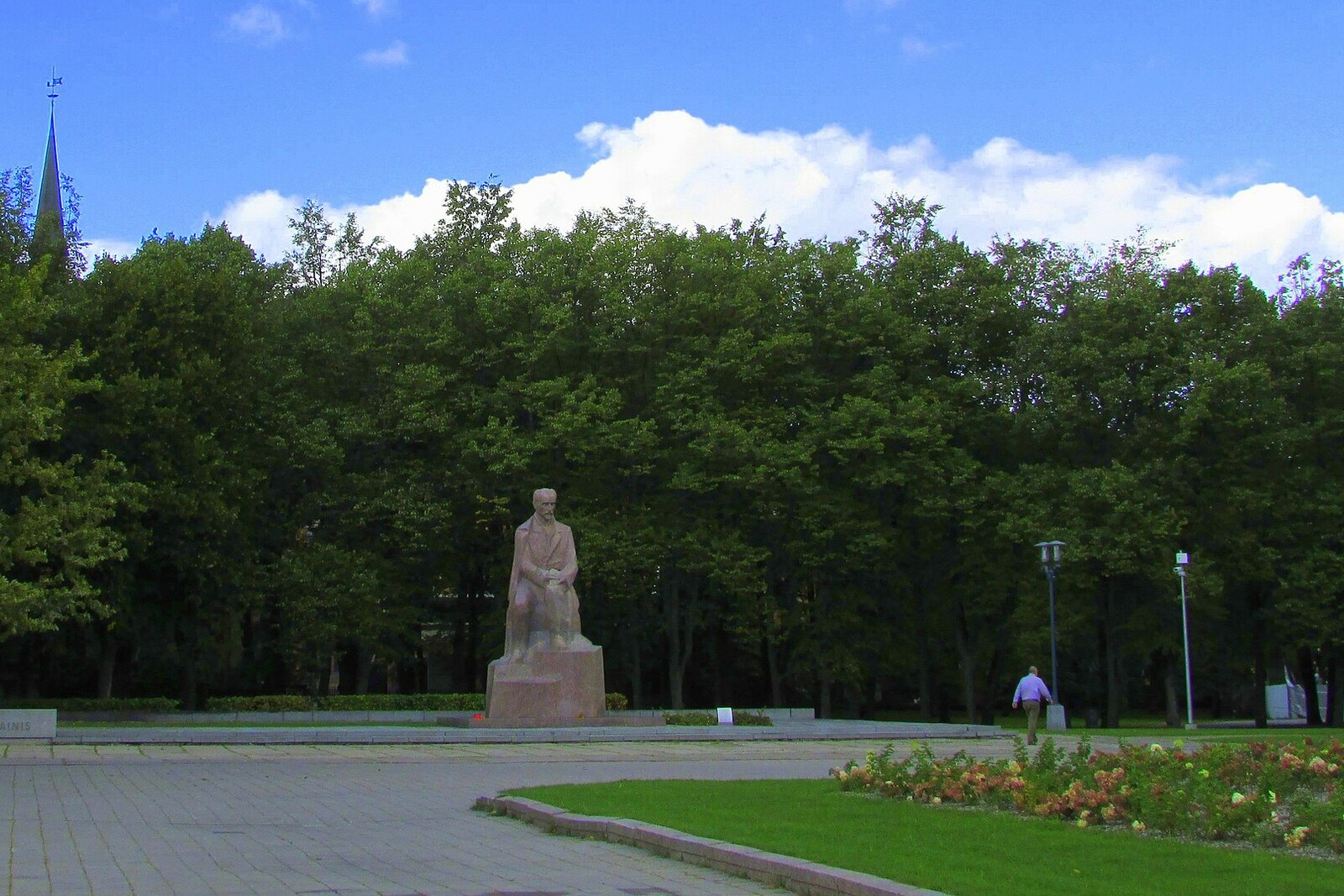
Look around first
What to notice
- Open lawn
- Straight park paths
- Cathedral amid the park
The story of the place
The name “Esplanāde” comes from the military field. This was the name for an open strip beside fortress fortifications: building on it was forbidden, so that the garrison would have enough room for drills and an approaching enemy could be spotted from afar. When Riga’s ramparts were demolished in the middle of the nineteenth century, boulevards, houses, and gardens appeared around them, but this sandy ground remained in military hands. Drills raised dust and blocked neighboring streets. Riga residents complained, but as late as nineteen hundred a commission of senior officers insisted that the garrison had no other convenient parade ground in the center.
The organizers of Riga’s seven-hundredth anniversary found a solution. A year before the commission, one hundred fifty factory owners, workshop owners, and artisans supported engineer Florian von Viganovsky’s proposal to hold a large industrial exhibition here. These people made their living from orders for stoves, furniture, machines, fabrics, and tableware; the anniversary gave them an opportunity to show their goods to buyers and compare them with their competitors’ work. The organizers inspected several sites on the outskirts, but poor transport links and lack of space were a problem there. The military parade ground was level, empty, and accessible from different parts of the city.
Max Scherwinsky, an architect and director of the craft school, won the competition for the exhibition plan. Twenty-one shared exhibition buildings and twenty-six private pavilions were built around the cathedral. Georg Kuphaldt, the city’s chief gardener, laid out paths, created lawns and plantings. In the summer of nineteen oh one, a wooden town in the then-new Art Nouveau style stood for three months on the former parade ground. Seven hundred seventy-five participants brought lace, cigars, tiled stoves, furniture, steam engines, tramcars, and an automobile here.
Before the exhibition opened, War Minister Alexei Kuropatkin inspected it. His department sought to preserve the site for the army, but the minister now saw a public space already completed around temporary pavilions and Kuphaldt’s garden. After the exhibition, on January tenth, nineteen oh two, the military department permitted the city to landscape the edges of Esplanāde and erect public buildings here. The pavilions were dismantled, and the city’s gardeners continued laying out a formal park.
Nothing remains on Esplanāde itself of the forty-seven exhibition structures. The open ground has survived—the very ground for which the military once prohibited construction here. City fairs and celebrations now take place on the former parade ground, and its military purpose survives only in the park’s name.
Useful on site
Open urban space; check the city events listings for events and temporary barriers.
Checked: June 26, 2026. Check the official source before visiting.This is a large open area with no single viewing point. Listen to the story as you walk slowly through it, without lingering on bicycle paths and busy walkways.