 Guide On Map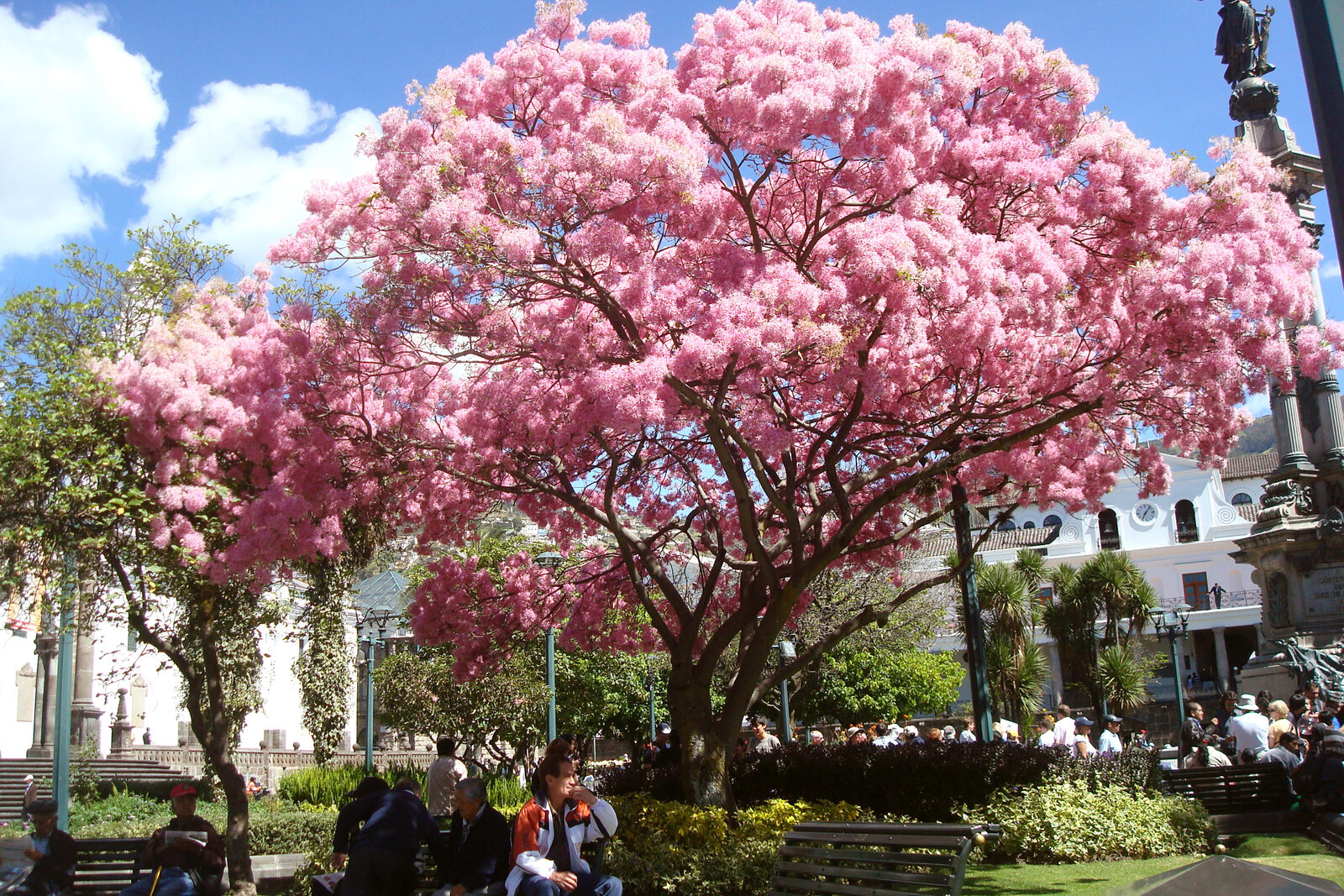
Look around first
What to notice
- Independence Monument
- Relief on the pedestal
- Bronze lion with an arrow
- Carondelet Palace
The story of the place
Spanish urban planners gathered the palace, city council, treasury, and main church around one square. The affairs of the entire province converged on these buildings: people appealed to the authorities here, conducted city business, kept public money, and held the main services. Carondelet Palace stands at the edge of the square, and a bronze lion with an arrow lies beneath the monument's pedestal.
Officially, it is Independence Square, although Quito residents still call it Plaza Grande—the Great Square. The official name appeared in nineteen oh six along with the Independence Monument in the center. It was dedicated to those who took part in the events of August tenth, eighteen oh nine. State ceremonies now take place here, and wreaths are brought to the foot of the monument.
At about five in the morning that August day, Juan de Salinas, an officer in the royal garrison, lined up his soldiers in the square, then Plaza Grande. Salinas was seeking the army's support for the local governing council—the junta—created by the conspirators. He was risking very tangible things: his rank, salary, and position came precisely from the royal service, against whose superiors he had deployed the garrison.
The pretext for the coup came from Europe. Napoleon forced the Spanish king Ferdinand VII to abdicate, and temporary councils sprang up across Spain, declaring that they governed in the name of the captive monarch. Quito's Creole leaders decided to use the same argument. In the document they drafted, they still swore loyalty to Ferdinand, but they intended to dismiss officials appointed by the Spanish Crown and govern the province themselves.
Salinas's support decided the outcome of the first hours. While the soldiers occupied the square in front of the Royal Palace—today's Carondelet Palace—the lawyer Antonio Ante demanded that Count Ruiz de Castilla be awakened. The count headed the Royal Audiencia of Quito, the highest Spanish administration in Quito. Ante handed him a letter: the previous government was ceasing to operate; from now on, the junta governed the city. No battle for the palace was needed.
Such a coup could happen precisely here. Spanish urban planners brought the palace, city council, treasury, and main church together around Plaza Grande. Salinas only needed to block off one square to separate the chief royal official from the garrison and occupy the premises from which the province was governed.
The neighboring regions did not recognize the new junta, and royal troops moved toward Quito from Lima and New Granada. After two and a half months, the conspirators restored Ruiz de Castilla to his post, having agreed that the participants would not be persecuted. After the previous order was restored, arrests began. Salinas and the other leaders were imprisoned in the Cuartel Real de Lima beside the square; the charge of treason threatened them with the death penalty.
On August second, eighteen ten, Quito residents tried to free the prisoners. Soldiers killed Salinas and several of his comrades in their cells, and then clashes spread through the central streets. More than two hundred people died. The government proclaimed a year earlier disappeared, and this territory's independence was finally secured only after the Battle of Pichincha in eighteen twenty-two.
On the monument's pedestal is a relief depicting the killing of the prisoners on August second. Below it lies a bronze lion with an arrow embedded in it—the defeated Spanish Crown. At the edge of the square remains the palace in front of which Salinas lined up the garrison; the premises of the former Cuartel Real de Lima now form part of the neighboring city cultural complex. Between the site of the morning coup and the building where its military leader died stands the monument that gave Plaza Grande its official name.
Useful on site
The square is open as a public space; access to individual sides may temporarily change because of official ceremonies, security, or city events.
Checked: July 1, 2026. Check the official source before visiting.This is an active administrative space: take barriers, security, and official events into account, and do not obstruct passage near the palace.