 Guide On Map
Historic Quito: churches, plazas, and La Ronda
From the Basilica of the National Vow through Plaza Grande and San Francisco to La Ronda
Guide On Map on your phone
Open the walk like a regular app
It takes about 10 seconds to install. No app store needed.
The whole path
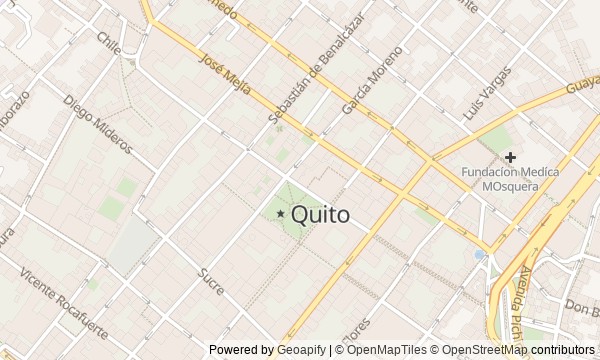
Route map
About the walk
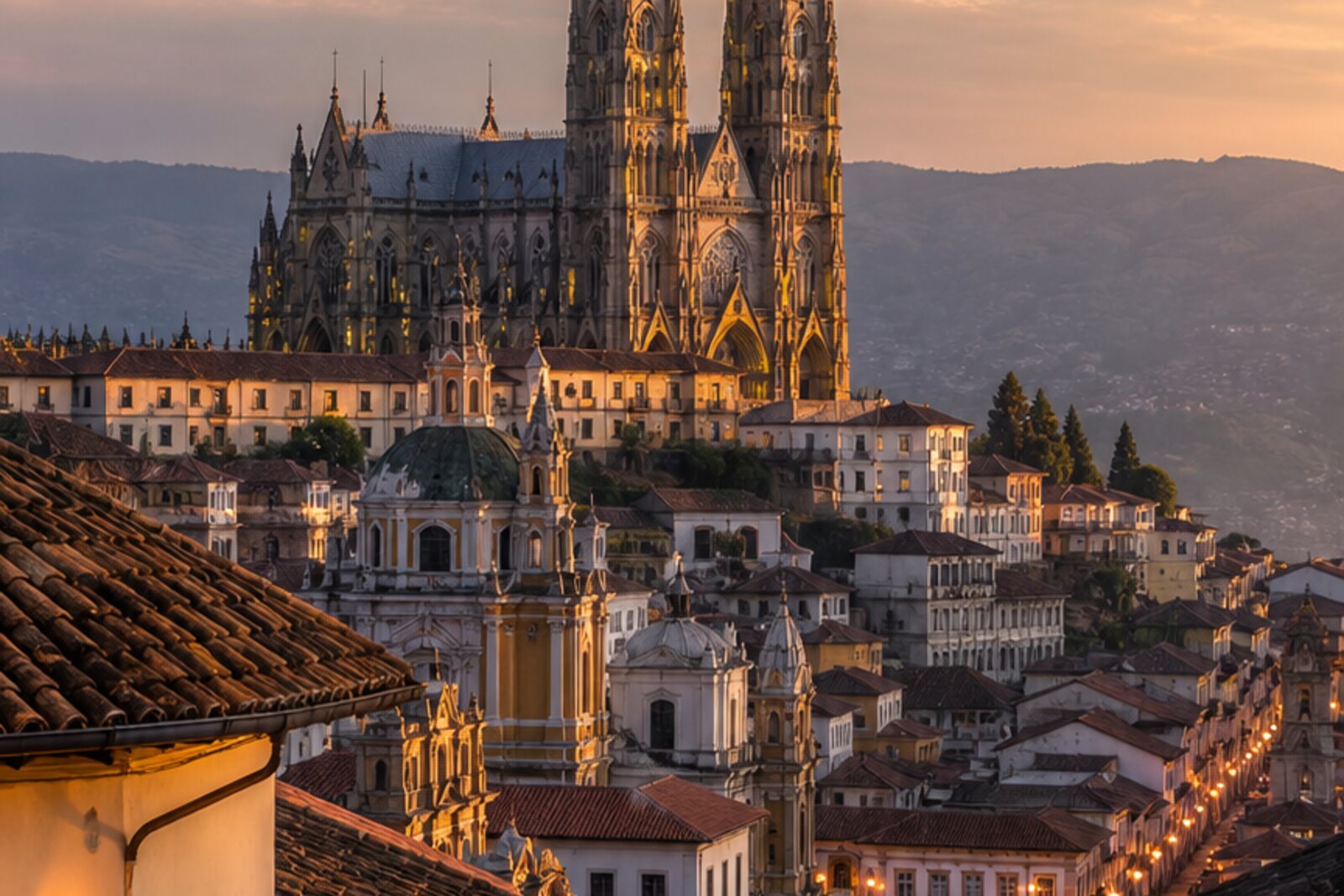
You will begin by the basilica towers on San Juan Hill and make your way down to Plaza Grande. From there, the route crosses the old center: Quito Metropolitan Cathedral, the gold-leafed Church of the Society of Jesus, the broad stone atrium of San Francisco, and finally the narrow street of La Ronda.
Here Quito is not a collection of colonial facades, but a city of promises people made to their country, their church, their family, and themselves. One church was built over nearly a century because of an argument about whether political power had the right to speak for everyone. On the main plaza, a morning coup took place without a fight—and still ended in bloodshed. Inside the cathedral, one bitter sip left investigators with evidence but no culprit. At a monastery chapel, a documented deal proves stranger than the popular legend, while on La Ronda a sign survives longer than the room people remember it for.
The story separates archival fact from tradition. By the end of the walk, you will be able to read Quito through its agreements, names carved in stone, and family signs—and understand why the old center looks the way it does.
Why this order
The descent from the basilica along Venezuela Street leads to Plaza Grande: the national vow immediately meets the plaza where power could be changed by taking a single block. Quito Metropolitan Cathedral stands on its southern side, so the plaza's story continues inside an institution that argued with that same state. Farther south, the route reaches the Church of the Society of Jesus: after the archbishop's public struggle, the story narrows to a personal promise made in a Jesuit church. Turning west brings you to San Francisco, where a religious promise becomes a documented deal for a chapel and a family burial place. The final descent to Juan de Dios Morales Street shifts the route from the major churches and plazas to a home: Quito's official history ends with family memory and a lost room.
A first introduction to Quito's historic center Those interested in the relationship between church and power Those who enjoy telling documents apart from urban legend
Those looking only for an overview of architectural styles and decoration Those who do not want to hear stories of political violence and poisoning Those who need a route without religious themes
Before you go
Quito's altitude noticeably affects your pace even on the way down: leave time for stops, water, and short rests. Wear shoes with good grip—the stone paving can be slippery after rain. Several stops on the route are active churches, so inside you will need a quiet voice, modest clothing, and a willingness to step aside during services. Access to towers, museums, chapels, and particular parts of the interiors may be regulated separately; check current conditions in advance if going inside matters to you. Take photos only where permitted, and ask for consent before photographing in La Ronda's workshops.
When to go
For architectural details and unhurried reading, start in good daylight. If you want to see the workshops and courtyards of La Ronda, finish the route before late evening; for music and a livelier street, come later, knowing the ending will be noisier.
Backup plan
A closed interior does not cancel the stop: at the basilica, the local animals on the facades remain; Plaza Grande can be read through the arrangement of its buildings; and San Francisco through the scale of the plaza and its restored towers. If the Church of the Society of Jesus is inaccessible, keep the story of craft and the Jesuit quarter, but do not try to make out the gilding through closed doors. In heavy rain, shorten pauses in open plazas and do not linger on slippery stretches. La Ronda can become a brief ending by its first houses instead of a long walk along the entire street.
Route conditions
Surface. Paved — 1.4 km (data covers 63% of the route)
Facilities. Toilets — 5; drinking water — 3
Elevation. Ascent — 32 m; descent — 72 m
OpenStreetMap extract of June 18, 2026: database data, not a check on the ground. Data © OpenStreetMap contributors, ODbL licence
Walk plan
Open in maps ↗- 1
Basilica of the National Vow
Here, a state religious promise becomes a dispute over the right to speak on behalf of the country, and a long construction project funded by private donations. - 2
Plaza Grande
The square will show why taking over several buildings made it possible to change the government without a battle—and why that did not save the conspirators. - 3
Quito Metropolitan Cathedral
This stop connects a church-state conflict with an investigation in which the evidence outlived the name of the criminal. - 4
Church of the Society of Jesus
The gilded interior becomes the setting for the story of how church testimony turned a laywoman’s death into voluntary martyrdom. - 5
Plaza de San Francisco
Documents about the blacksmith distinguish the real agreement for a family chapel from the famous legend. - 6
La Ronda
A family restaurant concludes the route with the story of a house restored after the loss of its secret room.
Route features
Everything you need stays in the browser
Progress, saves and your trip plan are stored on this device.
Add Guide On Map to your home screen so the walk opens outside the browser.
How we handle sources, maps and corrections: our editorial standards