 Guide On Map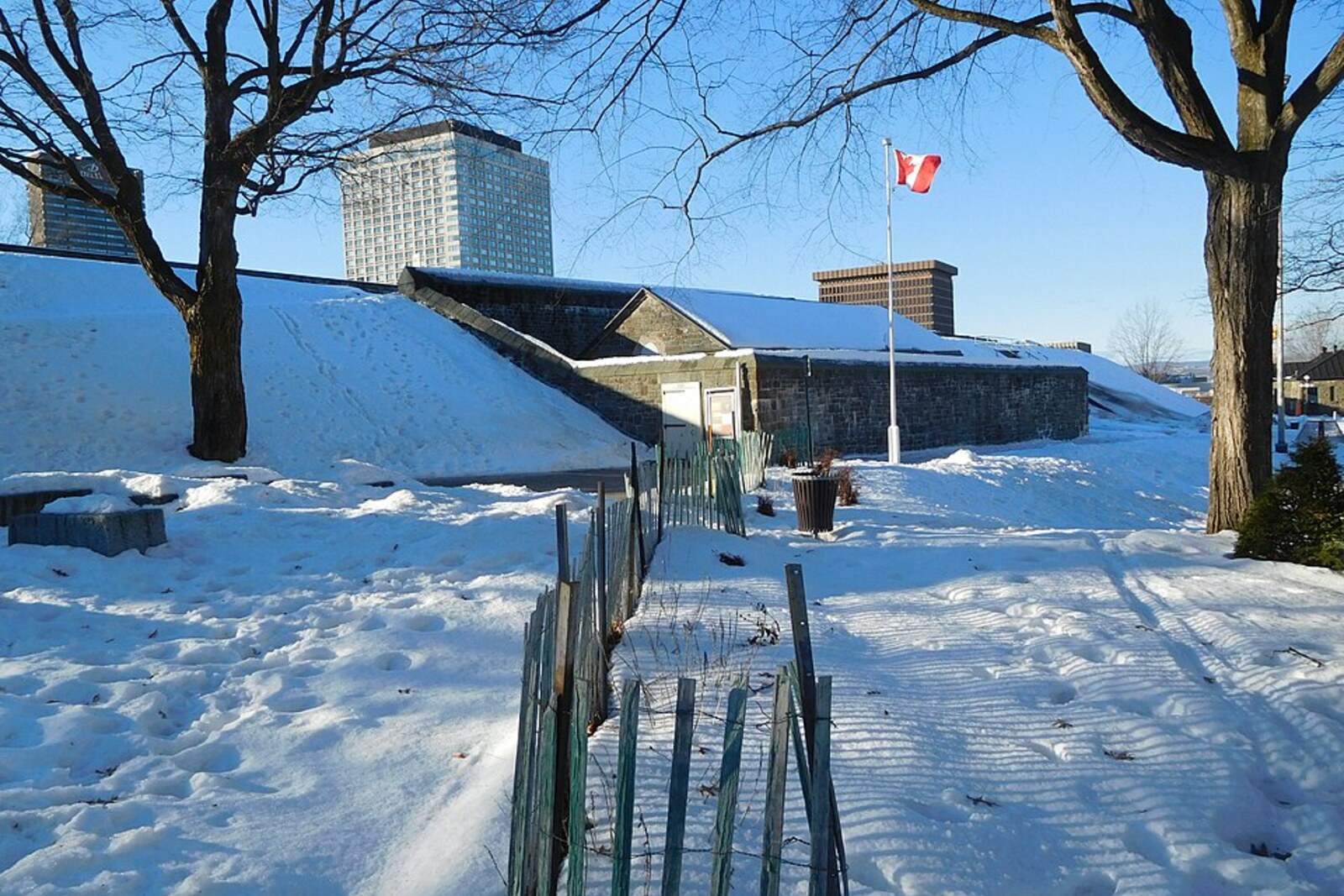
Look around first
What to notice
- Bronze soldier
- Rifle
- Ensign
- Side panel with names
The story of the place
In summer, a children's playground and water-play area operate in Esplanade Park; in winter, an ice rink is flooded here. The open field by the fortress wall was created for another kind of drill.
The military called an esplanade an open, level area beside fortifications. From seventeen seventy-nine to seventeen eighty-three, engineers blasted rock here, filled in old quarries, and leveled the ground. Space for the garrison was left between the city's development and the wall. Soldiers learned to keep formation, underwent inspections, and staged training battles. In the mornings, guards were sent out from here to posts throughout Québec City.
On October thirtieth, eighteen ninety-nine, the first Canadian contingent bound to fight across the ocean was formed up on the Esplanade. The British Empire entered the Second Boer War in southern Africa; Boers were the descendants of Dutch settlers. The Canadian government agreed to send about one thousand men, but restricted recruitment to volunteers. Each man had to decide for himself whether he was ready to leave for an imperial war.
Among the soldiers formed up here was Private Curphy of Québec City Company “F.” In the list of recruits, the word “civilian” appears beside his surname. The record does not name his exact occupation; most of his comrades have the names of army and militia units in that place. Curphy came into the battalion directly from civilian life.
After the ceremony, the soldiers left for the ship Sardinian. A month later, the battalion landed in southern Africa. Bullets proved to be only one of the dangers of that campaign: typhoid fever spread through military camps. On April eighteenth, nineteen hundred, Curphy died of it in Bloemfontein and was buried there.
On August fifteenth, nineteen oh five, a memorial to the fallen men from Québec City was unveiled at the contingent's point of departure. A bronze soldier holds a rifle and the Canadian Red Ensign. A side panel lists eleven people from Québec City who died in that war. Among military ranks and regimental names, Curphy's surname is still accompanied by the word “civilian.”
Useful on site
The park is open as a public space. Water play operates seasonally, usually from mid-May to mid-September, daily from 9:00 to 21:00 when the temperature is at least 18 degrees. Access inside the powder magazine depends on the tour schedule.
Checked: June 30, 2026. Check the official source before visiting.View the magazine only from the permitted side, and do not try to enter beyond closed barriers. There are few visible traces of the old events in the park, so it is more important to relate the story to the openness of the grounds.