 Guide On Map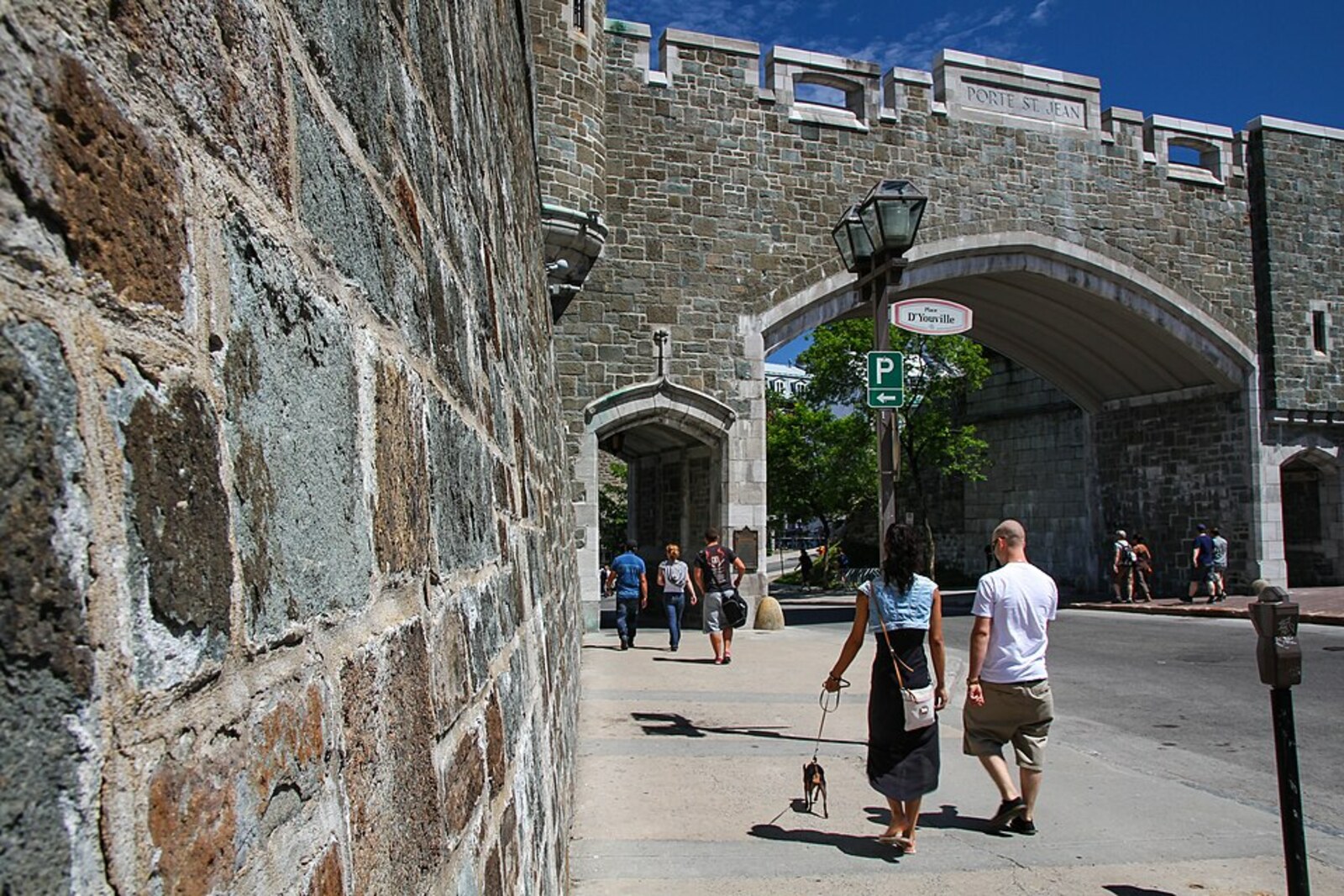
Look around first
What to notice
- Wide roadway arch
- Coat of arms of Canada
- Walkway above the gate
The story of the place
The name Saint-Jean appeared here before the gate did. In the mid-seventeenth century, the surveyor and engineer Jean Bourdon laid out a road from Québec City to his estate—the Saint-Jean Fief. The road retained the fief's name. When the western line of fortifications was shifted out to its present location, a passage was left in the wall for this road and given the same name.
By eighteen sixty-seven, there was a gate here with two carriage passageways and two pedestrian passageways. The large arches accommodated a horse-drawn streetcar—a railcar pulled by horses. Shop owners on both sides of the wall depended on this route: Saint-Jean Street linked the old city with the expanding suburb.
In the eighteen nineties, railway contractor Horace Jansen Beemer saw a new source of income in the city's electric streetcar system. He obtained an exclusive concession from the city council to create a network and tried to attract American investors. Stock-market instability frightened investors away, and in eighteen ninety-six Beemer had to transfer the concession to the Quebec District Railway Company, while retaining the right to buy the enterprise back.
The company combined the existing lines and began electrification. The cars needed wires above the rails, and the stone vaults of Saint-Jean left no room for them. In eighteen ninety-seven, the city ordered the gate dismantled. Electric cars began running along the street that summer, and a year later Beemer's company regained the now-operational network. The entrepreneur survived the loss of investors; the arch did not.
For forty-two years, the opening between the sections of wall remained uncovered. The present gate was built in nineteen thirty-nine, when a federal public-works program provided employment for people left without work during the Great Depression. The builders reproduced the medieval appearance of the gate proposed earlier by Lord Dufferin, the Governor General who had advocated preserving Québec City's fortifications. They made one wide arch for the roadway: transport, which had once destroyed the earlier gate, determined the dimensions of the new one.
The coat of arms of Canada is placed above the arch. Beneath it continues the street that Jean Bourdon laid out to his fief; not a single vault from the gate dismantled for the streetcar wires has survived here.
Useful on site
Passage and exterior viewing are available at all times. The walkways and park service museum sites operate seasonally and depending on the weather; ticket office and tour hours have been checked separately for 2026.
Checked: June 30, 2026. Check the official source before visiting.View the gate first from outside, then pass beneath the arch and compare the two facades. Do not stand in the roadway: the best view is from the pedestrian areas on either side.