 Guide On Map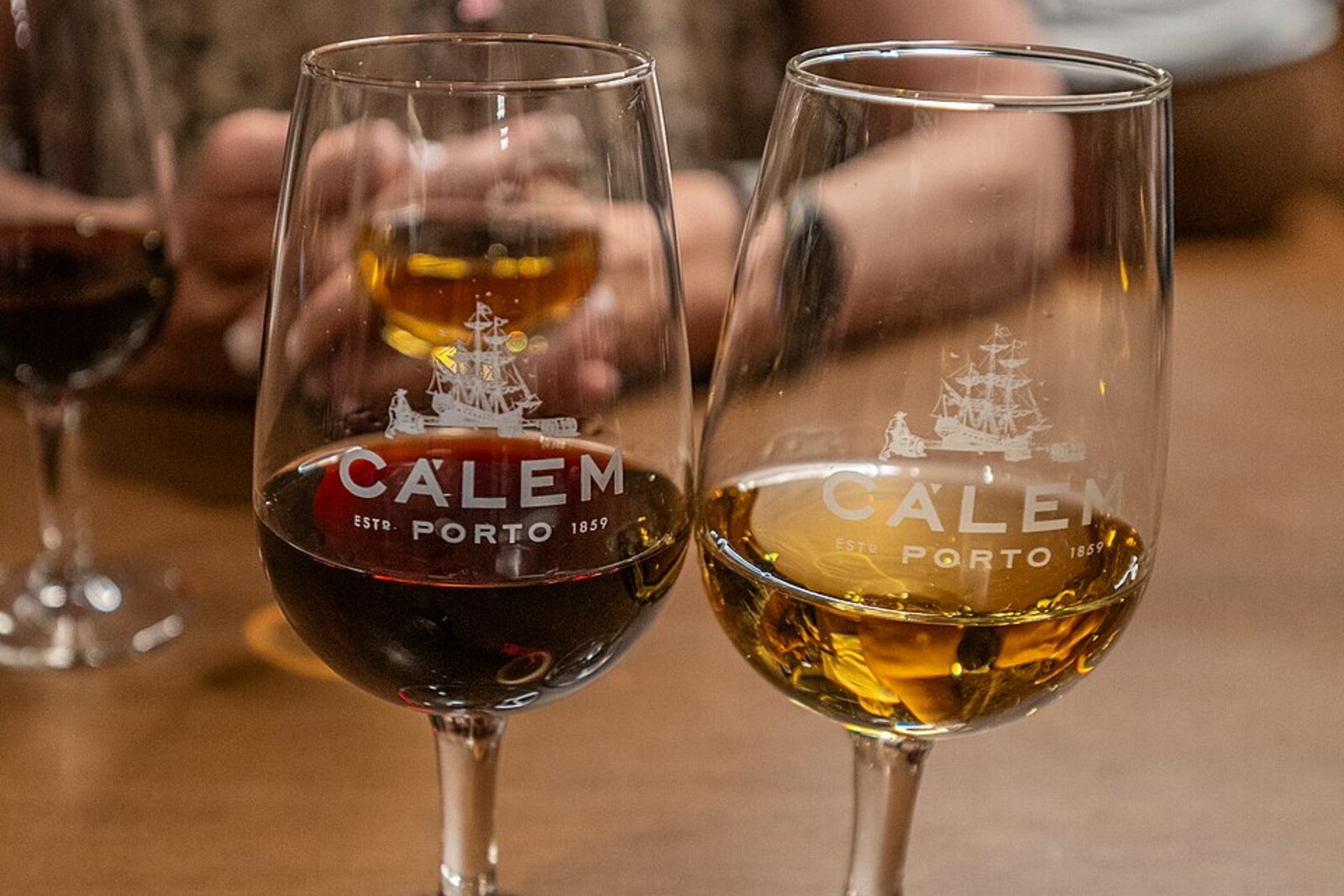
Look around first
What to notice
- The façade of the caves
- The caravel on the emblem
- Wooden containers
- Stone vaults
The story of the place
Behind the stone façade and vaults along the Douro are the working caves of a wine house: Port made farther upstream is delivered here to age in the cooler air of Vila Nova de Gaia. Wooden barrels remain inside, while the river once gave the warehouses access to maritime routes. Grapes do not grow at these quays: the work here began after harvesting and processing, when the drink needed time, containers, and shipment to customers. The caravel on the bottles recalls the maritime side of this waterfront.
In eighteen fifty-nine, the wine merchant António Alves Cálem founded his own firm on the Vila Nova de Gaia waterfront, beside the site of the present bridge. Cálem lived on the cash flow from wine: he invested money in cargo, paid for ocean transport, and recovered his capital only after the sale. The British Isles and European ports remained the usual destinations for Port, but he chose Brazil.
At first, Cálem sent ordinary Portuguese table wines across the Atlantic Ocean. Then the problem of the return voyage arose: an empty ship ate into part of the profit. In Brazil, Cálem began buying timber and bringing it to Vila Nova de Gaia. Here he opened a cooperage. Barrels were made from the imported wood, and its own barrels allowed the firm to store and age Port for sale. Cálem came to Port through the cargo that filled ships on the return journey.
The calculation paid off. By eighteen eighty, more than forty percent of Cálem's output was going to Brazil. The owners acquired their own fleet and then vineyards in the Upper Douro. One family now controlled the entire chain: grapes, ageing, barrels, and ocean transport.
This also explains the purpose of the rooms behind the façade. Grapes are grown and processed farther up the Douro. The wine is brought to the cooler Vila Nova de Gaia for ageing, while the riverbank linked the warehouses with maritime trade. Caves Cálem are still here, where Port is aged in wooden containers.
Since nineteen sixty-five, every Cálem bottle has borne a caravel being loaded with barrels of Port. There is no Brazilian timber on the emblem. But it is the return cargo that explains where Cálem got its barrels and why a table-wine merchant became the owner of a Port house.
Useful on site
Tours and tastings take place in slots; check the current schedule and the tour language on the official website.
Checked: June 25, 2026. Check the official source before visiting.The museum, caves, and tasting are available as part of a separate visit, which is best booked in advance. Without a booking, you can take in the stop from outside.