 Guide On Map
Gaia: Monastery, Bridge, and Wine Shore
From Serra do Pilar Monastery to Gaia’s wine cellars above the Douro and along the water
Guide On Map on your phone
Open the walk like a regular app
It takes about 10 seconds to install. No app store needed.
The whole path
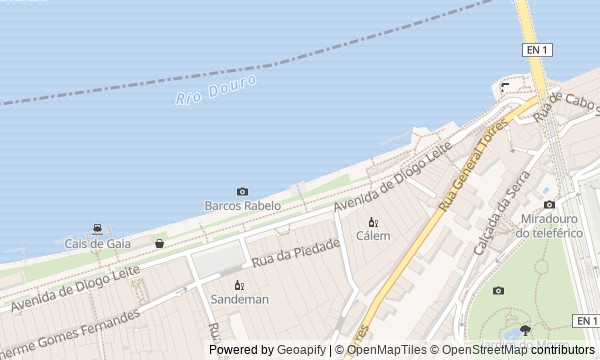
Route map
About the walk
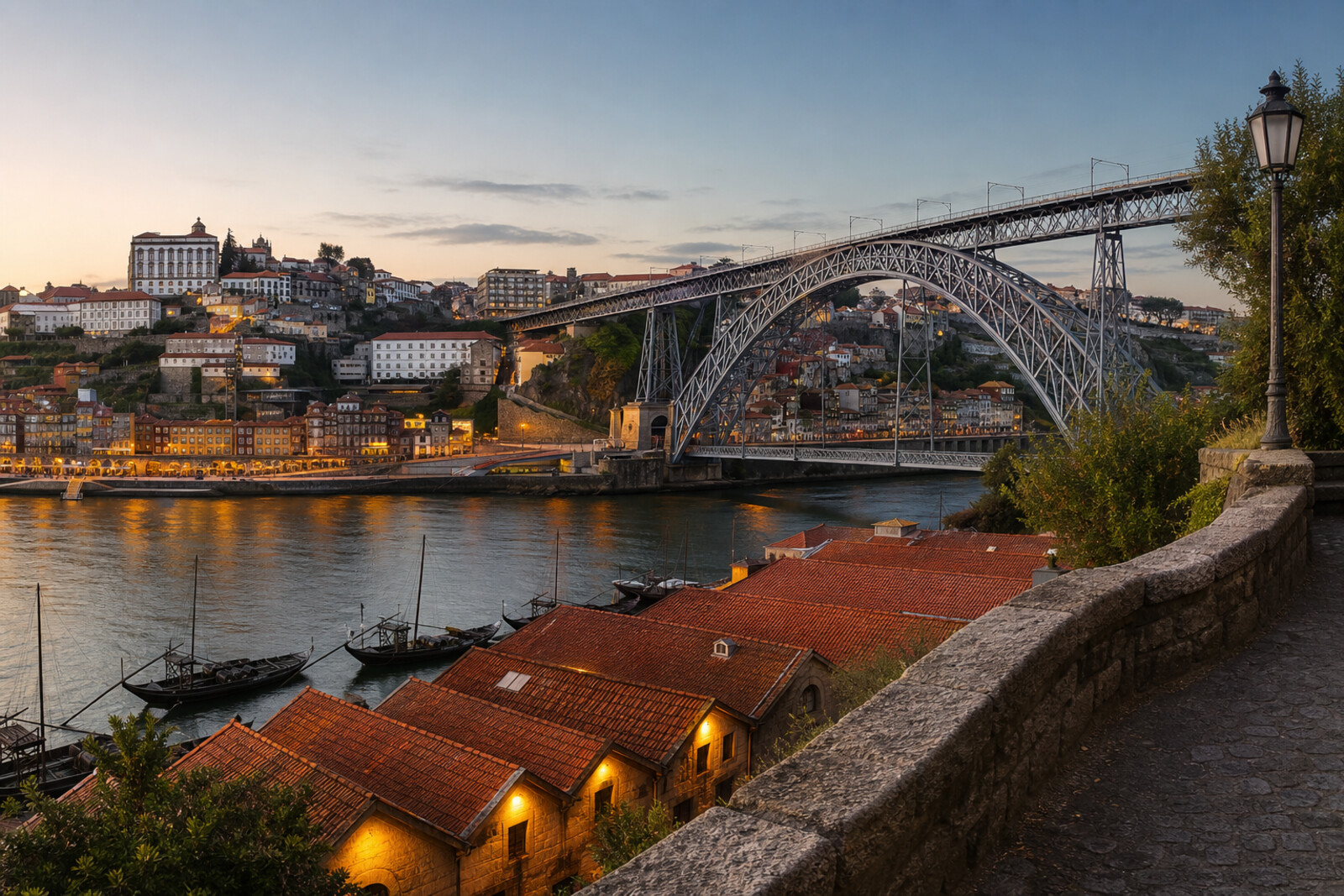
You will begin on a fortified height above the Douro, walk to the bridge’s upper deck, linger in the garden, and descend to Gaia’s wine shore. Below, the route follows the quay and ends at two old Port houses.
From above, you will make out the steep slope, the crossing’s two levels, and the narrow strip of warehouses by the water. Then the questions begin. Why did Gustave Eiffel’s name overshadow the bridge’s actual designer? What remains of the hill that had to be cut through for the tram? And why did a residential building disappear beneath the cable car?
The story will be calm and precise. It separates urban legends from documents and shows Port through defense, transport, debt, and family risk. After the walk, you will see Gaia’s waterfront not as a row of tasting rooms, but as a place where the height above the Douro and maritime trade shaped the quay’s fate.
Why this order
Serra do Pilar Monastery provides the starting height: from here, it becomes clear why control of the south bank decided the outcome of the Siege of Porto. Just below the monastery, the bridge shows how engineers later linked the city’s upper and lower levels. At the far end of the crossing, Jardim do Morro explains how much of the granite slope was removed for new traffic. The cable car continues that same argument with the terrain and physically carries the route downhill. At the quay, you will see why the waterfront was connected to the upper city: wine was stored and shipped here. The final cellars, Cálem and Burmester, reveal two neighboring models of trade—control of the entire transport chain and trust in a family name.
Those who want to connect Douro panoramas with urban history Those interested in bridges, transport, and changing terrain Those who want to understand Port through trade and the fortunes of family houses
Those who dislike heights and suspended cabins Those looking for a route only through Porto’s historic center Those expecting a story exclusively about the tastes and varieties of Port
Before you go
Check in advance whether Teleférico de Gaia is operating on your chosen day, and book a separate tour at Cálem or Burmester if you want to go inside: the walk itself does not replace a ticket to the cellars. Wind protection will help on the upper section, and sturdy-soled shoes are useful for the descent. Stay on the pedestrian section of the bridge and watch for metro traffic. Do not expect to move quickly along the waterfront during busy hours; it can be crowded near the boats and the entrances to the wine houses.
When to go
Without visiting the cellars, the route takes about an hour and a half at an easy pace. One tour with a tasting will noticeably lengthen the walk; two are best planned only with reserved time slots and room between them. The panoramas are most enjoyable in good daylight, with an unhurried descent to the waterfront.
Backup plan
If the cable car is not running, or traveling above the slope does not suit you, descend from Jardim do Morro to Cais de Gaia by city streets and stairways. This option takes more effort and time, but the order of the lower stops remains unchanged. If you cannot get inside one of the wine houses, see it from outside and continue to the next one: the route’s stories remain clear along the waterfront. In strong wind or if heights make you uncomfortable, do not linger on the bridge’s upper deck—the link between the banks is easy to read from Gaia’s viewpoints as well.
Route conditions
Surface. Paved — 452 m (data covers 31% of the route)
Facilities. Toilets — 3; drinking water — 4
Elevation. Ascent — 31 m; descent — 70 m
OpenStreetMap extract of June 25, 2026: database data, not a check on the ground. Data © OpenStreetMap contributors, ODbL licence
Walk plan
Open in maps ↗- 1
Serra do Pilar Monastery
Here, the height above the Douro would become a military position on which the defense of Porto depended. - 2
Dom Luís I Bridge
The crossing will show how a single metal arch linked two levels of the city at once. - 3
Jardim do Morro
The garden makes it possible to reconstruct the lost part of the hill and see how transportation created Gaia's new center. - 4
Gaia Cable Car: three minutes over the slope
The short descent will reveal the price paid for a direct connection between the garden and the wine riverfront. - 5
Cais de Gaia: The Working Memory of the Winefront
The quay explains why wine warehouses occupied this bank and what merchants risked losing in a single night. - 6
Cálem: Port Sent Across the Atlantic Ocean
This stop will show how return cargo from Brazil changed the trade of a family-owned house. - 7
Burmester: ageing, a name, and trust
The finale will connect the ageing of wine with a family name that buyers had to take on trust.
Route features
Everything you need stays in the browser
Progress, saves and your trip plan are stored on this device.
Add Guide On Map to your home screen so the walk opens outside the browser.
How we handle sources, maps and corrections: our editorial standards