 Guide On Map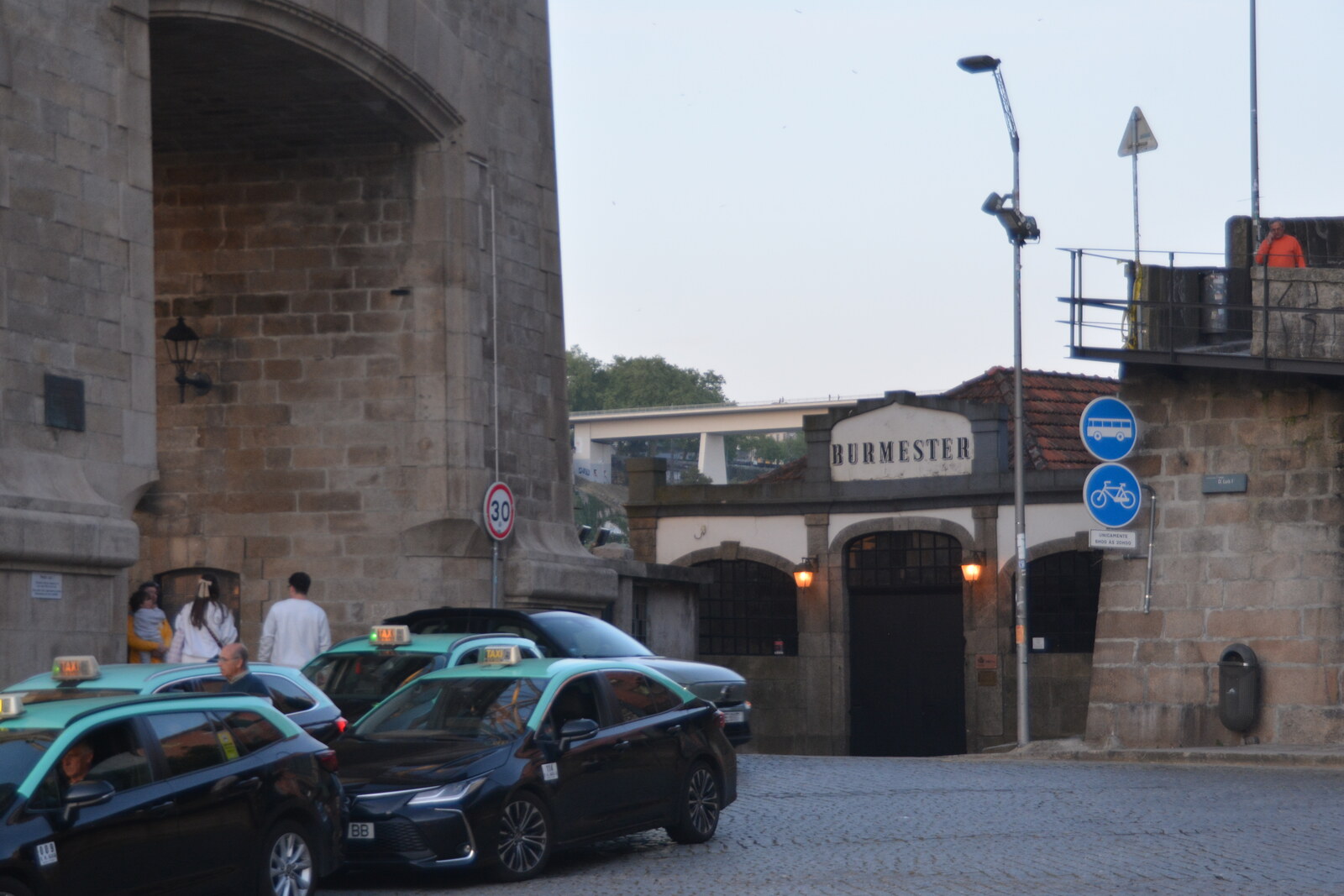
Look around first
What to notice
- Stone arches
- The name above the entrance
- Wooden barrels
- An old vat
The story of the place
A capacious wooden vat made in eighteen eighty-three has survived in the cellars of the old merchant house. It stands among the barrels and remains the oldest of the vats in these cellars. The company says that the father of Maria Henriqueta Leite Guedes gave this vat as a dowry to her husband, Gustav Adolf Burmester. At the beginning of the twenty-first century, the business passed to other owners, while the Burmester surname remained above the entrance.
Behind Burmester’s stone arches, grapes are not pressed. Port is made farther up the Douro, then transported to Gaia and left to mature in large vats and barrels. Old wood lets through a little oxygen but imparts almost none of the flavor of fresh wood to the wine. The proximity of the harbor made it easier to ship the product, while the local climate suited long ageing. Wine is still stored here today; some of the cellars are open for tours and tastings.
The surname above the entrance belongs to merchants. In seventeen fifty, Henry Burmester and John Nash began shipping Port from Gaia to Great Britain and other countries in Europe. A buyer across the sea saw neither the vineyard nor the contents of every barrel. For that buyer, the quality rested on the name of the merchant house.
By eighteen thirty-four, the family business was in debt. Then Johann Wilhelm Burmester, a twenty-four-year-old relative of the founder, arrived from Hamburg. He worked for the firm as a clerk and lived on a salary; he had no share in the business. In time, Johann became manager and then bought out the company along with its rights and obligations. He took on both the goods that could be sold and the debts for which he had to answer.
Johann brought his sons into the business and by eighteen eighty registered his full name for the firm: “Johann Wilhelm Burmester and Company.” He then acquired a bottle-making business and two vessels for transporting Port. Now one family could age the wine, bottle it, and deliver it to the buyer. The surname on the bottle depended on fewer decisions made by others.
In eighteen eighty-five, Johann watched heavy seas at Cadouços Beach, at the mouth of the Douro. A wave swept him into the water; he died. Management passed to his sons, Gustav Adolf and Otto, whom their father had brought into the business in advance. They preserved the cellars and guided the firm through the decades that followed.
Inside stands a large wooden vat from eighteen eighty-three—the oldest in the current group of cellars. According to a tradition told by the company itself, the father of Maria Henriqueta Leite Guedes gave it as a dowry to her husband, Gustav Adolf Burmester. Two years later, Gustav had to continue the work of his deceased father. The family sold the company only at the beginning of the twenty-first century; the Burmester name remained above the arched entrance, and in the cellar stood the wedding vat, older than the last family owner.
Useful on site
Daily 10:00-13:00 and 14:00-19:00; the last tour is at 18:15. Check the official website before booking.
Checked: June 25, 2026. Check the official source before visiting.A separate tour is required to visit the cellars and taste the wine; entry is not guaranteed by the walk itself. From outside, the house’s proximity to the bridge and the water is clearly visible.