 Guide On Map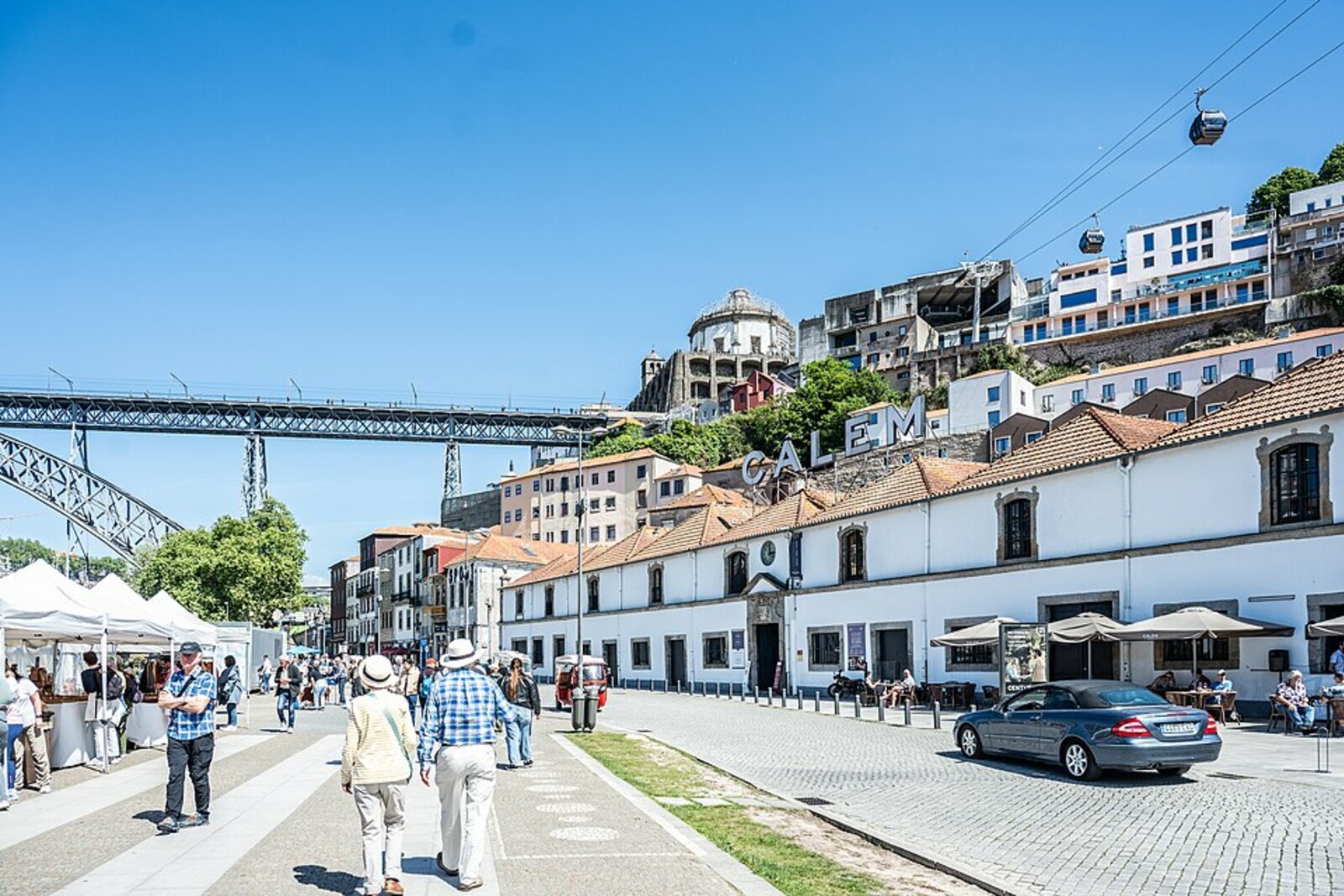
Look around first
What to notice
- Stone quay
- Warehouse façades
- Rows of wine roofs
- Douro River
The story of the place
The stone quay runs along the Douro, and immediately behind the warehouse façades the slope rises, almost completely covered by rows of wine roofs. Inside these blocks, there are still hatches leading to false underground pits: barrels were once hidden in them from looting. The cellar owners gradually bought up riverside plots and added to the buildings, so the bank became a dense working strip between the water and the slope.
Cais de Gaia means “Gaia quay.” Port was not produced here: it was brought from vineyards upstream on the Douro, unloaded on this bank, aged, blended to the desired taste, and sent abroad. The growing trade required enormous warehouses that cramped Porto could no longer accommodate. Barrels were also kept beside the river because before export the wine was inspected at customs and given a seal of authenticity. This is how long blocks of wine cellars grew up behind the quay.
In August of eighteen thirty-three, this stock was needed by Miguel I of Portugal. The Siege of Porto was drawing to a close, the war had left the king with huge debts, and he tried to sell the Port stored in the warehouses of the General Company of Agriculture of the Vineyards of the Upper Douro. For the merchants, these were years of income already invested in barrels: among the stocks was very old wine that could not be replaced by the next harvest.
Miguel I of Portugal's representatives offered the liberals a deal twice. João Carlos Saldanha, commanding Porto's defenders, demanded that the sale be conducted by the wine commission appointed by Pedro I of Brazil and IV of Portugal and that the goods undergo its inspection. The sides did not reach an agreement. Miguel I of Portugal then ordered the wine destroyed if it could not be sold for money.
Count d'Almere, a French general in Miguel I of Portugal's army who was covering the retreat from the Gaia bank, was assigned to carry out the order. On August sixteenth, soldiers set fire to the Company's mined warehouses. More than ten thousand pipes were lost—the name given to large transport barrels of wine and grape spirit. Sailors from English ships stationed on the Douro managed to save about five thousand pipes, but the losses still amounted to a fortune accumulated over many years. The Company later secured legal recognition of the damage, but it never received full compensation.
After the siege, the merchants restored the warehouses. When exports began to rise again, owners bought up plots by the river and built new blocks; it was then that the wine roofs packed the slope behind the quay especially densely. Inside some cellars, including those of Cálem and Krohn, hatches above false underground pits have survived. During the siege, barrels were hidden there from looting. These hiding places cannot be seen from the waterfront: they are covered by the floors of the very warehouses over whose stocks people first bargained in eighteen thirty-three and then set fire.
Useful on site
Open waterfront; the schedules of quays, boat trips, and restaurants depend on their operators.
Checked: June 25, 2026. Check the official source before visiting.View the boats from the waterfront and do not enter quays with restricted access. Their modern festive appearance does not mean the vessels are open for boarding.