 Guide On Map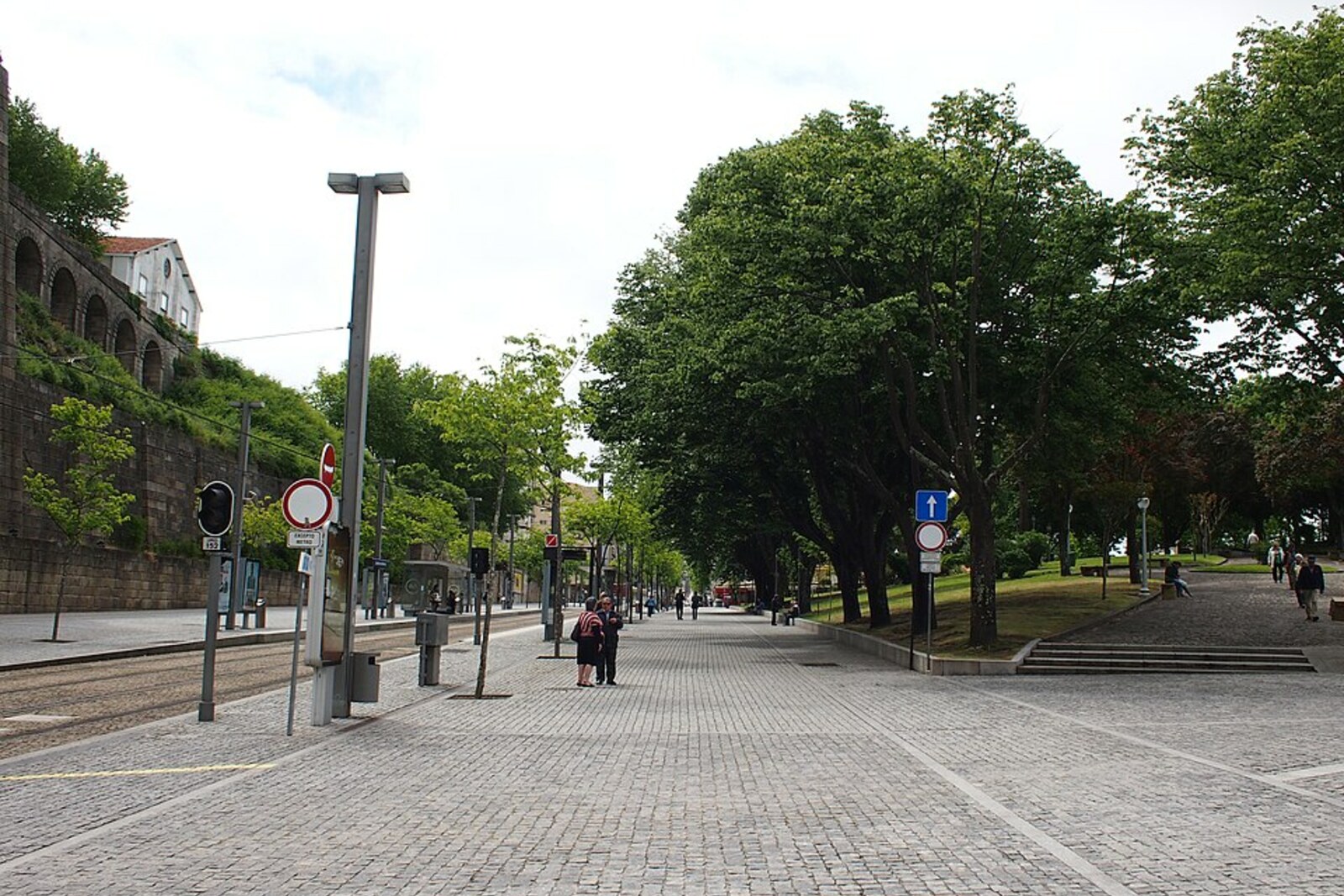
Look around first
What to notice
- Grotto
- Basin of the water feature
- Viewing platform
- Granite slope
The story of the place
On Gaia's upper level, there is a city garden with a grotto, the basin of a former water feature, and a viewing platform among the granite. It was laid out after the rock mass here was cleared away: a new direct city route ran nearby, while houses, shops, and institutions were growing above. The metro still stops almost where the electric tram once ran.
The name “Jardim do Morro” translates as “Garden of the Hill.” It is only the western part of the hill that gave the garden its name that no longer exists. After the upper deck of the bridge opened, the road from Porto ran into the granite base of Serra do Pilar on Gaia's riverbank. To continue farther south, carriages had to go around it. Stone was also quarried here: in a photograph from nineteen twenty-three, the future garden still looks like an operating quarry.
Tram workers and passengers changed the situation. In nineteen oh five, it was decided to extend the electric line from Porto along what is now Avenida da República, then called Avenida Campos Henriques. To create a direct route, workers cut a narrow passage through the hill. The tram ran south from the bridge's upper deck, while granite still remained on both sides of the tracks.
The direct connection changed Gaia more than a single street could. Land along the line became more expensive, and houses with gardens, shops, and institutions appeared. Vila Nova de Gaia City Council decided to move the city hall here from the old center by the river; the new building was completed in nineteen twenty-five. People who had previously needed to descend to the waterfront for trade and city business gained a new center above.
Two years later, the city authorities ordered the western half of the hill removed completely. Quarrying at this site ceased. Captain of the military engineers João Oliveira Pombeiro drew up a plan for a public garden, and Alfredo Moreira da Silva and his sons—a family firm that grew plants and built gardens—laid it out on the cleared granite. A grotto, a water feature, and a viewing platform were created in the central section. In early city materials, this place was called Jardim da Pedreira.
Today's metro crosses the river on the same upper deck and stops by the garden almost on the line of the first electric tram. Pombeiro's project survives in the grotto and the basin of the water feature. And the word “Morro” in the name preserves the granite outcrop that city residents first cut through for the tramcars and then removed for the street and the garden.
Useful on site
Open public space; on days with concerts and city events, accessible areas may change.
Checked: June 25, 2026. Check the official source before visiting.Take a break here before the descent. Do not mistake the grotto for a remnant of a natural cave: it is a park decoration.