 Guide On Map
Eastern Kyoto: from Ginkaku-ji to Nanzen-ji
From Ginkaku-ji along the Philosopher's Path to Nanzen-ji
Guide On Map on your phone
Open the walk like a regular app
It takes about 10 seconds to install. No app store needed.
The whole path
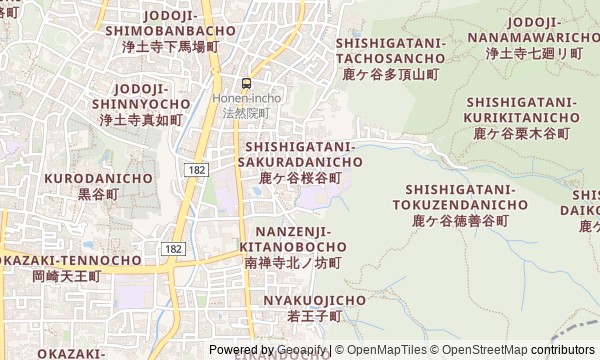
Route map
About the walk
You will begin at the dark Ginkaku-ji and find out why its name promises a metal you cannot see on its walls. Then you will head down the shopping street to the canal and continue south along Kyoto's eastern hills.
The route will turn away from the water toward temples and small shrines. Beyond a straw gate, an old scandal will be waiting. In a cramped courtyard, you will find two stone mice that became more important than the main building. On the Philosopher's Path, a question will emerge: why have the canal, the cherry trees, and the walking path survived together at all?
Closer to Nanzen-ji, brick arches with water running above them will appear among the temple buildings. The story will separate documents from legend, then return each time to what stands in front of you. By the end of the walk, you will understand why Ginkaku-ji, the Philosopher's Path, and Suirokaku belong to one road through eastern Kyoto.
Why this order
Ginkaku-ji will give the route its theme of inheritance and lead to former village land at the foot of the climb: beside the shogun's palace, the story of a community that inherited a mountain will come into view. The descent to the canal naturally continues south, but the first turn away from the water leads to Honen-in, where a personal practice of prayer became the fate of an entire community. Next, small Otoyo Shrine shifts the scale: after the monastery scandal, you will see how a single new object can transform the renown of an ancient shrine. Otoyo Bridge returns you to the canal, and the Philosopher's Path itself becomes the next protagonist. Following the water brings you to Eikan-do Zenrin-ji and raises the theme of accessible prayer again, this time through one unusual statue. From Eikan-do Zenrin-ji, the route enters Nanzen-ji alongside the water: first Suirokaku, where the canal crosses temple grounds, then the central buildings. The ending explains why this particular palace became a Zen temple, and why an engineering dispute arose in such a sensitive place.
A first unhurried walk through eastern Kyoto Those interested in temple legends and verifiable history Lovers of water, gardens, and old urban infrastructure
Those who want only the most famous views without long stops A walk without climbs or temple grounds Those who care more about shops and nightlife than the history of places
Before you go
Wear shoes that are comfortable on stone, steps, and damp stretches beneath the trees. You may need to remove your shoes in temples; keep your socks and belongings arranged so that you do not hold up other visitors. Honen-in and Otoyo Shrine are active religious sites: speak quietly, keep passageways clear, and check the rules on site before photographing sacred objects. Some important details in the story are inside buildings or gardens with regulated access, so do not treat them as a guaranteed part of the walk or try to look into closed spaces.
When to go
Allow at least half a day, and start in the first half of the day. The route itself does not require rushing, but gardens, listening, and unhurried stretches along the canal quickly take time. If you plan to visit the accessible interiors at Ginkaku-ji, Eikan-do Zenrin-ji, and Nanzen-ji, leave extra time and check the rules at each place on site.
Backup plan
If rain, fatigue, or limited time gets in the way, split the walk at the canal. Keep Ginkaku-ji, Honen-in, and the nearest stretch of the Philosopher's Path for the northern section; save Eikan-do Zenrin-ji, Suirokaku, and Nanzen-ji for the southern one. The aqueduct, the large gate, and the outer temple grounds offer plenty without a long visit to the interiors. On wet stone, shorten the detours through gardens and slopes instead of hurrying. If you need to skip one stop, stay on the main line toward the southern finale: the connection between the water, the aqueduct, and Nanzen-ji will preserve the meaning of the ending.
Route conditions
Facilities. Toilets — 4
Elevation. Ascent — 116 m; descent — 155 m
OpenStreetMap extract of June 18, 2026: database data, not a check on the ground. Data © OpenStreetMap contributors, ODbL licence
Walk plan
Open in maps ↗- 1
Ginkaku-ji
A family dispute over the heir explains why the palace appeared on the site of a burned monastery. - 2
The Climb to Ginkaku-ji
Here you will learn how local families acquired, along with a mountainside, the duty to maintain an old rite. - 3
Honen-in
This stop will link a court scandal to the construction of a monastery that began several centuries later. - 4
Otoyo Shrine
Two relatively recent figures show how an ancient shrine acquired its present-day symbol. - 5
Philosopher's Path
The canal and cherry trees bear witness to how residents made the city change its road project. - 6
Eikan-do Zenrin-ji
The unusual turn of the wooden figure leads to a legend about an abbot who once stopped during prayer. - 7
Suirokaku
The arches show the engineering solution that had to be found after the dispute over the canal route. - 8
Nanzen-ji
A temple legend will explain how a country palace became one of Kyoto's leading Zen monasteries.
Route features
Everything you need stays in the browser
Progress, saves and your trip plan are stored on this device.
Add Guide On Map to your home screen so the walk opens outside the browser.
How we handle sources, maps and corrections: our editorial standards