 Guide On Map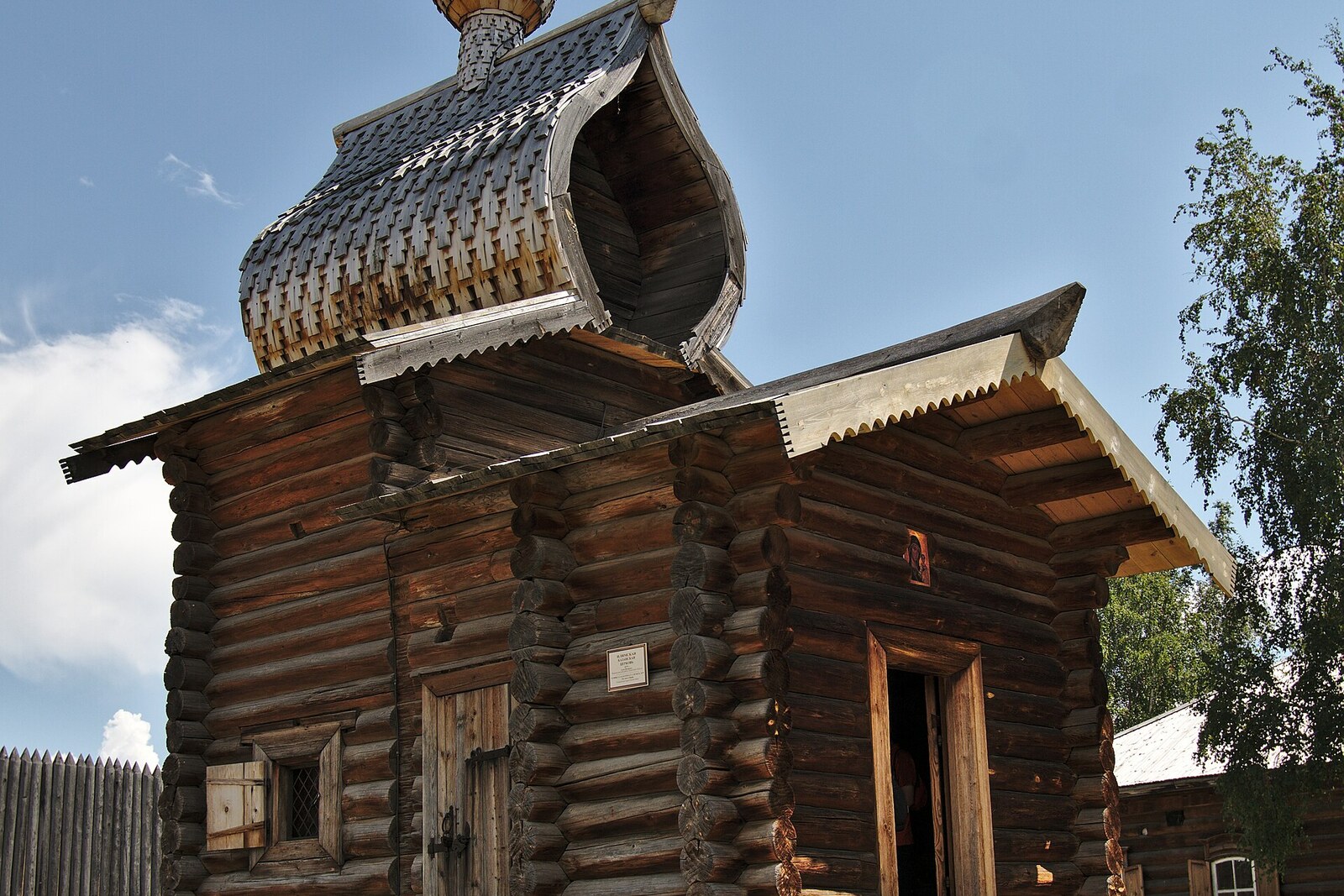
Look around first
What to notice
- Short square log structure
- High barrel-shaped roof above the altar
- Northern door
- Iconostasis
The story of the place
In nineteen thirty-three, staff from the Irkutsk Regional Museum of Local Lore came to Ilimsk to inspect Kazan Gate Church. Eight years earlier, it had been recognized as a unique monument and placed under the museum’s protection. The inspection report had to record that local administrators had turned the church into a public toilet, destroyed the iconostasis, chopped up the icons, and burned the wooden sculpture and carving. They boarded up the broken windows with the remaining seventeenth-century icons—this, too, was considered a protective measure.
Church records name Pyotr Maximov, the priest of Ilimsk’s main cathedral, as the church’s builder. In sixteen seventy-nine, he built the church outside the fortress wall, near the Spasskaya Gates. Its name comes from the Kazan Icon of the Mother of God, revered as the protector of warriors. Before leaving the ostrog, Cossacks prayed here before setting out on a campaign; after returning, they entered the church again. To the right of the Royal Doors hung an embroidered image of the Savior—a former Cossack banner, later transferred to the Irkutsk Regional Museum of Local Lore. Its position by the gates gave the church its second name: Gate Church.
The nineteen thirty-three report did not restore the lost furnishings. When the church was prepared for removal to Taltsy in nineteen seventy, the western section was already roofless, part of the northern wall was missing, and the interior had been destroyed. Above the altar, a high barrel-shaped roof still stood, with several surviving ploughshare shingles.
Architect-restorer Galina Oranskaya received the dismantled logs, old photographs, and measurements. She was the chief architect of the museum project and was responsible for deciding which of the church’s former appearances would become the museum church. From traces of notching on the logs, Oranskaya concluded that the surviving square structure had once been a separate small church and that the long, low refectory had been added later. She restored the early compact form.
The dating of this decision remains disputed. The official construction date is considered to be sixteen seventy-nine. Oranskaya found a mention of the church as early as sixteen sixty-seven, while later researchers suggested that Pyotr Maximov expanded the church in sixteen seventy-nine. Thus, one date refers to the first small log structure, and the other to the church with the large refectory.
The restoration was completed in nineteen eighty-five. Artists led by Sergey Frolov painted new icons for the lost iconostasis and restored the altar. In nineteen ninety-one, the church was consecrated, and it again became an active church inside the museum. The short log structure and high barrel-shaped roof above the altar convey Oranskaya’s early version; the northern door remained from the later rebuilding, while the iconostasis inside was created in place of the one destroyed in Ilimsk.
Useful on site
According to the Taltsy museum schedule: March–October 10:00–18:00, November–February 10:00–17:00; access inside may depend on museum work and church services.
Checked: date not specified. Check the official source before visiting.Even if you cannot go inside, pause by the walls: what matters here is the material itself, dismantled, moved, and reassembled after a long period of neglect.