 Guide On Map
Taltsy and Listvyanka: Gateways to Lake Baikal
From Irkutsk through Taltsy to the source of the Angara River and Chersky Stone
Guide On Map on your phone
Open the walk like a regular app
It takes about 10 seconds to install. No app store needed.
The whole path
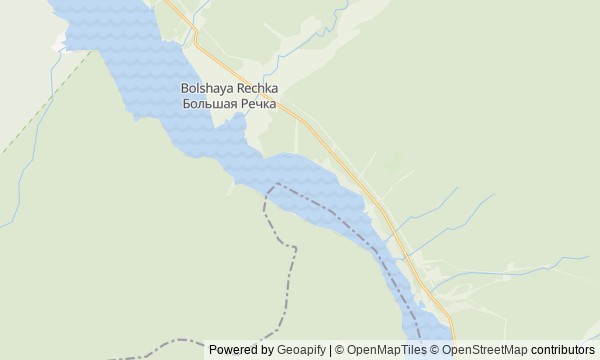
Route map
About the walk
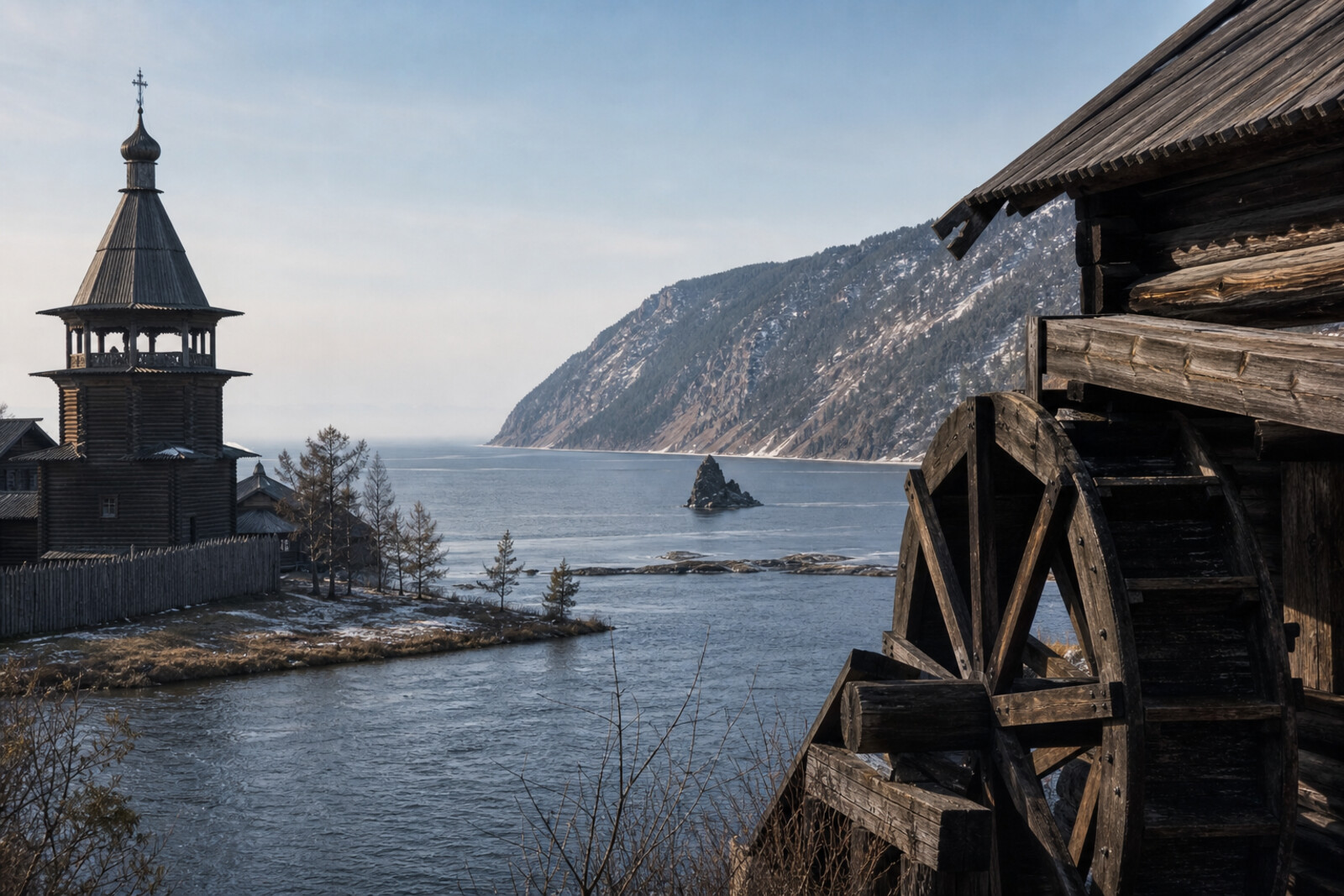
From Irkutsk, you will head toward Lake Baikal through Taltsy, then continue the day in Listvyanka. In Taltsy, you will walk from the gates of a Siberian fort to a small church, a Buryat Summer Camp, and three mills on one slope. Here, the point is not the age of the buildings, but how and why they were moved from their former sites. Why does the church have two dates? What had to be preserved along with the mills' log structures?
In Listvyanka, the route changes scale. First comes a church assembled at its third address. Then come aquariums with Lake Baikal water, a rock in the middle of the Angara River's source, and a climb to a panorama once used by a geologist. The story stays calm and concrete. It separates the document from the legend and shows the human work behind familiar views. By the end of the trip, you will understand why the road to Lake Baikal begins among relocated log buildings and ends above the source of the Angara River.
Why this order
Spasskaya Tower of Ilimsk Ostrog opens the route quite literally: through its gates, you enter the museum's Ilimsk Ostrog. Kazan Gate Church follows because it once stood beside those gates and, together with the tower, restores the layout of the fort entrance. Buryat Summer Camp broadens the picture of the Lake Baikal region: after the Russian fort comes a seasonal ulus arranged around a herd. The cascade of mills continues the conversation about the museum, but shifts from a single dwelling to a whole technical system that could not be saved without the slope and the flow of water.
The trip to Listvyanka connects museum relocations with the working St Nicholas Church, which parishioners reassembled in a new place. After a saved building, Baikal Museum shows another way of preserving access to the lake: bringing its water and inhabitants indoors. From the aquariums, the route leads to the very source of the Angara River and a submerged stone ridge. The final climb to Chersky Stone gathers the source, Shaman Rock, and the opposite shore into one panorama—the points the geologist compared on the ground.
Those who want to combine Taltsy and Listvyanka in one trip Those interested in the fates of relocated buildings and technical structures Those who prefer stories of people and objects to broad overviews Those who want to end the route with a panorama of Lake Baikal
Those looking for a short walk only in Irkutsk Those who want Lake Baikal without museums and historical details Those who do not want to combine walking sections with a trip beyond the city
Before you go
Treat Taltsy and Listvyanka as two separate parts of the day, and decide in advance how you will travel between them: there is no walking link in this route. Choose sturdy shoes for the open-air museum—you will be moving between wooden buildings, and the ground near the mill water can be damp. In Listvyanka, leave enough time for the indoor exhibition at Baikal Museum: the apparatus outside is only the start of the story, while the main observations await indoors. St Nicholas Church remains a place of prayer, so if a service is underway, look around quietly and do not disturb parishioners. Before the final climb, assess the wind, visibility, and your own strength; a warm layer can be useful even in pleasant weather by the shore.
When to go
Set aside a full day for the route. Give its first part to four stops in Taltsy, without rushing between them. After the trip to Listvyanka, visit the church, museum, and source of the Angara River in that order. Leave Chersky Stone for the final part of the day, with enough time for the climb, the panorama, and a calm descent before dusk.
Backup plan
If time grows short, do not turn both museum sections into quick dashes: finish Taltsy after the mills, then choose Baikal Museum and the source of the Angara River as the main pairing in Listvyanka. If visibility is poor, the wind is strong, or it is not safe to climb to Chersky Stone, end the route by the water. From there, you can still see the lake becoming a river and Shaman Rock—the final panorama will be narrower, but the route's meaning will remain.
Route conditions
Surface. Unpaved — 19 m (data covers 3% of the route)
Access. Wheelchair — limited; stroller — limited
Facilities. Toilets — 3
Elevation. Ascent — 110 m; descent — 13 m
OpenStreetMap extract of July 3, 2026: database data, not a check on the ground. Data © OpenStreetMap contributors, ODbL licence
Walk plan
Open in maps ↗- 1
Spasskaya Tower of Ilimsk Ostrog
Here you will see how the only surviving tower became the entrance to an ostrog that no longer stands in its original location. - 2
Kazan Gate Church
This stop will show which of the church’s former appearances was chosen for restoration and which traces of the other version were preserved. - 3
Buryat Summer Camp
The layout of the ulus will explain how families positioned their homes so that the shared herd would be protected at night. - 4
Cascade of Watermills
Here you will understand why, during the relocation, not only the buildings but the entire course of the water had to be recreated. - 5
St Nicholas Church
The story of the second relocation will show how a poor parish preserved both the building and its services. - 6
Baikal Museum
This stop will explain how a scientific building was turned into a place where visitors are shown living inhabitants in water from the lake. - 7
Source of the Angara River and Shaman Rock
The underwater ridge will connect the old icebreaker's passage with Buryat legends of judgment on the rock. - 8
Chersky Stone
The final panorama makes it possible to see at once the rocks, the source, and the shores that the geologist connected on his map.
Route features
Everything you need stays in the browser
Progress, saves and your trip plan are stored on this device.
Add Guide On Map to your home screen so the walk opens outside the browser.
How we handle sources, maps and corrections: our editorial standards