 Guide On Map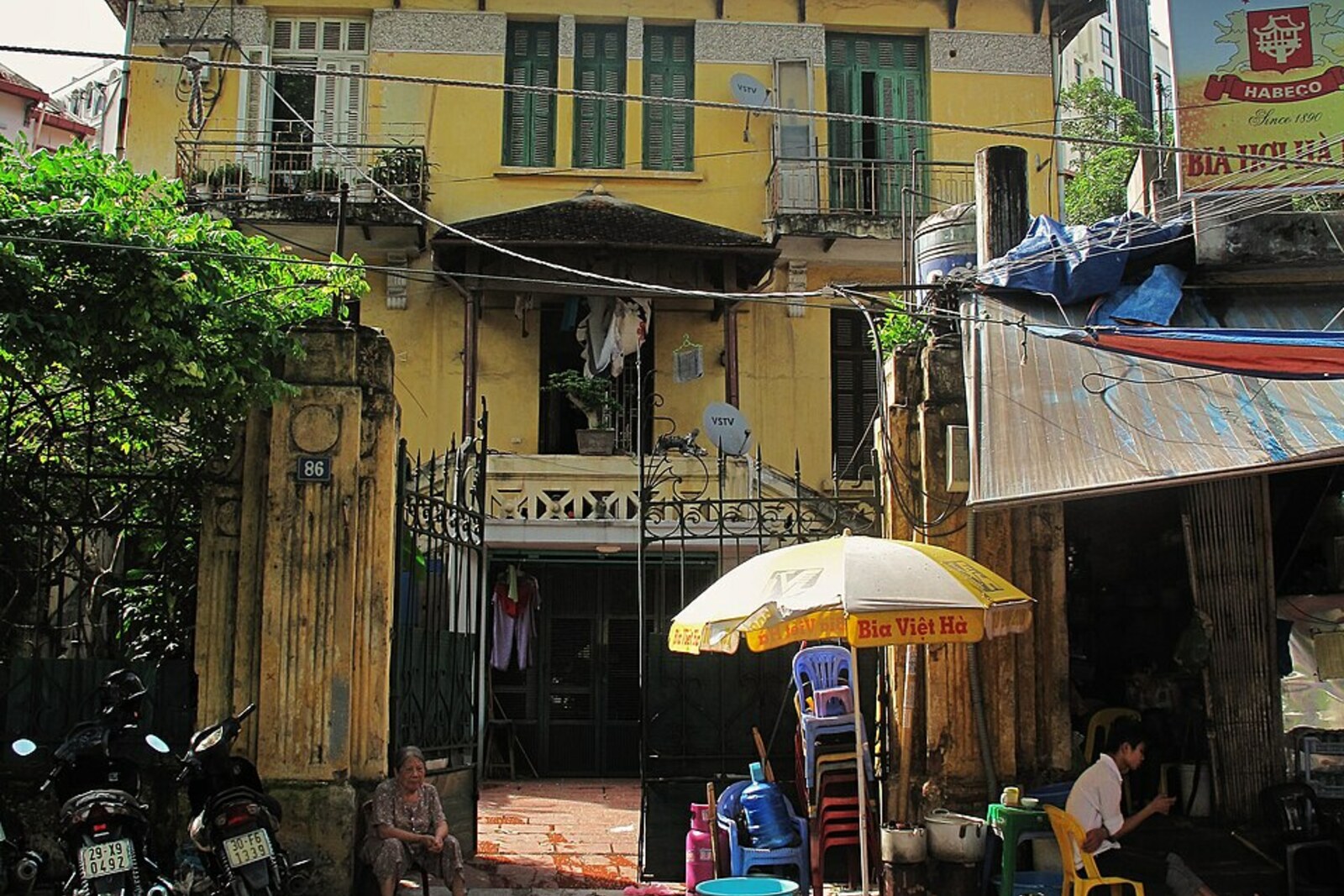
Look around first
What to notice
- Wide sidewalk
- Narrow two-story façades
- Low plastic stools
- Street tea shops
The story of the place
The short road connects the lake to the cathedral in a straight line a little more than one hundred meters long. It was widened, sidewalks were laid out, and space was set aside for a row of rental houses that the church built on its land. Later, these houses acquired second stories, while shops, cafés, and restaurants took over the ground floors, so a chain of narrow façades stretches along the passage. Low plastic stools still stand on the wide sidewalk, and the route to the church has become a place for long conversations over tea.
By the time the cathedral was already receiving parishioners, the old road of Bao Thien village, which had occupied this part of Hanoi, still lay before its façade. It had led to the lake before, but it became a broad city street by decision of the French administration.
The first head of that administration, Jean Bonnal, sought a European-style redevelopment of the center: houses were to be aligned in a single row, sidewalks left along the roadway, and drainage installed. The street in front of the cathedral came up in eighteen ninety-two. The road was widened to twelve meters and named Avenue de la Cathédrale—Cathedral Avenue. A direct vista a little more than one hundred meters long now led from the lake to the church.
By then, most of the former village land had passed to the Catholic Church, and few local residents remained here. The church put up single-story houses along the new street and rented them out: a façade facing the road brought in income. Later, these houses were sold to private owners. They added second stories and opened shops downstairs. This created a row of narrow two-story façades, among which shops, restaurants, and cafés now operate.
After the end of the colonial period, the street was not given the name of a figure or an event. The French name was translated into Vietnamese, and from nineteen forty-five, “Nha Tho”—Church Street—appeared in documents. The name indicates its purpose: it is a short passage laid out as an approach to St. Joseph's Cathedral.
The wide sidewalk gave this passage another occupation. In the early two thousands, Mai, the owner of one of the local street tea shops, sold fruit desserts, iced tea, and a tamarind drink. She then added lemon tea. By nineteen eleven, it had become her establishment's main product, and around the cathedral about ten similar tea shops were already operating. Young Hanoi residents could buy an inexpensive glass and talk for hours: one low plastic stool served as a seat, and another as a table.
Useful on site
Open urban space; choose a viewing point that does not obstruct pedestrian flow.
Checked: date not specified. Check the official source before visiting.Do not linger in the middle of the roadway: choose a quiet spot by a façade without blocking entrances to shops and cafés.