 Guide On Map
Hanoi’s French Quarter: How Power Changed
From St. Joseph's Cathedral through Hoa Lo Prison to the Hanoi Opera House and the Vietnam National Museum of History
Guide On Map on your phone
Open the walk like a regular app
It takes about 10 seconds to install. No app store needed.
The whole path
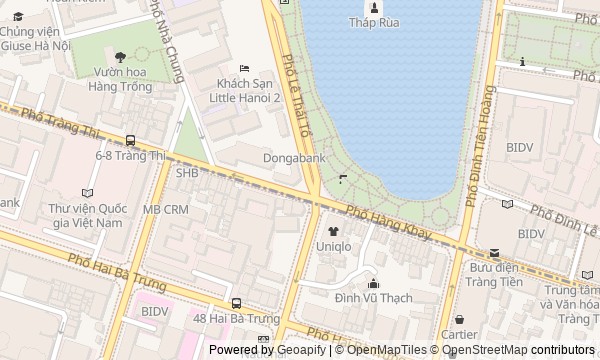
Route map
About the walk
You will walk from St. Joseph's Cathedral along the short Nha Tho Street, then turn toward Hoa Lo Prison and emerge onto Trang Tien Street—the ceremonial spine of the former colonial center. Ahead are Sofitel Legend Metropole Hanoi, the Hanoi Opera House, and a museum beneath a tall three-tiered roof.
Grand facades stand alongside tea shops, a prison yard, and a shelter beneath a hotel. Each stop shows how people adapted a city built by the French to new lives and a new kind of power.
You will learn why cathedral construction needed lottery tickets, where a concrete cover with an iron ring led, and how a nighttime recording from a hotel basement made its way onto a record. The story follows documents, objects, and human choices, without colonial nostalgia or revolutionary rhetoric.
By the end, you will see how the same buildings served French officials governing Hanoi, underground activists changing power, and Vietnamese museum scholars rebuilding the story of the country’s past.
Why this order
The cathedral establishes the first colonial remaking of the city, while neighboring Nha Tho Street immediately reveals its everyday continuation: a church approach becomes a street of shops and tea houses. After open urban space, Hoa Lo Prison introduces a closed system of control—and the first direct link to the coming uprising. Trang Tien Street continues the theme of power through a mint and a restored local name, while Sofitel Legend Metropole Hanoi shows how a colonial building acquired a new state role and sheltered people during bombing raids. From the hotel, the route reaches the square before the Hanoi Opera House, where power changed hands in public. The museum behind the theater completes the sequence: after the administration changed, Vietnamese scholars reshaped the story of the past itself.
Those who want to understand the French Quarter, not just admire its facades Those interested in urban uprisings and human choices within major events Those who enjoy tightly told documentary histories and concrete details
Those looking for an easy walk without prison and wartime history Those who want to focus on old commercial Hanoi and street food Those uninterested in museums and the history of urban institutions
Before you go
Decide in advance whether you want to go inside Hoa Lo Prison and the Vietnam National Museum of History: their exhibitions will noticeably extend the walk, and visiting conditions are best checked separately. Do not assume access to the bomb shelter at Sofitel Legend Metropole Hanoi is open—ask the hotel before setting out. Bring water, protection from sun or rain, and headphones that do not block out surrounding traffic. At the cathedral and the small altar, keep a respectful distance, do not disturb worshippers, and do not touch offerings. On busy streets, listen to the stops after stepping back from the edge of the roadway.
When to go
2–3 hours
Backup plan
If weather or fatigue makes it hard to complete the whole route, split it into 2 parts: save the cathedral, Nha Tho Street, and Hoa Lo Prison for one walk, then combine Trang Tien Street, Sofitel Legend Metropole Hanoi, the Hanoi Opera House, and the museum on another outing. If interiors are closed, do not replace a visit with guesswork: at the cathedral, Hoa Lo Prison, the hotel, and the theater, you can listen from outside and focus on the facades and the layout of the space. If the museum is unavailable, end the route at the building and banyan tree, then leave the exhibition for another day.
Route conditions
Surface. Paved — 1.3 km (data covers 76% of the route)
Facilities. Toilets — 4; drinking water — 1
Elevation. Ascent — 14 m; descent — 11 m
OpenStreetMap extract of June 18, 2026: database data, not a check on the ground. Data © OpenStreetMap contributors, ODbL licence
Walk plan
Open in maps ↗- 1
St. Joseph's Cathedral
This is where the story begins of the price the Catholic community paid to gain a new main church. - 2
Nha Tho Street
The short approach to the cathedral shows how an administrative redevelopment acquired everyday urban life. - 3
Hoa Lo Prison
This stop links the workings of a colonial prison to the people who managed to return from it to underground work. - 4
Trang Tien Street
Here, a street name leads to a vanished mint, its workers, and furnaces found beneath a shopping center. - 5
Sofitel Legend Metropole Hanoi and Its Bomb Shelter
Behind the hotel facade, the story of a recording made on one night during air raids will unfold. - 6
August Revolution Square and the Hanoi Opera House
The square will help explain how civil servants and underground activists turned an official rally into the beginning of a change of power. - 7
Vietnam National Museum of History
The final stop will show how former Asian collections were assembled into the country’s history for a new public.
Route features
Everything you need stays in the browser
Progress, saves and your trip plan are stored on this device.
Add Guide On Map to your home screen so the walk opens outside the browser.
How we handle sources, maps and corrections: our editorial standards