 Guide On Map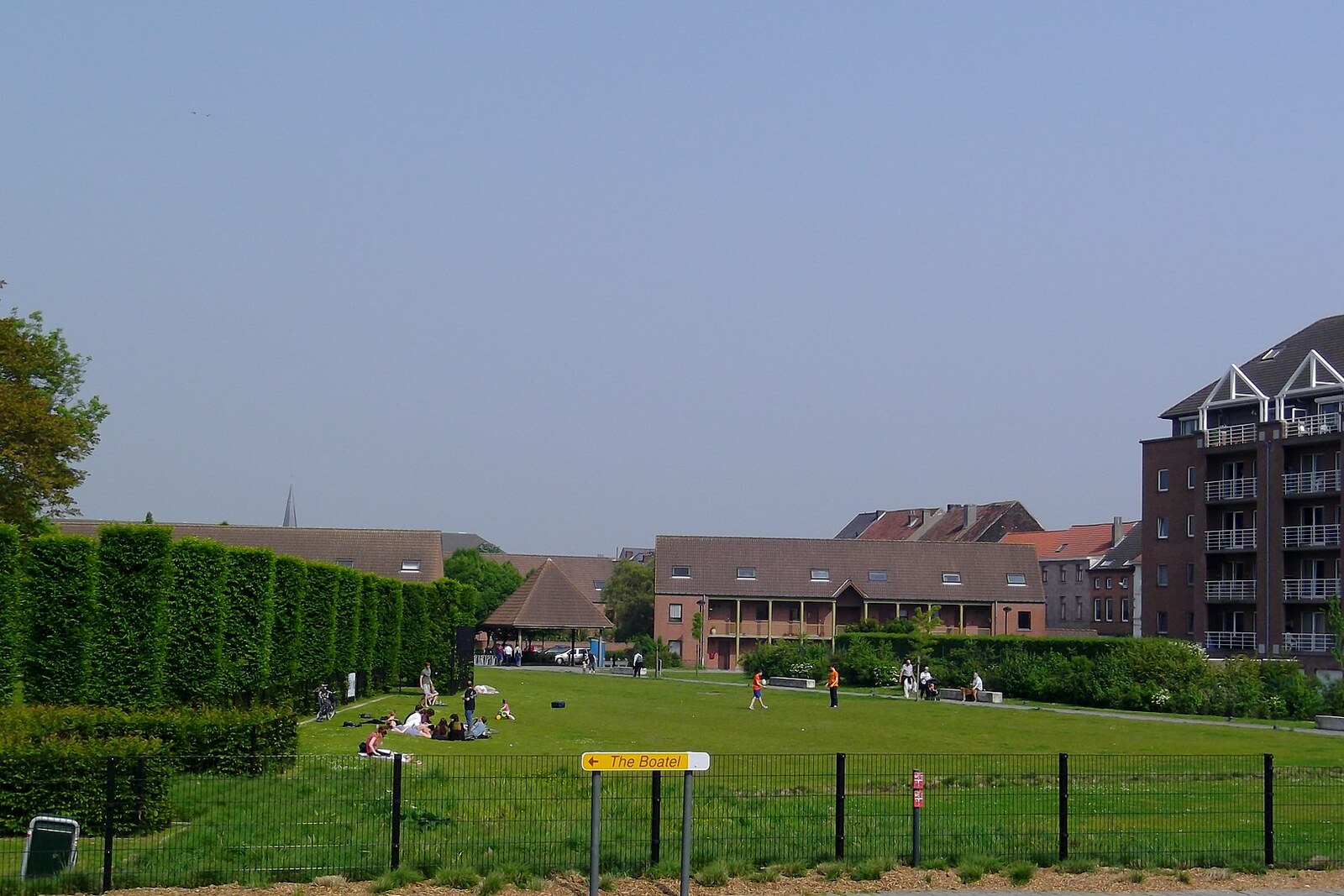
Look around first
What to notice
- Five-meter hornbeam columns
- Living hedges
- Concrete stage
The story of the place
Five-meter columns of trimmed hornbeams stand where the stone supports of Saint Bavo's Abbey's Romanesque church once rose. Living hedges repeat its plan, while a concrete platform occupies the place of the altar. The stone church was dismantled on the orders of Emperor Charles the Fifth.
In fifteen thirty-seven, Charles demanded additional money from Ghent for his wars. It was a difficult moment for the city: the cloth trade no longer brought in its former revenues, yet weavers, craftsmen, and merchants depended on it. Ghent's guilds and city council refused to pay, trying to preserve their old tax privileges. Legal proceedings achieved nothing. In fifteen thirty-nine, craftsmen took up arms, and some city officials fled or were arrested.
Charles was born in Ghent, but he came to deal with his native city as emperor. In February fifteen forty, he entered the city with an army numbering many thousands. On May third, city officials, guild elders, weavers, and other participants in the rebellion were driven barefoot to beg forgiveness. Fifty citizens walked in white shirts with nooses around their necks: this is where Ghent's nickname, “noose bearers,” comes from. Charles then stripped the guilds of their privileges, deprived the citizens of the right to choose their own councilors, and confiscated city property.
For a permanent garrison, the emperor chose the abbey grounds by the Scheldt. From here, soldiers could keep watch over Ghent, while the large monastery complex provided room for bastions, barracks, and moats. Lucas Munich, the last abbot, tried to save the community and the church, but his protest changed nothing. The canons were moved to Saint John's Church, now Saint Bavo's Cathedral. The abbey church and a significant part of the neighboring village of Saint Bavo were demolished. A fortress was built in their place, which the people of Ghent called the Spanish Castle.
The garrison remained here for almost three centuries. In the first half of the nineteenth century, the fortress was dismantled; nothing of it remains in Coyendanspark. The hornbeams mark the outline of the church that was destroyed to build it. The concrete platform on the site of the altar now serves as a stage.
The park's name is connected with the inhabitants of the vanished village. “Coyendans” means “cow dance.” The villagers had the right to graze livestock on the shared low-lying meadow of Heirnis. Four stewards hired a shepherd, who led the common herd there every morning. After the annual accounts, the money left over was spent on a celebration with music and refreshments. The old Cow Dance itself took place not here, but on Heirnisberg.
After the village was demolished, this tradition disappeared. In nineteen ninety-two, residents of the district found its name in the city archive and held a new neighborhood celebration. In two thousand fourteen, the park was named Coyendans. Now festivities and performances take place among the hornbeam columns, and performers step onto the concrete altar of the vanished church.
Useful on site
Open park; individual lawns and unpaved sections depend on the weather.
Checked: June 30, 2026. Check the official source before visiting.Walk around the green outline along the paths to make out the naves and the building's boundaries. Do not go inside the plantings or look for a complete stone church.