 Guide On Map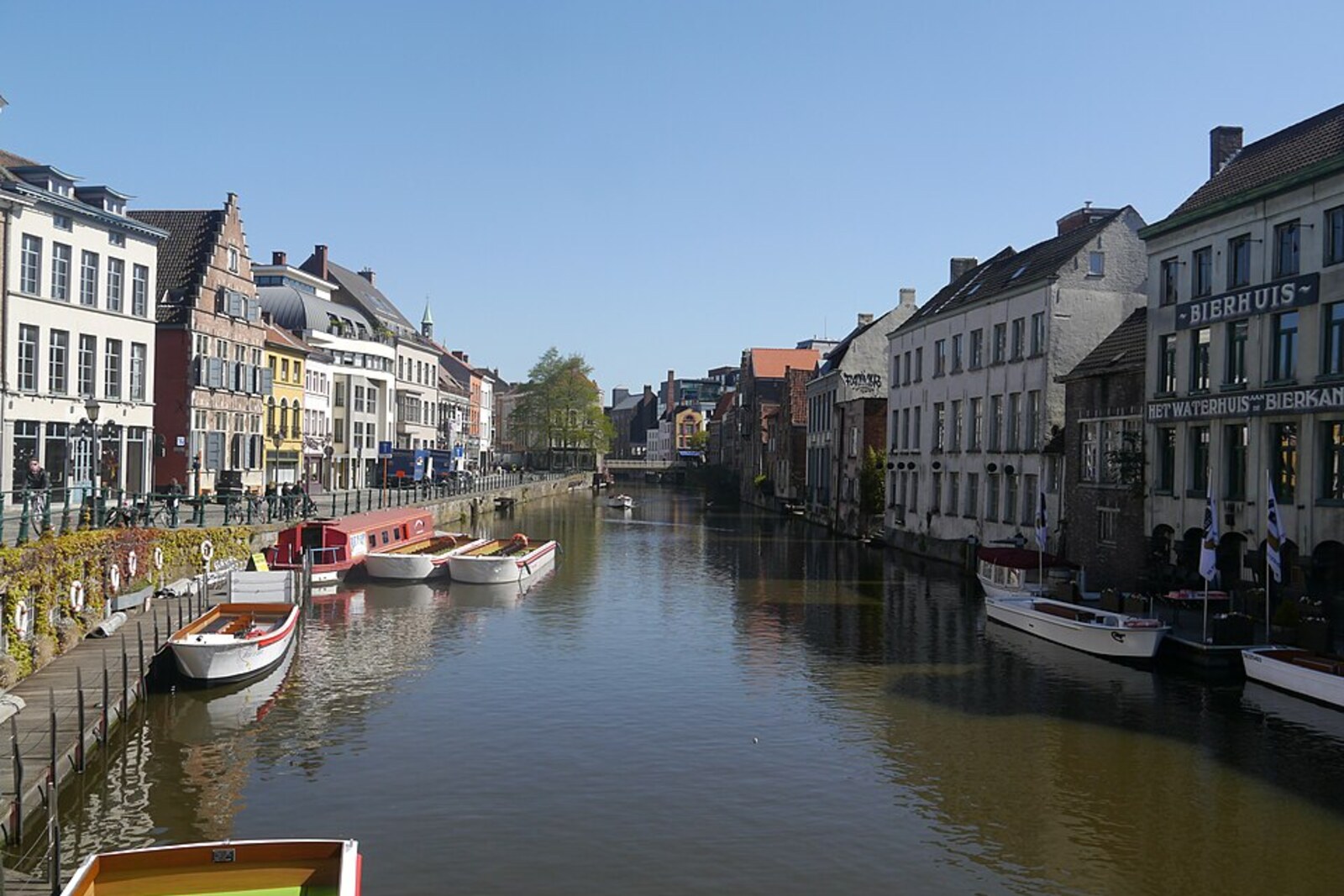
Look around first
What to notice
- Whitewashed cottages around the courtyard
- Inscription above the arch
- Niche with Saint Catherine
- Chapel
The story of the place
The almshouse gave needy women lodging and permanent financial support. At first, it consisted of eight wooden cottages; one resident managed the payments, chapel, and gates. Later, the wooden buildings were replaced by white structures around the courtyard, and the number of dwellings grew to eighteen. Today, they house a museum of Ghent’s everyday life in the twentieth and twenty-first centuries.
Kraanlei literally means “Crane Quay.” From the sixteenth century until eighteen thirty-six, a large wooden harbor crane with two tread wheels stood here. Workers walked inside them, lifting wine barrels, millstones, and even cannons from boats. All that remains of the crane now is the quay’s name.
Another name is written above the arch of the white complex: “Alijn Children's Hospital, thirteen sixty-three.” No children were treated here. The inscription names the brothers Hendrik and Zeger Alijn, murdered nine years before the almshouse was founded.
Later, their deaths were turned into a Ghent Romeo-and-Juliet story: Hendrik supposedly rivaled Simon Reym over a girl named Godelieve. This is a legend. The surviving documents speak of an insult, family honor, and a broken oath.
In thirteen fifty-two, Simon and Goswin Reym, sons of one of Ghent’s old wealthy families, accused Hendrik and Zeger Alijn of humiliating words. City judges summoned the opponents and made them conclude a permanent peace. Hendrik denied the accusation, while Goswin swore, in his own name and on his brother’s behalf, to end the feud.
Two years later, the Reyms broke the oath. Together with accomplices, they attacked Hendrik and Zeger during a service at the Church of Saint John—now Saint Bavo Cathedral—and killed both brothers and their servant. Hendrik was then a schepen, a member of the city court and council. The killers therefore committed two grave crimes at once: they shed blood in a church and killed a city magistrate.
Simon and Goswin fled. Louis of Male, Count of Flanders, declared them outlaws, and the houses belonging to the Reyms were demolished. Even while hiding from punishment, they retained enough family wealth and connections to seek forgiveness. On May seventeenth, thirteen sixty-one, Simon submitted a petition to the count. The following year, the count agreed to pardon the brothers on condition that they make penitential pilgrimages and assign a permanent annuity to an almshouse for the needy.
The parents of the murdered brothers took a reciprocal step: they gave their house and land here on Kraanlei for the almshouse. The foundation charter of July twenty-third, thirteen sixty-three, required an almshouse and a chapel to be built. The Reyms’ annuity paid for its upkeep, while the Alijns’ site gave it its address and name. Needy women were housed in the first eight wooden cottages. They received lodging and financial support; one of the residents distributed the payments, looked after the chapel, and locked the gates.
Those wooden buildings are gone. The present whitewashed cottages and chapel were built during sixteenth-century rebuildings, and the number of dwellings around the courtyard eventually grew to eighteen. The date above the arch marks the birth of the almshouse, not the age of all the visible walls.
In nineteen sixty-two, the Museum of Folk Life moved here. The House of Alijn now collects objects, photographs, and films about everyday life in the twentieth and twenty-first centuries. Above the museum entrance, the two murdered brothers are still named, and Saint Catherine stands in the niche—the patron saint of their mother, Catherine Zelveberghs, founder of the chapel.
Useful on site
The House of Alijn is open Mondays, Tuesdays, Thursdays, and Fridays from 09:00 to 17:00, and weekends from 10:00 to 18:00; closed Wednesdays. Last admission is 30 minutes before closing.
Checked: date not specified. Check the official source before visiting.Plan the museum exhibition as a separate visit. If you cannot get inside, do not linger at the entrance; look at the accessible facade details from the street.