 Guide On Map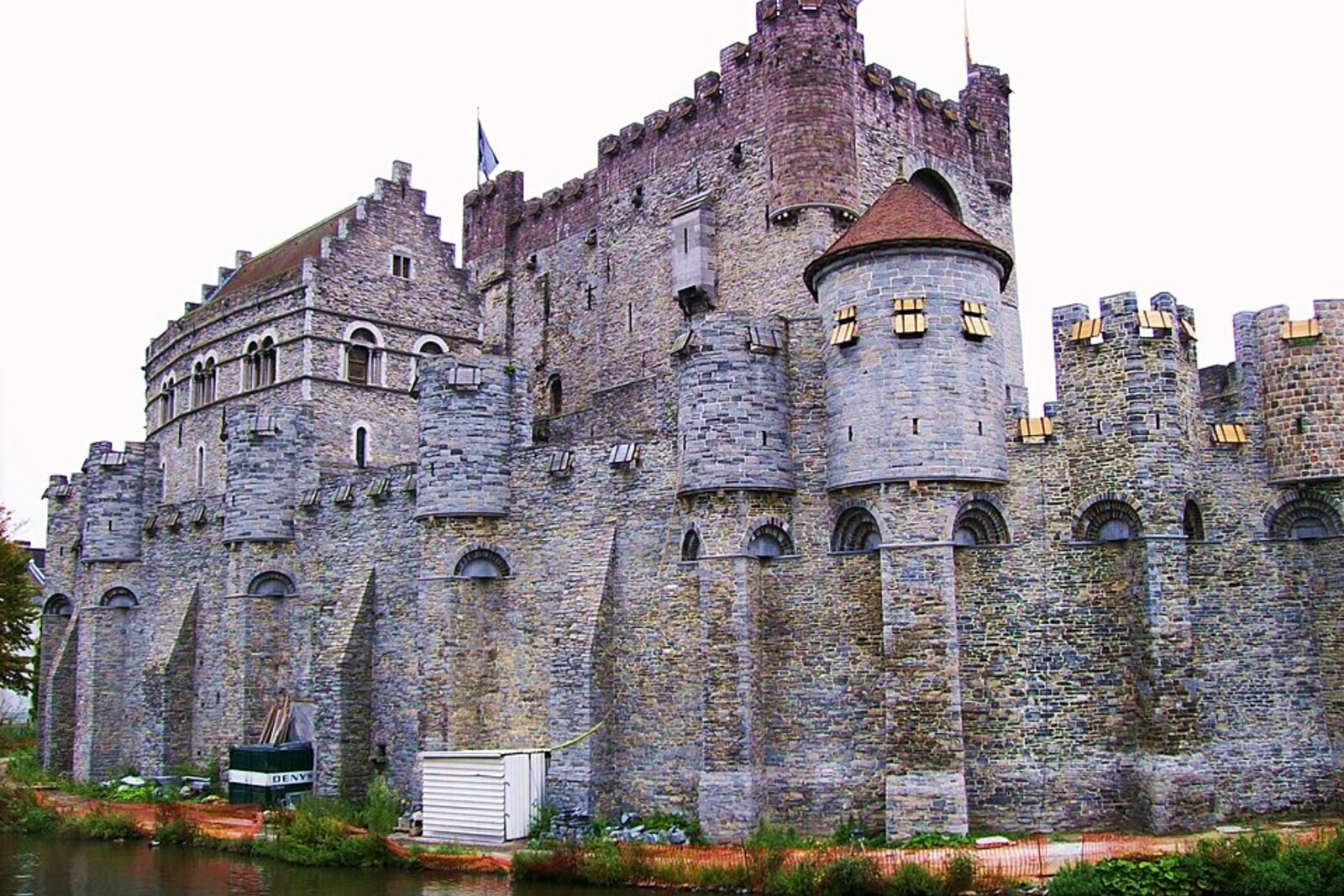
Look around first
What to notice
- The inscription above the entrance arch
- The stone keep
- The wall with turrets
- The fortified gates
The story of the place
Above the entrance arch, an inscription has survived in which Philip of Alsace, Count of Flanders and Vermandois, calls himself the builder of this castle and gives the date—eleven eighty. Hence the name Gravensteen, “Castle of the Counts”: it refers to the rulers of Flanders, whose court stood on this site long before the present walls.
Revenues from the count’s estates were brought here, warehouses stood here, and craftsmen worked here. Meanwhile, Ghent merchants were growing rich from wool processing and building homes for themselves from costly Tournai limestone. A stone house announced its owner’s status even before the owner opened the door.
Philip returned from a crusade and ordered the old count’s court turned into an enormous fortress. A chronicle from his time explains the idea in direct words: the count wanted to “curb the pride of the people of Ghent.” A keep rose above the merchants’ houses, a wall with turrets appeared around the court, and fortified gates separated the count’s site from Sint-Veerleplein. Philip did not intend to live here permanently. His officials and court were housed in Gravensteen: the count came, heard cases, and left, while the stone mass remained opposite a city whose residents increasingly argued with him as equals.
Six centuries later, other people shaped the castle’s present appearance. When the court left Gravensteen, the state sold the complex off in parts. The architect Jean-Denis Brismaille bought the first plot, settled by the gates, and adapted the rooms for cotton-spinning mills and a metal-construction workshop. Other owners built over the courtyard and leaned residential houses against the old walls. In nineteenth-century photographs, separate fragments of the fortress rise above factory roofs; from the street, the gates most clearly recall the medieval castle.
By the end of the century, businesses had moved to the outskirts. The dilapidated complex was to be demolished and the land sold for development, but no one wanted to buy the plots. Ghent’s city council and the Belgian state began buying back the former count’s court piece by piece from private owners.
The Ghent architect Joseph de Waele was given the task of restoring its medieval appearance. He ordered the later houses and factory buildings dismantled, restored lost walls, and completed what could be judged only from remains and old images. De Waele chose a romantic version of Philip of Alsace’s castle. The upper floor of the keep was rebuilt; a significant part of the present silhouette appeared during the restoration and partial reconstruction from eighteen ninety-four to nineteen thirteen.
From nineteen seven onward, the public was admitted to Gravensteen, and after the World’s Fair of nineteen thirteen, it became the city’s main attraction. Philip’s name and the year eleven eighty can still be read above the entrance. Beyond the arch rises the keep, whose top Ghent restorers rebuilt more than seven centuries later.
Useful on site
Open daily from 10:00 to 18:00, last entry at 16:40; closed 24/12, 25/12, 31/12, and 1/1. The audio guide is included in the price.
Checked: date not specified. Check the official source before visiting.The fortress’s scale and threatening character can be understood from outside as well. Viewing the rooms requires a separate visit; inside, be prepared for stairs, changes in level, and stone passageways.