 Guide On Map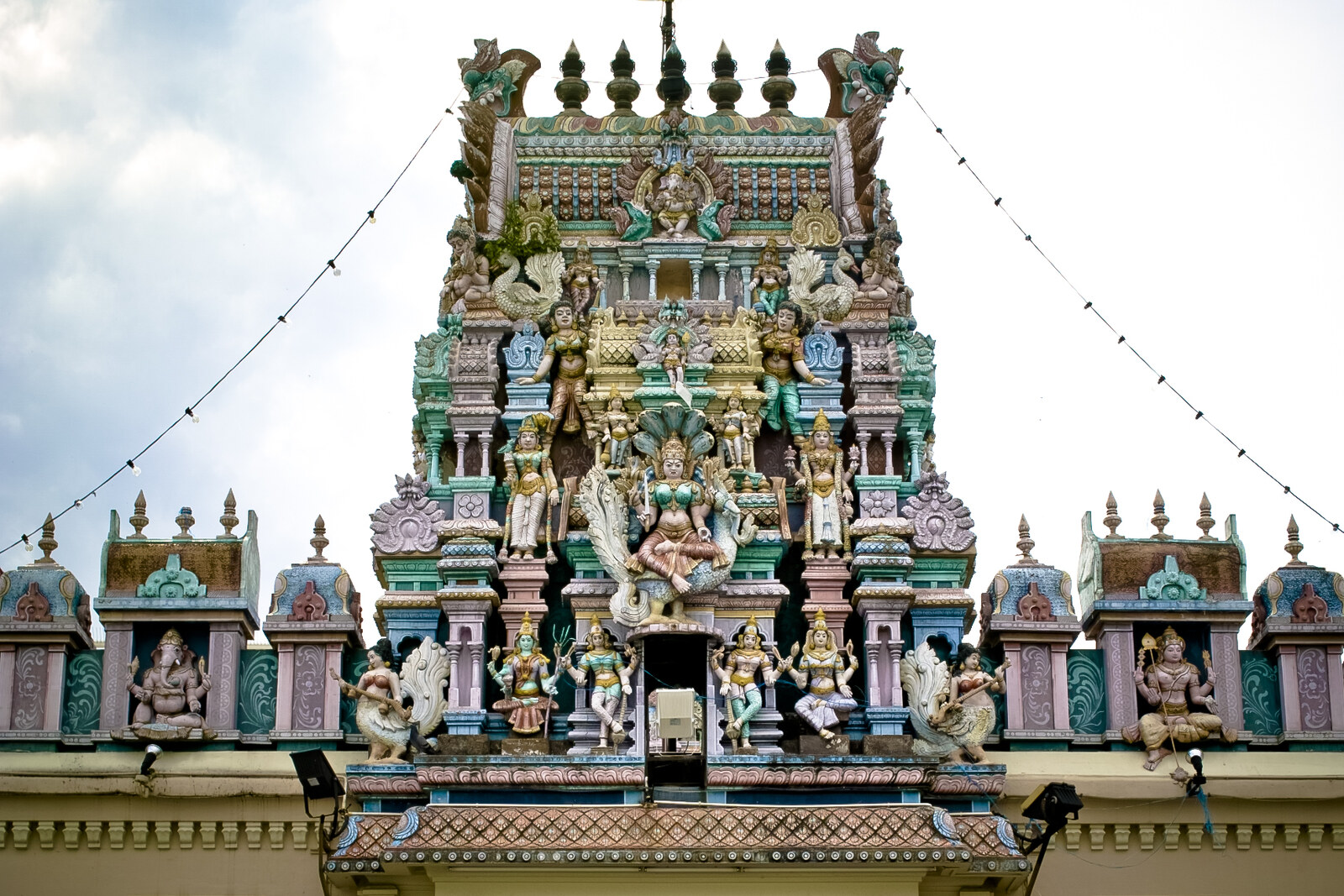
Look around first
What to notice
- Sculptural entrance tower
- Mariamman's main shrine
- Halls in front of the altar
- Lime garlands
The story of the place
From this temple's first decades, a document survives with one man's name, but almost no account of his actions. In eighteen oh one, the British administration granted this plot to Betty Lingam Chetty. Later temple histories call him a captain—an appointed head of Tamils and other people from South India. He was responsible for the migrant community and was meant to provide it with a shared place of prayer.
Chetty is often listed among the temple's founders. The documents allow us to say less: the land was issued in his name, but who built the first shrine is unknown. A renewed grant in eighteen thirty-one again assigned the plot to the community. Two years later, worshippers expanded the small shrine into Arulmigu Sri Mahamariamman Temple.
These worshippers lived near the port. They included merchants, sepoys, and porters who carried goods between ships and shore warehouses. They chose Mariamman as their patroness—a Tamil mother goddess invoked for protection from disease and misfortune. “Maha” in the present name means “great.” The goddess remains in the main shrine today; puja is performed before her, and flowers and lime garlands are offered to her.
By nineteen thirty-three, the old building had deteriorated and no longer held the community. The Hindus of Penang bought two neighboring houses north of the temple. A committee of six people directed the rebuilding. Among them was Karuppiah, recorded with the position of tandal—the senior overseer of a gang of port laborers. People who earned their living carrying other people's goods helped create a permanent shrine for their own neighborhood.
The committee enlarged the site and ordered a temple built according to the rules of South Indian temple architecture: with a separate shrine for the goddess, front and great halls, a passage for circling the altar, a dome, and an entrance tower. Community funds paid for the houses and the construction. On June twelfth, nineteen thirty-three, the worshippers consecrated the temple anew.
Later craftsmen repaired the sculptures and added new rooms, but preserved the layout established then. In nineteen eighty, the trustees replaced the former name, Arulmigu Sri Mahamariamman Temple, with its present one—Arulmigu Sri Mahamariamman Temple. Beyond the sculptural entrance tower, the shrine, halls, and circuit around the altar still follow one another, while the northern part of the temple site occupies the place of the two houses that worshippers bought when the old shrine became too cramped.
Useful on site
daily 6:30–12:00, 16:30–21:00 (pujas at 7:30 and 18:30)
Checked: June 17, 2026. Check the official source before visiting.Leave your shoes in the designated place, keep your distance during the ritual, and do not photograph the shrine without permission.