 Guide On Map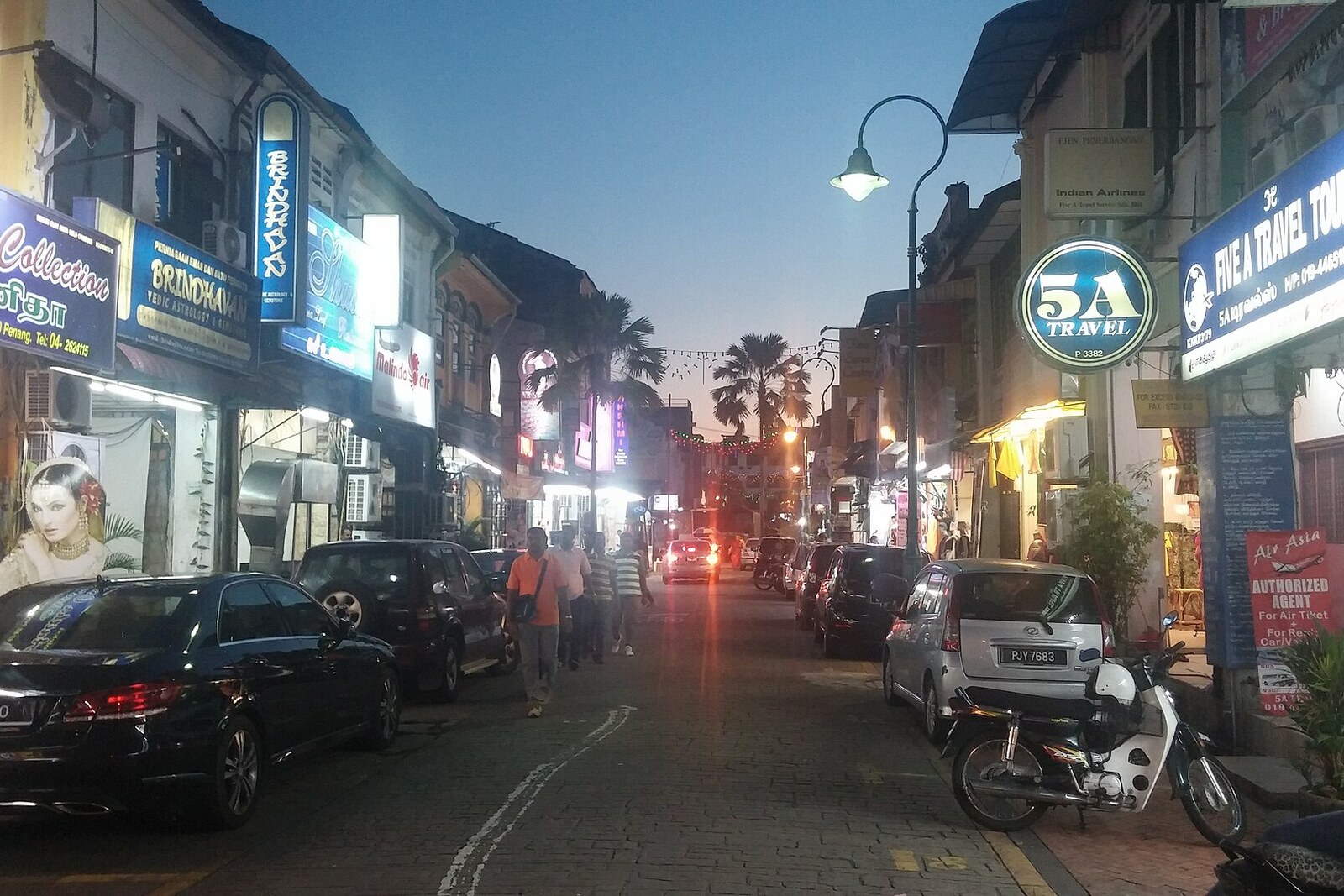
Look around first
What to notice
- The facade of number 4
- Spice shops
- Rows of fabrics
- Items for Hindu rituals
The story of the place
“Pasar” here means “market.” Market Street was named after the trading rows by the shoreline of the time. Before the land reclamation, the sea began beyond present-day Beach Street. The old market has long been gone, but shops took its place: spice traders here supply grocers, restaurants, mills, and home kitchens; nearby, shops sell fabrics, tableware, and items for Hindu rituals. Tamils called the street Kadai Teru—the street of shops—and the British called it Little Madras. Later, the district became known as Little India.
One of the people who turned this address into an Indian trading center arrived in Penang as a ten-year-old boy. S. Letchumanasamy, a migrant from Tamil Nadu, had to support his family. He took on odd jobs from morning to evening and saved part of his earnings. By the age of nineteen, he had saved enough for a business of his own: in nineteen thirty-five, he opened Jothee Press at number four Market Street.
For Market Street, the press produced thoroughly practical items—diaries and account books. Before S. Letchumanasamy, such books were not made in Penang: Jothee Press was the first to print local daily planners and hand-bind account ledgers. Merchants who kept their goods downstairs and their families on the upper floor of the shop no longer had to order the main tool of their trade from afar. These books recorded debts, deliveries, and payments.
In the nineteen forties, S. Letchumanasamy began printing a Tamil-language newspaper here. The man who had arrived as a child and earned money through odd jobs was now publishing text for fellow migrants—now readers, customers, and shop owners. Later, he helped establish the Malaysian Indian Congress and handed the press over to his son, Shanmuganathan.
One of Jothee Press’s foot-powered printing presses is now kept at the Indian Heritage Centre in Singapore. At Market Street, its former address remains—number four, among the shops of that same Kadai Teru for which S. Letchumanasamy once began binding account books.
Useful on site
most shops open daily 8:00–21:45
Checked: June 17, 2026. Check the official source before visiting.This is a working commercial district: do not block the counters, ask craftspeople before photographing them, and do not expect every old shop to be open.